
Secondary Glazing for Islington Terraces: Slimline Solutions for N1 Conservation Areas
How to reduce Upper Street noise by 80% and cut heating bills in your Georgian or Victorian terrace—without touching your original windows.
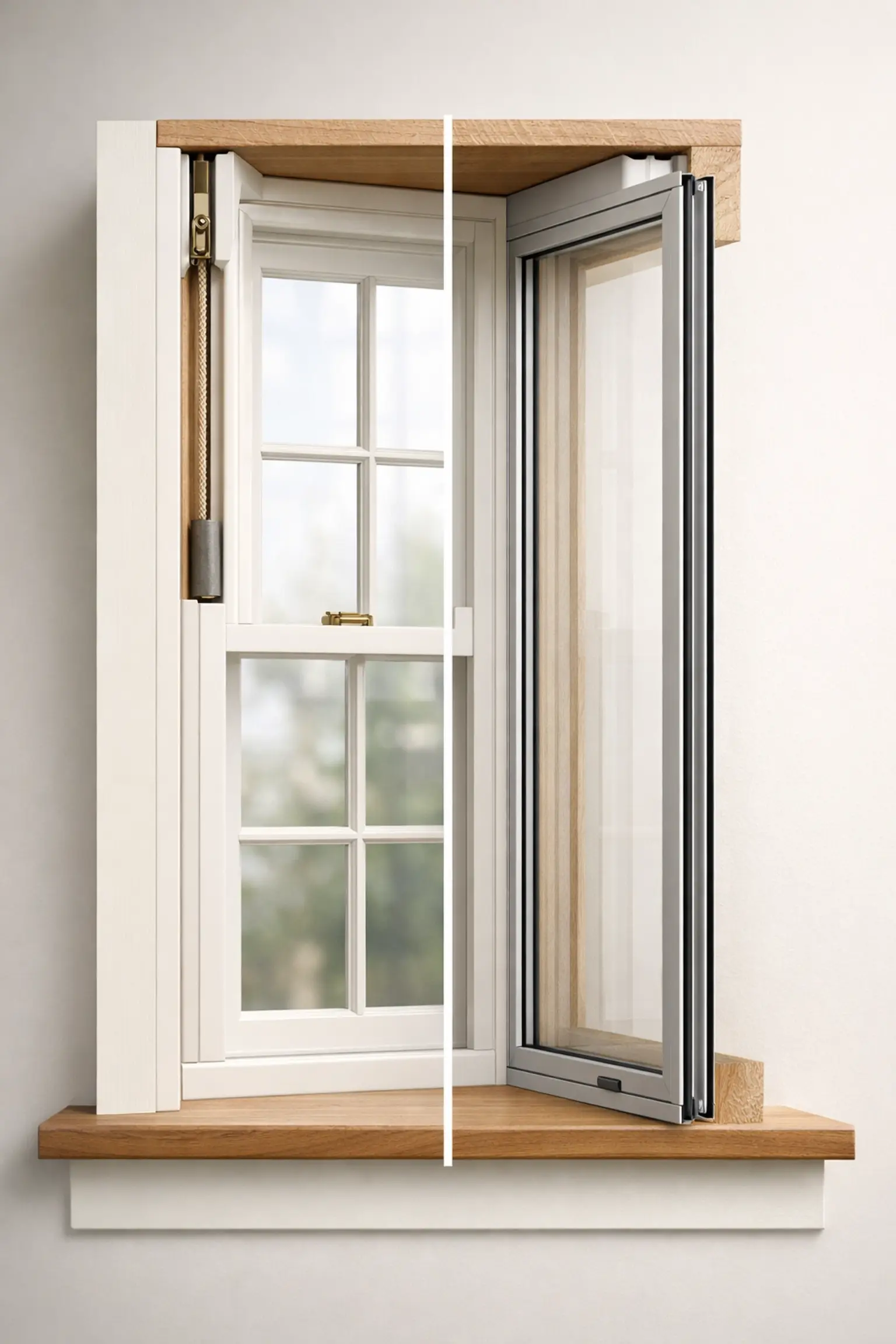
If you own a Georgian or Victorian terrace in Islington, you already know the drill. Beautiful original windows, gorgeous proportions, and... absolutely freezing in winter. Plus, if you're anywhere near Upper Street, the Holloway Road, or any of N1's main arteries, the noise never really stops.
Here's the thing: your windows are probably the main culprit for both problems. But replacing them? That's a planning permission nightmare in most of Islington's conservation areas. Enter secondary glazing: the slim, discreet solution that keeps your period features intact while actually making your home comfortable.
Why Islington Terraces Need Secondary Glazing
Let's be honest: Islington is one of London's most desirable postcodes, but those gorgeous terraces come with some frustrating quirks. The single-glazed sash windows that look so perfect from the street are basically paper-thin when it comes to keeping out cold and noise.
Walk around Canonbury Square or down Upper Street on a Saturday night, and you'll see what we mean. The combination of traffic, footfall, late-night bars, and the occasional Overground train rumbling past means peace and quiet can feel like a distant memory.
Traditional double glazing would solve the problem, sure—but it would also mean ripping out your original windows, dealing with planning officers, and probably ending up with chunky UPVC frames that kill the character of your home. Not exactly ideal. See our comparison of secondary vs double glazing for a detailed breakdown.
The Slimline Secondary Glazing Solution
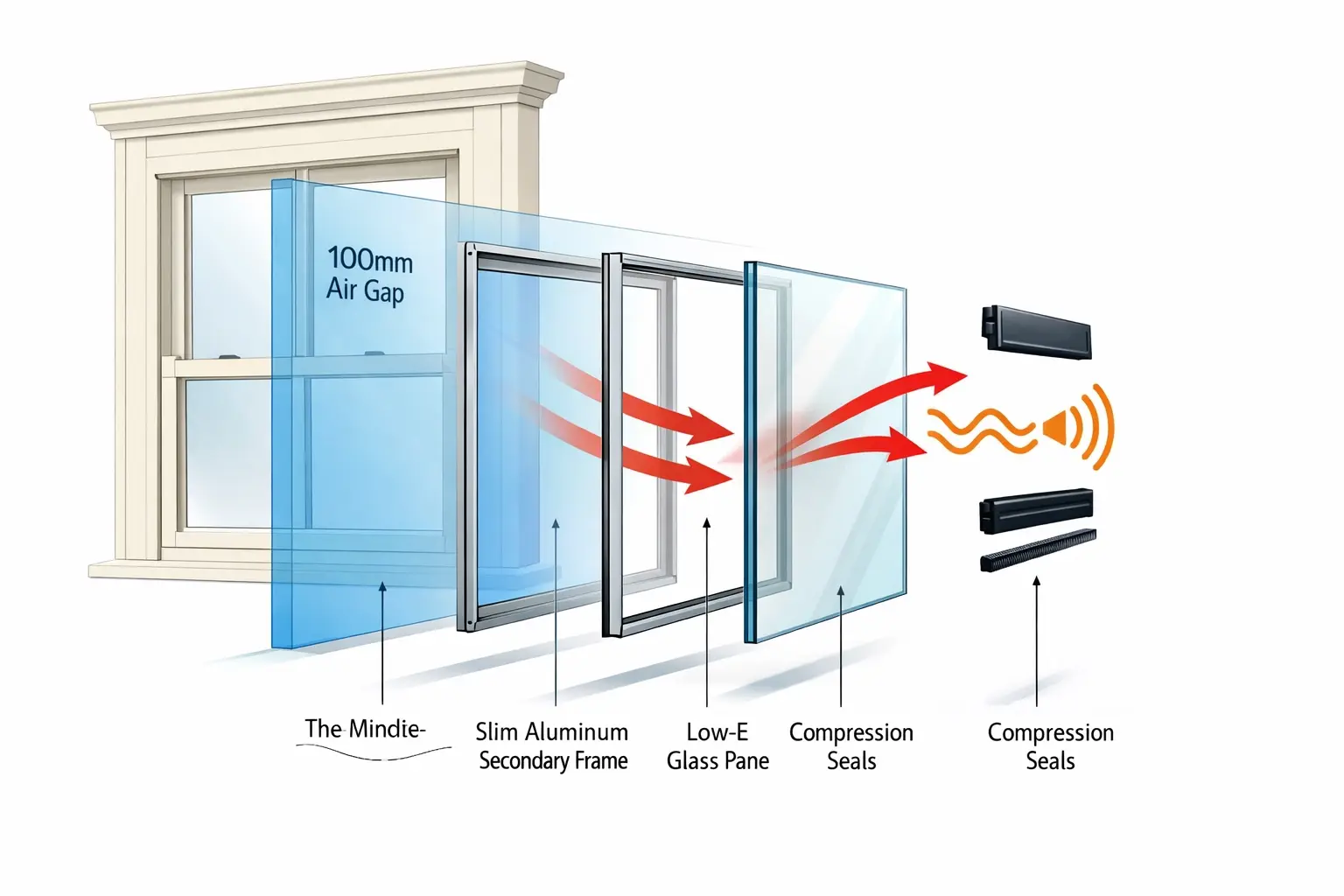
This is where secondary glazing really shines in N1. Instead of replacing anything, a secondary pane of glass is fitted inside your existing window frame. The air gap between the two panes acts as an insulating barrier—trapping heat in winter and dramatically reducing noise year-round.
The best part? It's designed to be ultra-slim. We're talking discreet, barely-there frames that don't mess with those elegant Georgian proportions. When done right, secondary glazing is almost invisible from the street, which is exactly what you need in areas like Barnsbury or Highbury where the Conservation Area officers are (understandably) picky about aesthetics.
Most importantly, secondary glazing usually counts as permitted development. That means no planning permission required in most cases—just a straightforward installation that respects the original architecture. Check our planning permission guide for more details.
Tackling Upper Street Noise (and Everything Else)
If you live anywhere near Upper Street, Essex Road, or Holloway Road, you already know the noise situation. Buses, delivery vans at 6am, late-night revellers stumbling home from the pubs—it's all part of the Islington charm, but it's not so charming when you're trying to sleep.
Secondary glazing with acoustic glass can reduce noise levels by up to 80%. That's the difference between lying awake counting double-deckers and actually getting a decent night's sleep. The thicker the air gap between your original window and the secondary pane, the better the soundproofing—so if noise is your main concern, mention it during your acoustic consultation.
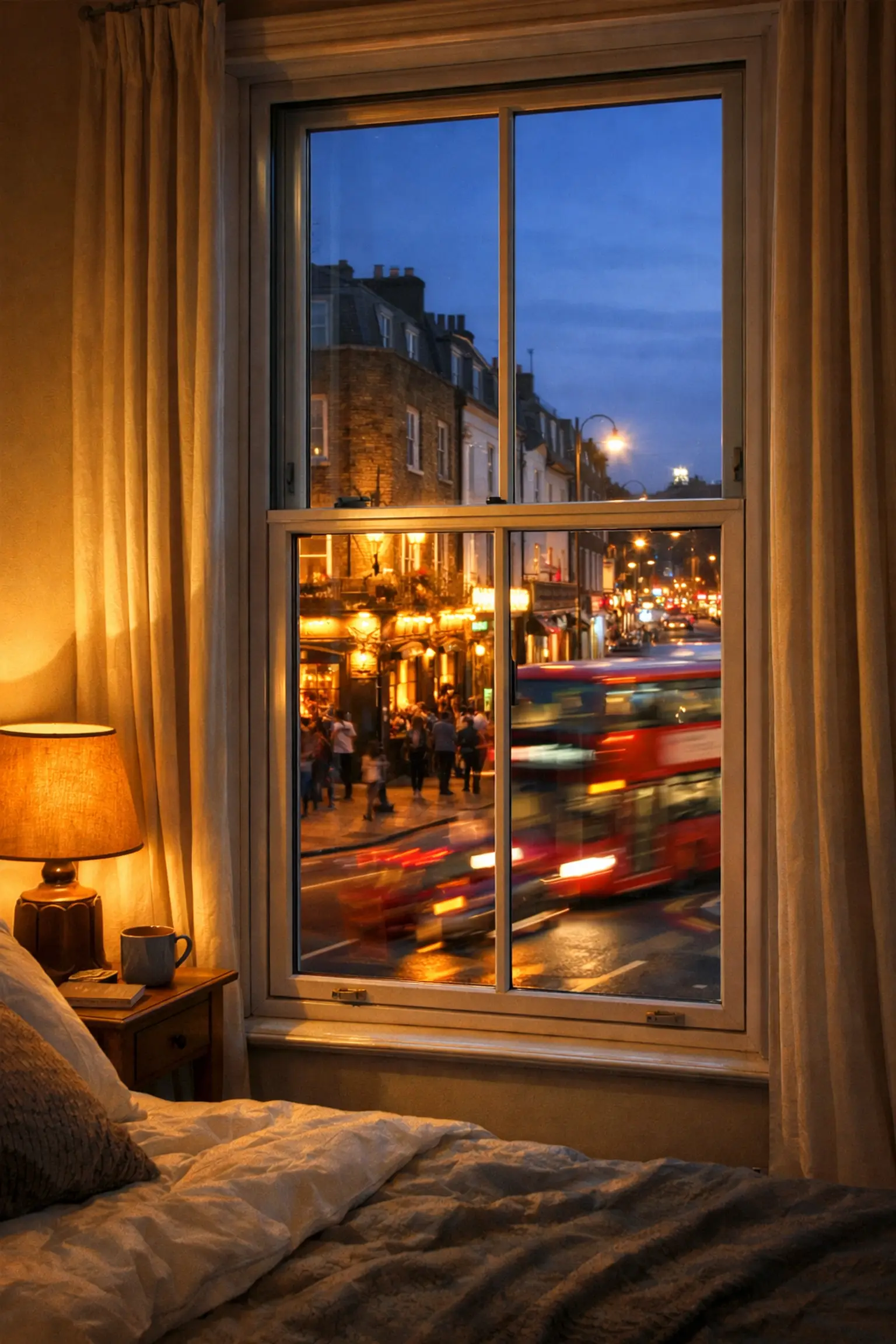
Even if you're tucked away on one of the quieter residential streets near Highbury Fields or along the Regent's Canal, traffic noise has a way of sneaking in. Secondary glazing creates a proper sound barrier without changing the look of your home from the outside. Use our noise reduction calculator to see potential improvements.
Energy Bills and Draughty Terraces
Here's another reality of period terraces: they're gorgeous, but they leak heat like nobody's business. Those single-glazed windows, the gaps around the frames, the lack of modern insulation—it all adds up to sky-high heating bills.
Secondary glazing can cut heat loss through your windows by around 60%. That's a serious reduction in your energy bills, especially during those brutal January cold snaps. The insulating air gap keeps warm air inside where it belongs, rather than letting it escape straight through the glass. See our thermal performance guide for the science, or read our EPC & Thermal Efficiency Guide to understand how this impacts your EPC rating and MEES compliance.
For anyone living in a typical Islington terrace with three or four storeys, that saving adds up fast. You're not just making your home more comfortable—you're actually reducing your carbon footprint and putting money back in your pocket every month. Try our energy savings estimator to calculate your potential savings.
Key Benefits for Islington Terraces
Block Upper Street traffic and nightlife noise
Slash heating bills in draughty terraces
No planning permission typically required
Original windows stay completely untouched
Conservation Areas: Why Secondary Glazing Works
Islington is absolutely packed with conservation areas. Canonbury, Barnsbury, Highbury New Park, the streets around St Mary's Church—basically, if you live in N1, N5, or N7, there's a good chance your property falls within one.
That's great for preserving the area's character, but it makes upgrading your windows a bureaucratic headache. Want to install double glazing? You'll likely need planning permission, listed building consent (if applicable), and approval from the council's conservation team. The whole process can take months.
Secondary glazing sidesteps most of this hassle. Because you're not altering the external appearance of the building, it typically counts as permitted development. You keep your original windows exactly as they are—preserving the historic fabric of your home—while still getting modern performance. Learn more about our heritage and listed building solutions.
It's honestly the perfect compromise between heritage and comfort.
The Local Touch: Living Better in N1
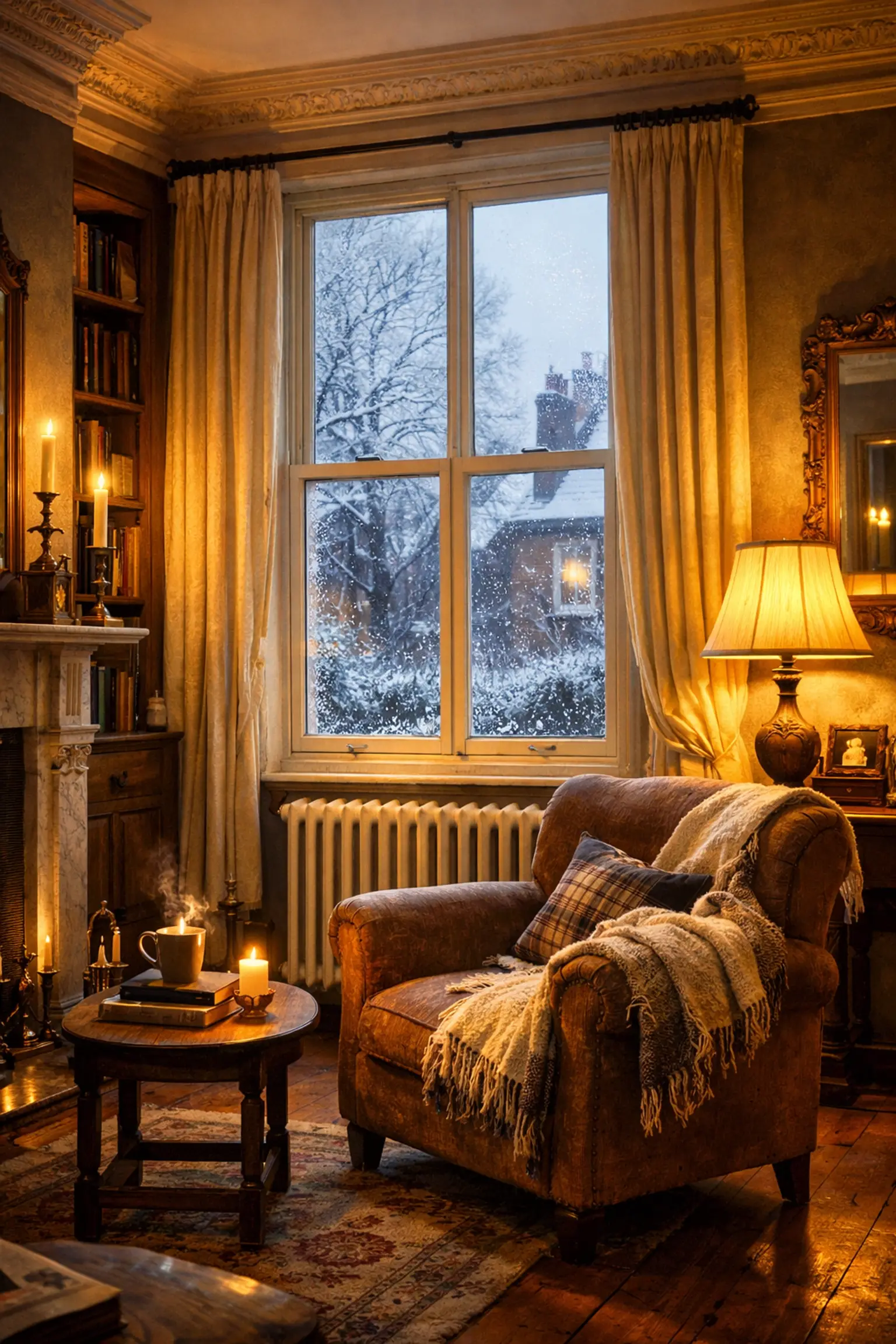
Whether you're a stone's throw from the farmers' market at Chapel Market, enjoying weekend walks along the Regent's Canal, or spending Sunday afternoons at Highbury Fields, Islington life is all about that blend of urban energy and neighbourhood charm.
Secondary glazing helps you enjoy both sides of that equation. You get to appreciate the buzz of Upper Street without it literally buzzing through your windows at 2am. You can open your secondary glazing in summer to let in fresh air from the canal, then close it up tight when winter hits.
And because secondary glazing is fitted internally, it doesn't change the streetscape. Your terrace looks exactly the same from the outside—those elegant proportions and original features stay intact—but inside, you've got a genuinely comfortable, energy-efficient home.
Getting Secondary Glazing Installed in Islington
The installation process is refreshingly straightforward. A surveyor will come out to measure your windows, discuss your main concerns (noise? draughts? both?), and recommend the best type of secondary glazing for your specific property.
Most installations can be completed in a day or two, depending on the size of your home. There's no major building work, no scaffolding, and no lengthy planning applications. Just a quick, clean installation that immediately improves your home's performance.
For Georgian and Victorian terraces, slimline secondary glazing with unobtrusive frames is usually the way to go. The goal is to preserve the visual elegance of your windows while adding that crucial layer of insulation and soundproofing.
Is Secondary Glazing Right for Your Islington Home?
If you're dealing with any of these issues, secondary glazing is probably worth considering:
- Traffic noise from main roads keeping you awake
- Sky-high heating bills every winter
- Draughty windows that let cold air pour in
- Living in a conservation area where planning permission is tricky
- Original sash windows you want to preserve
Secondary glazing isn't a compromise—it's genuinely the best solution for period properties in areas like Islington. You get modern comfort without sacrificing historic character, and you avoid the planning permission headaches that come with more invasive upgrades.
If you're in N1, N5, or N7 and you're tired of choosing between staying warm and staying true to your home's heritage, secondary glazing might be exactly what you need. Your terrace stays beautiful. Your energy bills drop. And you finally get some peace and quiet—even on a Saturday night in the middle of Upper Street.
Ready to Transform Your Islington Terrace?
Get a free consultation and discover how secondary glazing can reduce noise by 80% and cut your heating bills.
Related guides
Explore the dedicated London landing pages for the systems and property types covered above.
- Conservation area secondary glazingWhat London conservation officers accept — sightlines, finishes and reversibility.
- Secondary glazing for listed buildingsFully reversible, consent-friendly specifications for Grade I and Grade II properties.
- Victorian terrace secondary glazingTypical reveal depths, glass specs and costs for London Victorian terraced homes.
- Secondary glazing for sash windowsPurpose-built systems for London box sash windows — specs, prices and heritage detailing.