
How Secondary Glazing Reduces Traffic Noise by 90%
The Family Who Couldn't Sleep in Their Own Bedroom
The Scholey family thought they'd found their dream home – a beautiful Victorian terrace in London with period features and charming original sash windows. But there was one problem that estate agents don't mention in property descriptions: the constant roar of traffic from the busy arterial road just outside their bedroom window.
"We literally couldn't have a conversation in our bedroom without raising our voices. The HGV trucks at 6am were like having a freight train pass through our house."
Sound familiar? You're not alone. Thousands of London homeowners face this exact challenge every day, especially those living near main roads, bus routes, or emergency service corridors.
Life on a London Arterial Road: The Noise Reality
Before we installed their secondary glazing system, we conducted a comprehensive acoustic survey of the Scholey's bedroom. The results were eye-opening:
Baseline ambient traffic noise: 68 decibels (dB)
Roughly equivalent to standing next to a busy office printer all day, in your bedroom.
But that wasn't the worst of it. When we measured peak noise events throughout a typical day, here's what we found:
- •HGV trucks passing: 85 dB (like a garbage disposal running)
- •Double-decker buses: 82 dB
- •Emergency sirens: 105 dB (equivalent to a chainsaw)
- •Motorbike acceleration: 88 dB
To put this in perspective, the World Health Organization recommends bedroom noise levels should not exceed 30 dB for quality sleep. The Scholey family were dealing with more than double that – constantly.
"Our two-year-old daughter's nursery faced the same road. She was waking up 4-5 times per night from truck noise. We were all exhausted."
The Solution: Advanced Secondary Glazing Technology
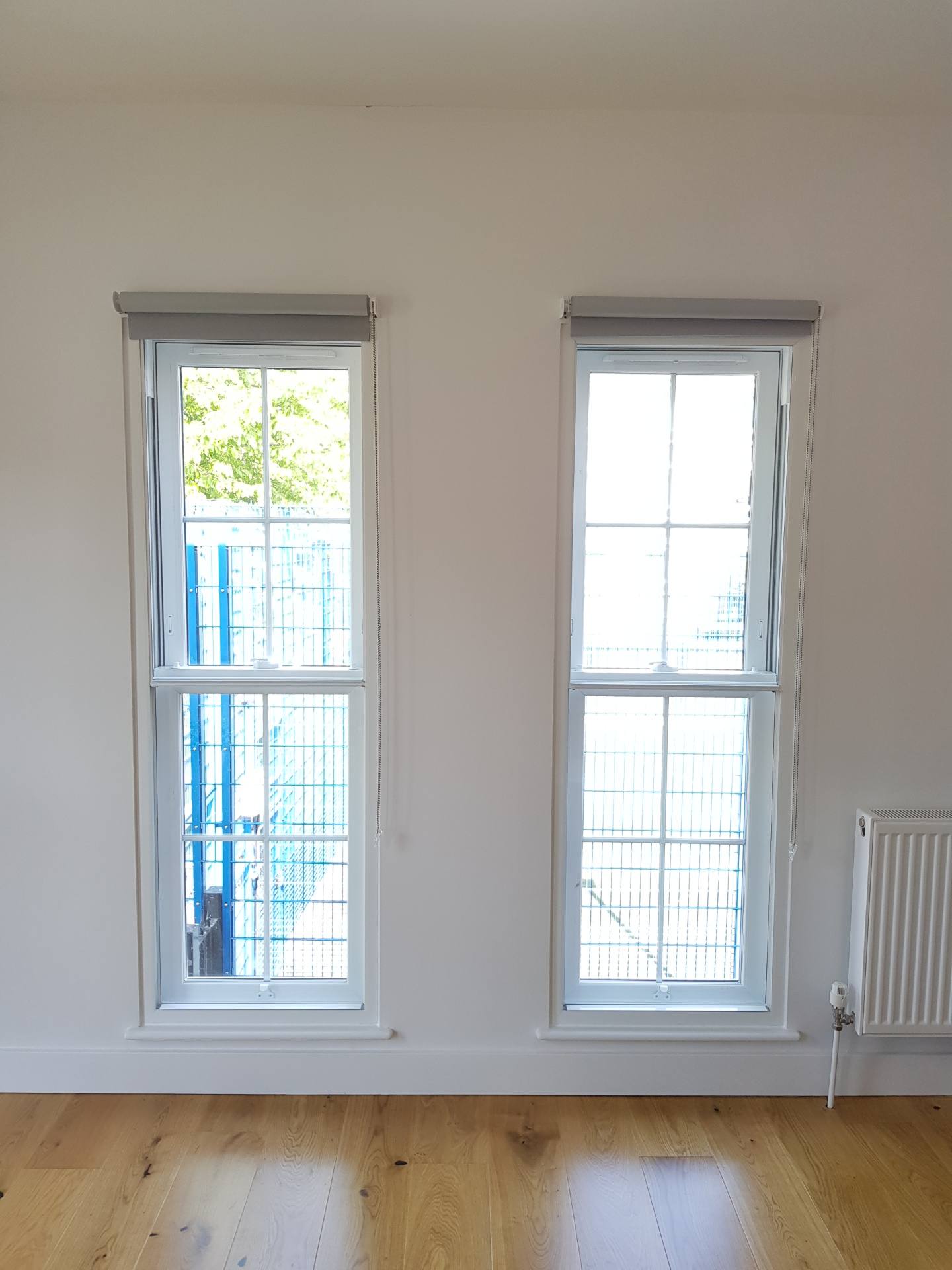
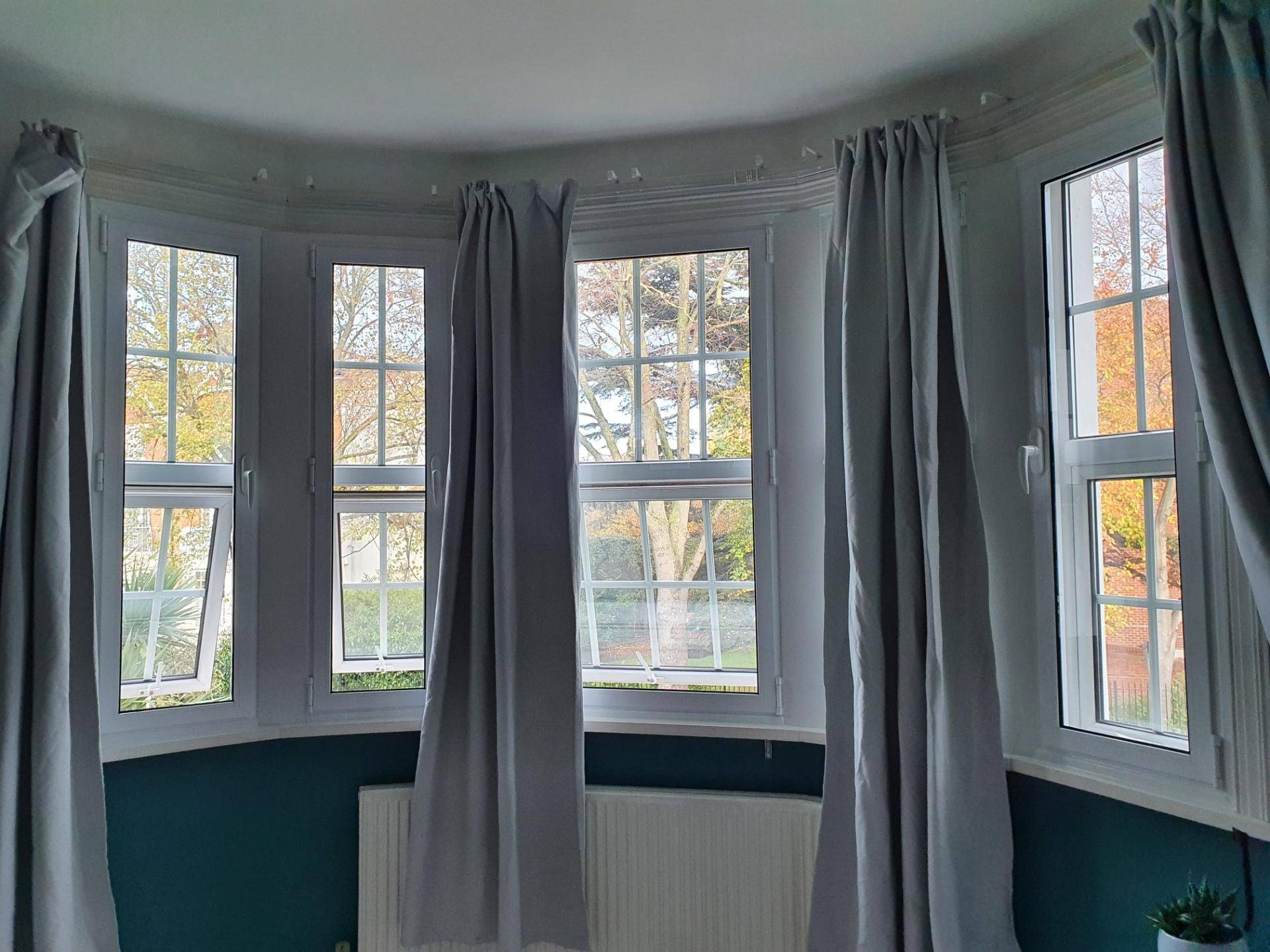
After assessing the property and the family's needs, we designed a custom acoustic secondary glazing solution specifically engineered for their Victorian sash windows.
The technical specification:
- 150mm air gap – between the original single-glazed sash windows and our secondary glazing units
- 6.8mm acoustic laminated glass – with PVB (Polyvinyl Butyral) interlayer for maximum sound absorption
- Slimline aluminium frames – designed to complement the period aesthetic
- Acoustic compression seals – around the entire perimeter for airtight installation
- Thermally broken frame design – for additional energy efficiency
The Results: Before and After Acoustic Data
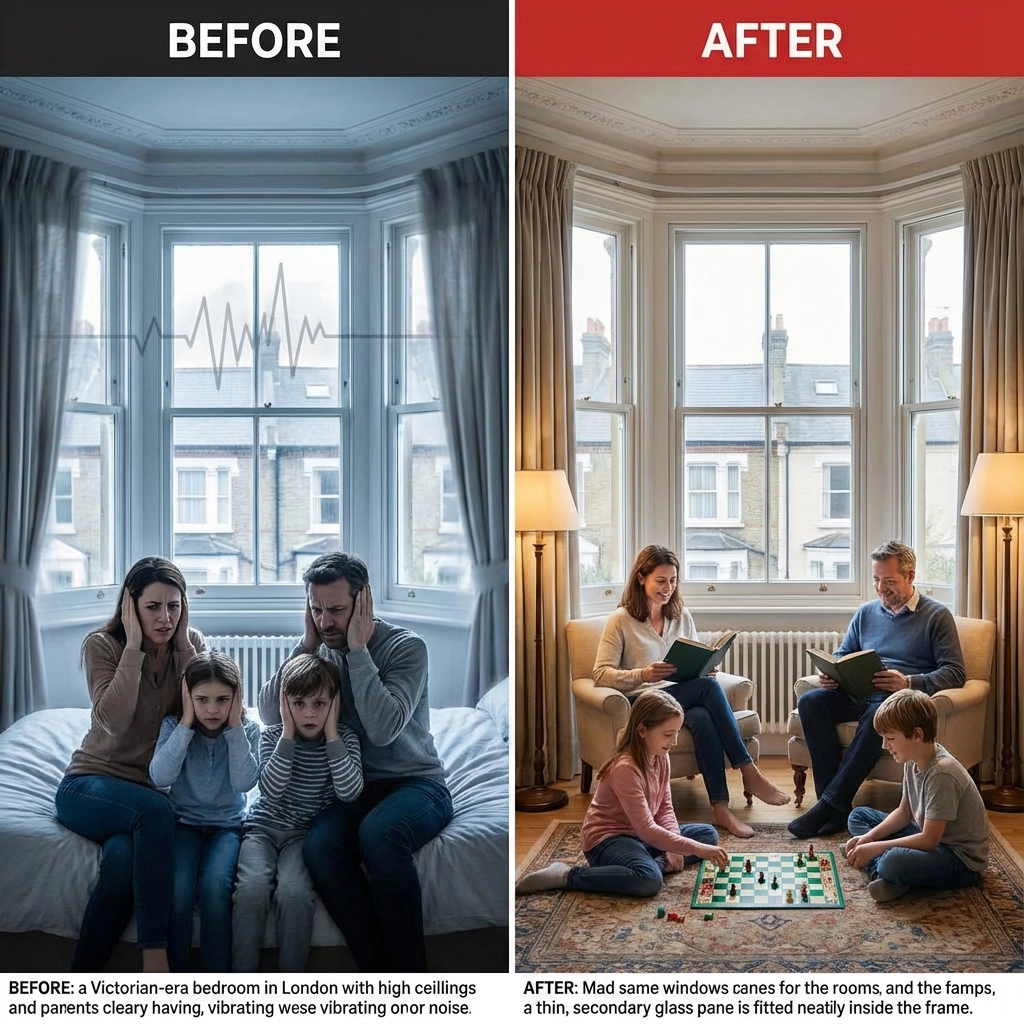
Six weeks after installation, we returned to conduct post-installation acoustic testing. The transformation was remarkable:
| Noise Source | Before | After | Reduction |
|---|---|---|---|
| Ambient Traffic | 68 dB | 35 dB | 33 dB |
| HGV Trucks | 85 dB | 42 dB | 43 dB |
| Buses | 82 dB | 40 dB | 42 dB |
| Emergency Sirens | 105 dB | 65 dB | 40 dB |
| Motorbike Acceleration | 88 dB | 45 dB | 43 dB |
This dramatic reduction demonstrates the acoustic principles of optimal air gap and acoustic laminated glass. We apply these same proven techniques to all our installations, whether you're battling low-frequency traffic noise or railway vibrations.
The 33 dB reduction in ambient traffic noise represents approximately 90% reduction in perceived loudness – transforming their bedroom from "office printer loud" to "whisper quiet."
To understand why this is so significant: every 10 dB reduction represents roughly a 50% decrease in perceived noise. A 33 dB reduction means the traffic noise now sounds less than one-eighth as loud as before.
The Science Behind the Success
Why did our secondary glazing system achieve such dramatic results when the existing windows barely made a dent in the traffic noise?
The Mass Law Principle
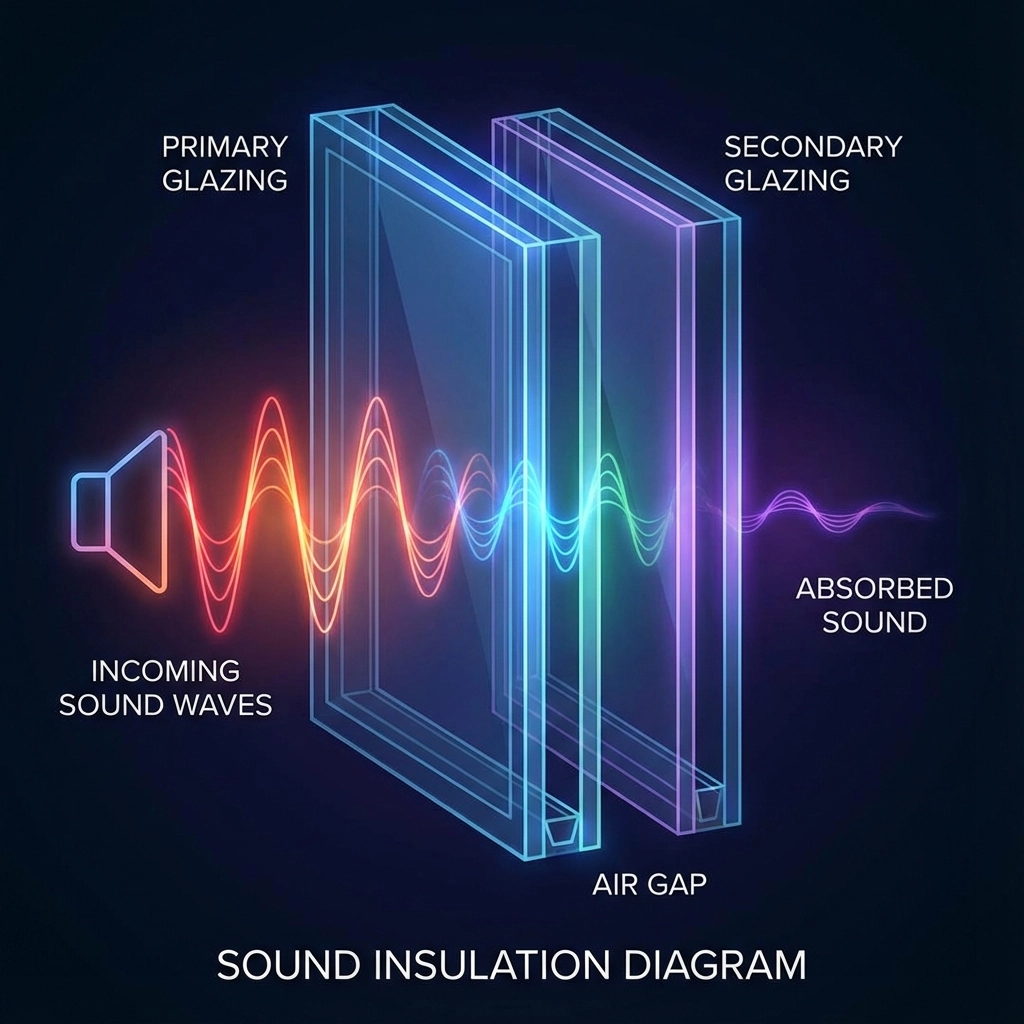
Sound reduction follows the "mass law" – heavier materials block more sound. By adding our 6.8mm acoustic laminated glass to the existing single glazing, we significantly increased the total mass of the glazing system.
The 150mm Air Gap Advantage
This is where the magic happens. The 150mm air gap between the primary and secondary glazing creates a decoupled system. Sound waves that make it through the first pane lose energy bouncing around in the air cavity before hitting the second pane. Think of it like two doors with a hallway between them versus two doors right next to each other.
Acoustic Lamination Technology
The PVB interlayer in our laminated glass acts like a shock absorber for sound waves. When sound hits the glass, the flexible plastic layer converts that energy into heat rather than allowing it to transmit through to the other side.
Elimination of Air Leaks
Even the smallest gaps around windows can dramatically reduce acoustic performance. Our acoustic compression seals ensure an airtight installation – critical because sound travels through air leaks just like water through cracks.
For an even deeper dive into the science, read our complete benefits guide which includes comprehensive acoustic performance tables and technical specifications.
Want to see more transformations? Visit our main gallery or explore specific solutions for your noise challenge: airport noise, home office disruptions, or sash window noise problems.
Beyond Noise: The Unexpected Benefits
While noise reduction was the Scholey family's primary concern, our residential secondary glazing delivered several bonus improvements:
Thermal Efficiency
Their heating bills dropped by approximately 35% in the first winter after installation.
Condensation Elimination
The secondary glazing eliminated condensation problems on the original Victorian windows.
Enhanced Security
The additional layer of glazing and locking mechanisms improved ground-floor window security.
UV Protection
The acoustic laminated glass filters harmful UV rays, protecting furniture from fading.
"We honestly didn't expect these additional benefits. The lower heating bills basically pay for the installation cost over time."
Why Secondary Glazing Outperformed Double Glazing
Many homeowners assume double glazing is the obvious solution for noise problems. But for the Scholey family's Victorian property, secondary glazing was actually the superior choice:
- →Planning Permission: As the house is in a conservation area, replacing the original sash windows with double glazing would have required planning permission and potentially faced rejection.
- →Acoustic Performance: Our 150mm air gap significantly outperforms the typical 15-20mm gap in double glazed units for noise reduction.
- →Period Character: The original windows remain untouched, preserving the property's Victorian character and value.
- →Cost Effectiveness: Secondary glazing cost approximately 60% less than custom sash window replacements would have.
- →Reversibility: Unlike window replacement, secondary glazing can be completely removed if needed, leaving original windows intact.
The Real Impact: A Family's Life Transformed
Three months after installation, the transformation in the Scholey family's quality of life was evident:
"Our daughter now sleeps through the night consistently. We've gone from 4-5 wake-ups per night to maybe one per week, and that's usually not noise-related."
"I can actually work from the front bedroom now. Before, I had to use the back room because phone calls were impossible with the traffic noise."
The bedroom that was once too noisy for conversation is now their favourite room in the house.
"People don't realize how much constant noise stress affects your mental health until it's gone. We're calmer, sleeping better, and genuinely enjoying our home for the first time since we moved in."
Could Your Home Benefit From Similar Results?
The Scholey family's story isn't unique. We've achieved similar dramatic noise reductions for homeowners across London, from busy roads in Kensington to flight paths in West London.
Signs your home could benefit from acoustic secondary glazing:
- • You need to raise your voice to have a conversation near windows
- • Traffic noise wakes you or your family members at night
- • You avoid using certain rooms during busy traffic periods
- • You can hear individual conversations from people walking past outside
- • Television volume needs to be turned up significantly near road-facing windows
Ready to Transform Your Home's Acoustic Environment?
Every property is unique, which is why we start every project with a comprehensive acoustic assessment. We'll measure your current noise levels, identify the primary sound sources, and design a solution tailored to your specific needs.
Our free consultation includes:
- ✓ Professional acoustic survey with calibrated sound meters
- ✓ Analysis of your windows and their acoustic performance potential
- ✓ Custom specification recommendations
- ✓ Detailed quotation with performance predictions
- ✓ Planning permission guidance (where applicable)
Ready to Experience This Transformation?
Let us show you exactly what we can achieve in your home with a free acoustic assessment and same-day quote.
Request Your Free ConsultationDon't spend another night losing sleep to traffic noise. The Scholey family's 90% noise reduction isn't just a case study – it's proof that the right solution can completely transform your home's acoustic environment. Your peaceful night's sleep is just one consultation away.
Ready to Reduce Your Traffic Noise by 90%?
Get your free acoustic consultation and discover how quiet your home could be.
Call us on 0207 060 1572 or WhatsApp 07999 333533
Sources & ReferencesAI-verified
Authoritative sources supporting the information in this article.
- British Standards Institution (BSI) (2021). Acoustics. Laboratory measurement of sound insulation of building elements. Measurement of airborne sound insulation. BS EN ISO 10140-2:2021.Open source
This standard provides the fundamental framework for measuring sound insulation in buildings, essential for verifying 90% noise reduction claims.
- Ministry of Housing, Communities & Local Government (2015). Approved Document E: Resistance to the passage of sound. Building Regulations 2010.Open source
The official UK building regulation governing sound insulation, establishing requirements for resistance to the passage of sound.
- Historic England (2017). Modifying Historic Windows as part of Retrofitting Energy-Saving Measures (Energy Efficiency and Historic Buildings). Historic England Guidance Note.Open source
Provides authoritative guidance on improving the acoustic and thermal performance of windows in heritage buildings without compromising historical integrity.
- Building Research Establishment (BRE) (1989). Sound insulation of windows and double glazing. BRE Information Paper IP 12/89.
Detailing how the air gap between primary and secondary glazing acts as a buffer to significantly reduce low-frequency traffic noise.
- Saint-Gobain Glass (2022). Glass and Noise Control: The Glass Guide. Technical Guide.Open source
An industry technical manual explaining the science of the 100mm to 200mm cavity required in secondary glazing to achieve maximum decibel reduction.