
Home Office Noise Reduction: Why Remote Workers Need Secondary Glazing
Don't let traffic noise ruin your next client call. Discover how secondary glazing transforms home offices into professional workspaces.
Picture this: You're presenting quarterly results to your biggest client on Zoom when a delivery truck rumbles past, drowning out your carefully rehearsed pitch. Your client asks you to repeat the key numbers, and you notice their slightly raised eyebrow as another vehicle honks outside. Sound familiar?
If you're one of the millions working from home, external noise isn't just an annoyance—it's a career liability. While 42% of UK employees now work remotely at least part-time, many are struggling with a problem that traditional solutions simply can't solve: creating a genuinely quiet, professional home office environment.
The Hidden Cost of Home Office Noise
Remote working has transformed from a pandemic necessity to a permanent fixture of modern employment. However, most homes weren't designed as professional workspaces, and external noise creates problems that extend far beyond momentary disruptions.
Research shows that office workers lose an average of 21 minutes of productivity per day due to noise distractions. When that "office" is your spare bedroom overlooking a busy road, the impact multiplies. Traffic noise, railway rumble, aircraft overhead, and neighbourhood disturbances don't just disrupt your concentration—they undermine your professional credibility.
Consider the psychological impact: Chronic noise exposure elevates cortisol levels, leading to increased stress, fatigue, and difficulty concentrating. For remote workers, this creates a perfect storm of reduced productivity and heightened anxiety about professional performance.
Why Video Call Quality Matters More Than Ever
Your audio quality on video calls directly reflects your professionalism. When clients or colleagues hear traffic noise, barking dogs, or construction work in the background, it sends unintended messages about your setup and attention to detail.
The numbers are stark: Companies report that poor audio quality in video conferences reduces meeting effectiveness by up to 30%. For freelancers and consultants, this can translate directly into lost business opportunities. One interrupted client presentation or garbled contract negotiation can cost thousands in revenue.
Even with mute buttons, the constant mental effort of monitoring background noise and timing your unmuting creates cognitive load that reduces your ability to engage fully in discussions. You're not just managing your work—you're constantly managing your environment.
Why Temporary Fixes Fall Short
Most remote workers try the obvious solutions first:
Noise-cancelling headphones seem ideal, but they're problematic for long video calls. They cause ear fatigue, make you appear less engaged on camera, and create an artificial barrier between you and household members who may need your attention.
Soft furnishings and acoustic panels help with echo but do virtually nothing for external noise transmission. Sound travels through windows, not around rooms.
Moving your office to the "quietest room" often means compromising on lighting, space, or functionality. You shouldn't have to work in a windowless back bedroom to achieve professional quiet.
Rearranging your schedule around traffic patterns is neither practical nor professional. Your clients shouldn't have to book meetings around rush hour limitations.
These temporary measures treat symptoms, not causes. External noise transmission through windows is a structural problem requiring a structural solution.
How Secondary Glazing Transforms Home Offices
Secondary glazing can reduce external noise by up to 80%, equivalent to a 54-decibel reduction. To put this in perspective, this transforms the noise level from that of heavy traffic (75dB) to a quiet library (35dB)—perfect for professional video calls.
Unlike double glazing, which typically reduces noise by only 42%, secondary glazing creates a decoupled system. When sound waves hit your primary window, they must pass through an air gap before reaching the secondary pane. This breaks the sound transmission chain, dramatically reducing the energy that reaches your workspace.
Our case study data demonstrates real-world performance: reducing traffic noise from 68dB to 35dB—a transformation that makes the difference between unusable and professional-grade acoustic conditions.
The ROI Case for Remote Workers
Consider secondary glazing as a business investment rather than a home improvement cost. The productivity gains alone justify the expense:
Increased billable hours: Without constant noise disruptions, remote workers report completing tasks 15-20% faster. For a consultant billing £75/hour, this represents £900-1200 additional monthly revenue on a 40-hour week.
Client retention: Professional-quality video calls improve client satisfaction and reduce the likelihood of losing business to competitors with better presentation capabilities.
Expanded work hours: With effective noise reduction, you can take calls during previously unusable periods—early morning international calls, evening client discussions, or weekend emergency consultations.
Property value: Secondary glazing typically adds £2,000-4,000 to property values while solving an immediate business problem.
Tax efficiency: Home office improvements, including acoustic treatments, may qualify for business expense deductions. Consult your accountant about claiming secondary glazing as a legitimate business cost.
The numbers are compelling: If secondary glazing costs £1,500 and increases your productivity by just 10%, most remote workers recover the investment within 6-8 months through improved efficiency and expanded working capabilities.
Beyond Noise: Comprehensive Home Office Benefits
Effective noise reduction supports several aspects of remote working:
Thermal comfort: Secondary glazing reduces heating costs by 20-30%, keeping your office comfortable year-round without expensive climate control.
Sleep quality: If your home office doubles as a bedroom, or if you need quality sleep to maintain peak performance, noise reduction improves rest quality dramatically. Poor sleep directly impacts work performance—addressing it serves dual purposes.
Family harmony: Reducing external noise means you don't need to ask family members to "keep it down" during important calls. Everyone benefits from a quieter home environment.
Flexibility: With proper acoustic control, any room can become a viable workspace. You're no longer limited to the single "quietest" room in your home.
For those dealing with specific noise sources, we address low-frequency traffic noise and railway noise reduction in dedicated guides. Understanding dB reduction principles helps you make informed decisions about acoustic improvements.
Professional Installation, Minimal Disruption
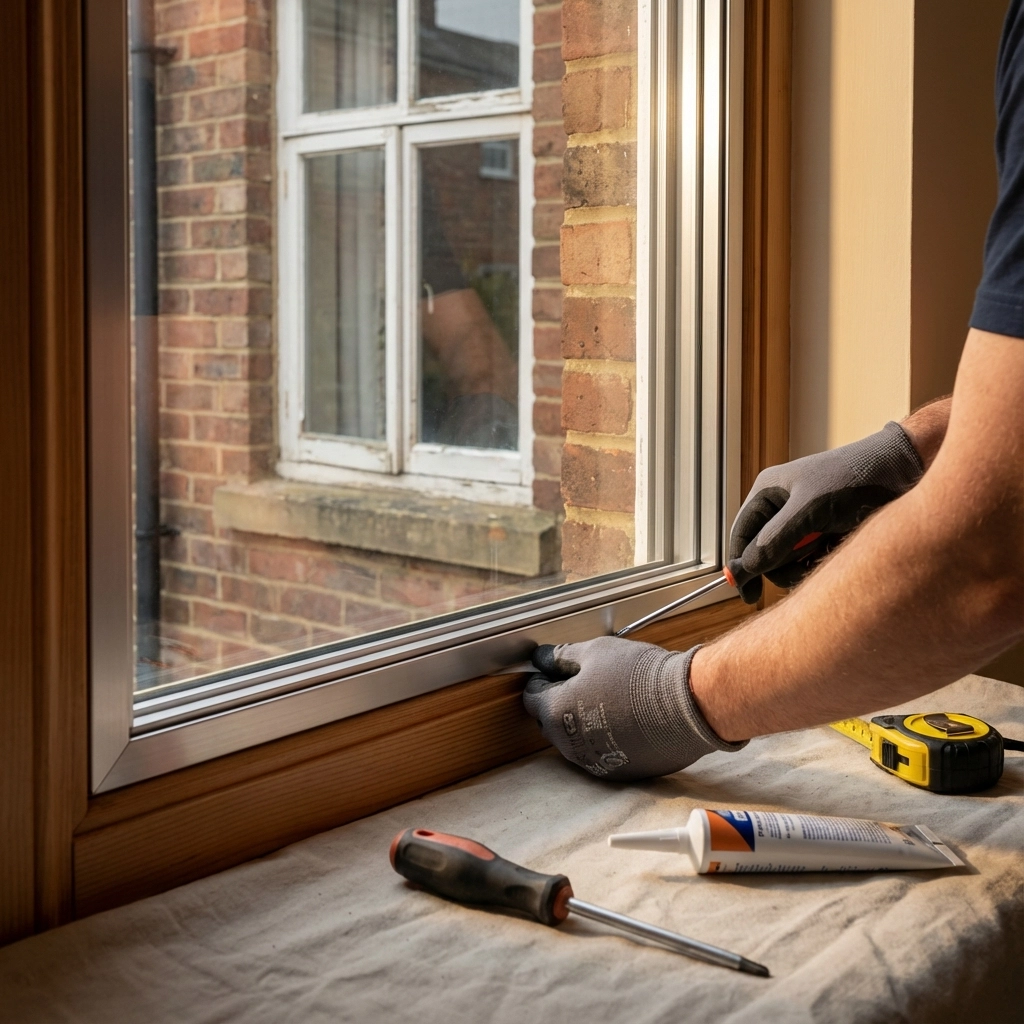
Unlike full window replacement, secondary glazing installation typically takes just 2-3 hours per window with minimal disruption to your work schedule. Installation can often be completed during lunch breaks or between meetings.
The process involves:
- Measuring your existing windows
- Manufacturing bespoke units off-site
- Installing discrete secondary frames
- Immediate noise reduction results
Many remote workers are surprised to discover they can continue working normally during installation, with noise reduction effects apparent immediately upon completion.
For residential properties across London, we provide same-day assessments and typically complete installations within 5-7 working days of confirmation.
Multiple Room Solutions
Most successful remote workers benefit from addressing noise in several areas:
Primary office space: Your main workspace requires the highest level of acoustic control for video calls and concentrated work.
Bedroom: Quality sleep directly impacts work performance. Reducing traffic or railway noise in bedrooms supports the rest quality essential for peak productivity.
Living areas: If you occasionally take calls from other rooms, or if family members also work from home, comprehensive noise reduction throughout your property provides maximum flexibility.
Our acoustic consultancy service evaluates your entire property to identify the most cost-effective combination of improvements for your specific situation and working patterns.
Comparing Your Options
When comparing secondary glazing to alternatives, the differences are significant:
- Double glazing replacement: Costs 3-4 times more, requires planning permission in some areas, and provides inferior noise reduction
- Triple glazing: Extremely expensive, often unnecessary for most noise problems
- Acoustic glass: Effective but requires complete window replacement
- Sound barrier curtains: Minimal impact on external noise transmission
Our detailed comparison of secondary versus double glazing explains why secondary glazing consistently outperforms other solutions for noise reduction while remaining the most cost-effective option.
For properties with specific requirements—such as listed buildings—secondary glazing often represents the only viable noise reduction solution that preserves historical character while delivering modern performance.
Technical Performance Data
Real-world performance data from our installations demonstrates consistent noise reduction across various scenarios:
- Heavy traffic: 75dB reduced to 40dB (excellent for video calls)
- Railway noise: 82dB reduced to 45dB (significant improvement in comfort)
- Aircraft noise: 70dB reduced to 35dB (barely perceptible)
These reductions represent the difference between an unusable workspace and a professional-grade environment.
Ready to Transform Your Home Office?
Your professional reputation shouldn't depend on hoping the postman doesn't ring during client calls. Secondary glazing provides a permanent solution to external noise problems, improving both your work environment and your property's value.
Your next video call could be the difference between landing that important contract or watching it go to a competitor with better audio quality. Make sure you're ready.
Get a Free Acoustic Assessment
We offer free acoustic assessments to evaluate your specific noise challenges and recommend the most effective solutions for your working requirements. Same-day quotes and installations within a week.