
Living in a Georgian townhouse in Chelsea or a Victorian terrace in Kensington sounds like the dream, right? Beautiful architecture, gorgeous period features, and the prestige of owning a piece of London history. But there's one thing estate agents don't mention when they're showing you around those stunning sash windows: the noise.
Whether it's the endless rumble of traffic on Fulham Road, buses thundering down Kensington High Street, or the late-night revellers outside on King's Road, historic homes in these boroughs come with a serious soundproofing problem. And if your property is listed (Grade I, II, or II*), you can't just rip out those beautiful original windows and install modern double glazing. Conservation officers would have a field day.
That's where secondary glazing for listed buildings comes in. It's the solution that heritage authorities actually approve of, and it works better than you'd think.
The Planning Permission Nightmare
If you own a listed building in Kensington & Chelsea, you already know the drill. Want to change anything visible from the street? You'll need Listed Building Consent. Want to replace those single-glazed sash windows with modern double glazing? Good luck with that application.
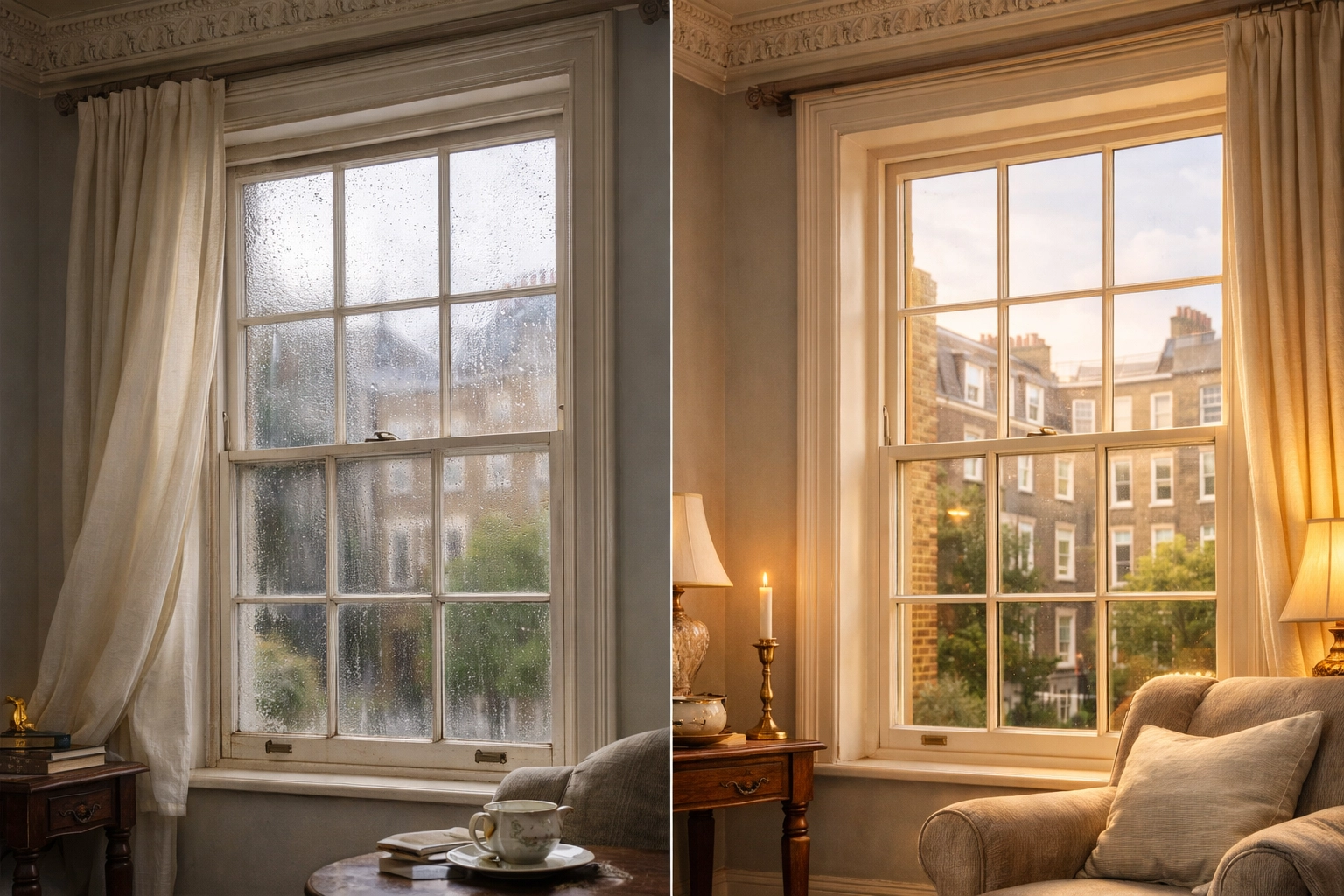
The Royal Borough of Kensington & Chelsea takes conservation seriously. They have to: this is one of the most architecturally significant boroughs in the country. But that leaves you stuck between a rock and a hard place — either live with freezing cold, noisy windows, or navigate a planning process that could take months and might end in rejection anyway.
Traditional double glazing changes the appearance of period windows. The thicker glazing units, modern spacer bars, and bulkier frames just don't look right on a Victorian building. Conservation officers spot it a mile off, and they're not fans.
Secondary glazing, on the other hand, flies under the radar. Because it's fitted internally and doesn't alter the external appearance of your building, it typically doesn't require planning permission — even in conservation areas. It's also completely reversible, which is music to the ears of heritage authorities who want to preserve the option of restoring buildings to their original state.
Why Secondary Glazing Actually Works
Here's the thing about soundproof secondary glazing: it's not just a workaround for planning restrictions. It's actually technically superior to standard double glazing when it comes to blocking noise.
The secret is in the air gap. When you install a secondary glazing unit inside your existing window, you're creating a cavity between the two panes of glass. The bigger that gap, the better the acoustic performance. With secondary glazing, you can achieve gaps of 100mm or more — something you'd never get with sealed double glazing units, which typically have gaps of just 12–20mm.

That large air cavity disrupts sound waves far more effectively. Think of it like this: sound is vibration travelling through materials. When it hits your original window, some of it passes through. But then it has to cross that wide air gap before hitting the secondary glazing — and that's where most of the noise energy gets lost.
The result? Secondary glazing noise reduction can cut external noise by up to 54dB in suitable configurations. That's not marketing fluff — that's measurable acoustic performance that transforms your living space from "can barely hear myself think" to "actually peaceful."
The Gold Standard: 10.8mm Acoustic Laminate Glass
Not all secondary glazing is created equal. If you're serious about noise reduction in London, you want 10.8mm acoustic laminate glass.
Standard glass (even if it's 6mm thick) does an okay job with noise, but acoustic laminate glass is specifically engineered for soundproofing. It's made from two panes of glass with a special acoustic interlayer sandwiched between them. That interlayer is the real MVP — it's designed to dampen sound vibrations before they can pass through the glass.
For traffic noise — which is mostly low-frequency rumble from engines and tyres — 10.8mm acoustic laminate glass is the gold standard. It targets exactly the frequencies that disturb sleep and concentration, and it does it without making your windows look industrial or out of place.

When combined with a properly installed secondary glazing system, you're looking at noise reduction that actually makes a difference. We're talking about transforming clearly audible traffic sounds into barely noticeable background hum. That's the kind of change that improves your quality of life immediately.
The Numbers Don't Lie
~29 dB
Single glazing reduction
35–40 dB
Standard double glazing
45–50 dB
Secondary glazing + acoustic glass
Let's get specific. Traditional single glazing (what most listed buildings have) offers about 29 dB of noise reduction. That means if there's 75 dB of traffic noise outside (typical for a busy London road), you're still getting 46 dB inside. That's roughly the volume of normal conversation — loud enough to wake you up at night and make working from home a nightmare.
Secondary glazing with 10.8mm acoustic laminate glass can reduce that same external noise by 45–50 dB. Suddenly, that 75 dB traffic becomes 25–30 dB indoors — quieter than a whisper. The difference is genuinely life-changing, especially if you've been living with traffic noise for years.
And here's the bonus: because secondary glazing is so effective, it often outperforms modern double glazing for acoustic purposes. Standard double glazing units might reduce noise by 35–40 dB, which is good but not exceptional. Properly specified secondary glazing beats it every time.
Discreet and Reversible
One of the biggest advantages of secondary glazing for listed buildings is how discreet it is. When installed correctly, it should be barely noticeable from inside the room — just slim frames that follow the lines of your existing windows.
From the outside? You shouldn't be able to see it at all. That's crucial in conservation areas where even minor visual changes can trigger enforcement action.
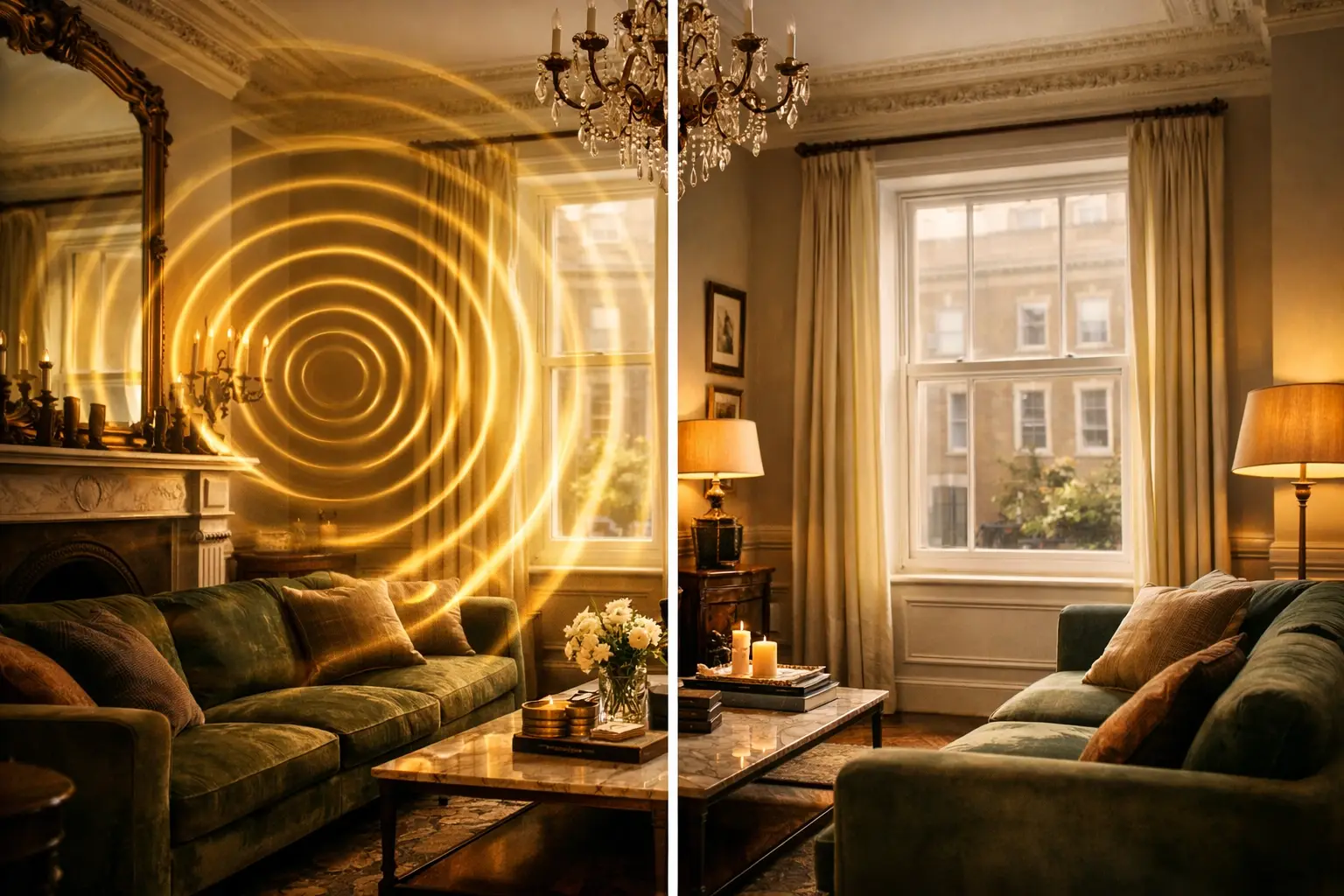
The reversibility factor is equally important. Listed building consent often comes with conditions about maintaining the ability to restore original features. Because secondary glazing doesn't involve drilling into historic masonry or removing original windows, it can be taken out without leaving a trace. Try doing that with replacement double glazing.
This reversibility also makes secondary glazing a smarter investment. If you ever sell the property, the next owner has the option to keep the secondary glazing (for the noise and thermal benefits) or remove it if they prefer. You're not permanently altering a historic building — you're just making it more liveable.
Beyond Noise: Thermal Performance
While we're focused on secondary glazing noise reduction here, it's worth mentioning that secondary glazing also dramatically improves thermal performance. That 100mm air gap that's so good for blocking sound? It's also excellent insulation.
Thermal Benefits at a Glance
- 60–70% thermal improvement vs single glazing
- Lower heating bills and reduced condensation
- Invisible improvement — no change to building appearance
- Helps meet EPC targets for listed properties
You can expect thermal improvements of 60–70% compared to single glazing alone. That means lower heating bills, less condensation, and rooms that actually stay warm in winter. For listed buildings in Kensington & Chelsea — where energy efficiency is often shockingly poor — that's a significant benefit.
The Kensington & Chelsea Advantage
If you're in Kensington, Chelsea, or Richmond, you're in the perfect position to benefit from secondary glazing installers London specialists who understand the specific challenges of working with listed buildings in high-value conservation areas.
The best installers know the planning landscape, understand what conservation officers are looking for, and can specify acoustic glass solutions that actually work for your specific noise issues — whether that's traffic on the A4, aircraft approaching Heathrow, or the unique acoustic challenges of living near Underground lines.
Is It Worth It?
Here's the bottom line: if you own a listed building in a busy London borough and you're tired of traffic noise, secondary glazing isn't just "the only option because planning won't let you do anything else." It's actually the best option.
It preserves your building's historic character, it doesn't require months of planning applications, and it delivers noise reduction that outperforms most modern alternatives. The 10.8mm acoustic laminate glass specification ensures you're getting serious soundproofing, not just a token improvement.
For period property owners who want the quiet life without compromising on heritage, secondary glazing noise reduction is the answer that's been hiding in plain sight.
Ready for a Quieter Home?
Get a free acoustic assessment for your Kensington or Chelsea property. Our heritage specialists understand listed building requirements.
Get Your Free QuoteFurther Reading
Sources & References
Authoritative sources supporting the information on this page.
- Greater London Authority (2021). The London Plan 2021, Policy D14: Noise. Mayor of London.Open source
The London planning policy on reducing, managing and mitigating noise in homes across the capital.
- British Standards Institution (2014). Guidance on sound insulation and noise reduction for buildings (BS 8233:2014). BSI Standards.
Sets the recommended internal noise levels for bedrooms and living rooms used to judge how much glazing performance a home needs.
- World Health Organization Regional Office for Europe (2018). Environmental Noise Guidelines for the European Region. World Health Organization.Open source
Evidence-based guideline levels for road, rail and aircraft noise and their links to sleep disturbance and health.
- Historic England (2016). Energy Efficiency and Historic Buildings: Secondary Glazing for Windows. Historic England.Open source
Technical advice on choosing and installing secondary glazing in older and listed buildings.
- HM Government (2015). Approved Document E: Resistance to the passage of sound. The Building Regulations 2010.Open source
The statutory guidance on sound insulation in dwellings in England.