Secondary Glazing for Listed Buildings: Planning & Thermal Guide
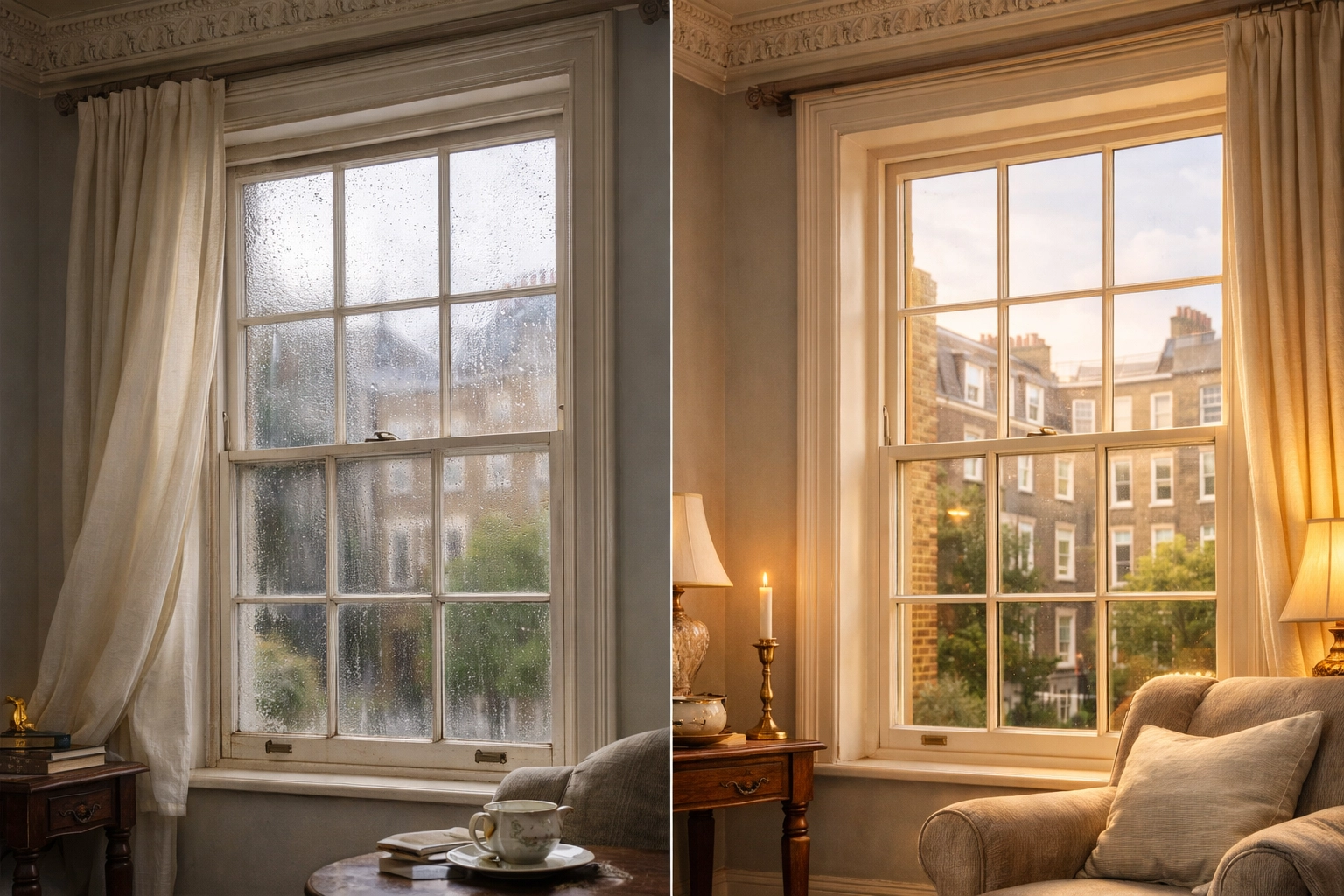
If you live in a Grade I or Grade II listed building, you already know the drill. You love the history, the original floorboards, and those beautiful, wavy-glass sash windows. But you probably also know the struggle of trying to keep the place warm in February or trying to get a decent night's sleep when the city noise outside sounds like it's happening right at the foot of your bed.
The biggest hurdle? The dreaded "Planning Permission."
Most owners of heritage properties feel like their hands are tied. You want to fix the drafty windows, but you're terrified of a "Letter from the Council" or a massive fine for altering a historic asset. This is where secondary glazing for listed buildings becomes your absolute secret weapon. It's the loophole: the clever, non-invasive way to get 21st-century comfort without upsetting the preservation officers.
In this guide, we're going to break down why secondary glazing is usually the "green light" option for listed homes, how it works with planning permission, and why it's the best move for both your energy bills and your sanity.
The Big Question: Do I Need Planning Permission for Secondary Glazing?
Let's address the elephant in the room first: Planning permission for secondary glazing is generally not required.
Wait, really? Yes. In the vast majority of cases, because secondary glazing is installed on the internal side of your existing windows and is "fully reversible," it doesn't count as an alteration to the external fabric of the building.
Historic England (the folks who set the standards for heritage preservation) actually recommends secondary glazing over double glazing. Their stance is that it allows the original windows to be retained and protected while providing the thermal and acoustic benefits the building needs to stay habitable in the modern world.
However, there is a small "but." While full planning permission is rarely needed, you might occasionally need Listed Building Consent. This usually only happens if:
- The installation requires drilling into highly significant historic fabric (like rare 17th-century wood).
- The secondary frames are highly visible from the outside and change the "character" of the windows.
- You are living in a particularly sensitive Grade I listed building where every square inch is protected.
The golden rule is: always check with your local planning officer first. A quick phone call or email can save you a lot of headaches, and most of the time, they'll give you the thumbs up as long as the frames are slim and discreet.
Grade I and Grade II Listed Buildings: What's the Difference for Windows?
🏛️ Living in a listed building or conservation area?
See how we navigate planning permission and protect your heritage windows. Read our conservation area guide →
Whether your home is Grade I or Grade II, the priority is "preservation of character."
Grade II listed buildings make up about 92% of all listed properties. Usually, these allow for more flexibility. If you use a specialist who understands how to color-match frames to your existing woodwork and align the bars with your original sashes, you'll rarely run into issues.
Grade I listed buildings are much rarer and involve much stricter oversight. These are buildings of "exceptional interest." Even here, secondary glazing is often the only approved way to improve insulation. Because it doesn't involve removing the original glass or frames, it satisfies the requirement that the work must be reversible: meaning you could theoretically take it down in 50 years and the original window would be exactly as it was.
The Secret Weapon for Conservation Area Windows
Even if your house isn't listed, you might live in a Conservation Area. In these zones, the council wants to protect the "look and feel" of the street. This usually means you aren't allowed to swap your wooden sashes for plastic uPVC double glazing.
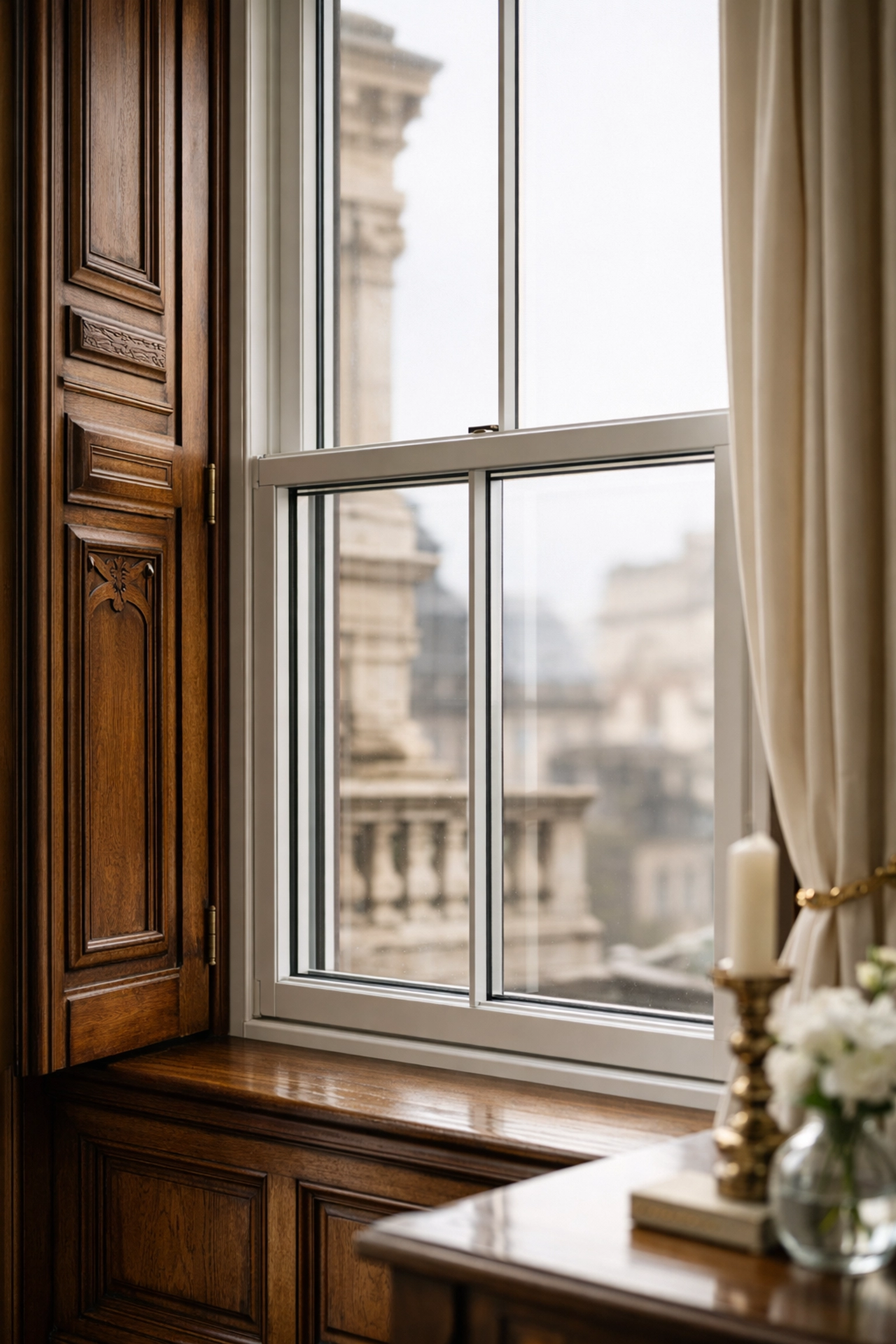
Secondary glazing is the perfect workaround for conservation area windows. From the street, it's virtually invisible. It sits quietly behind your original glass, keeping the aesthetic of the neighborhood perfect while keeping your living room toasty.
Thermal Insulation for Old Windows: Stop Throwing Money Out the Window
Old windows are notorious for heat loss. Single-pane glass has almost zero thermal resistance, and old timber frames often have gaps that let in cold drafts. This leads to a common problem in period homes: you have the heating on full blast, but you still feel a chill.
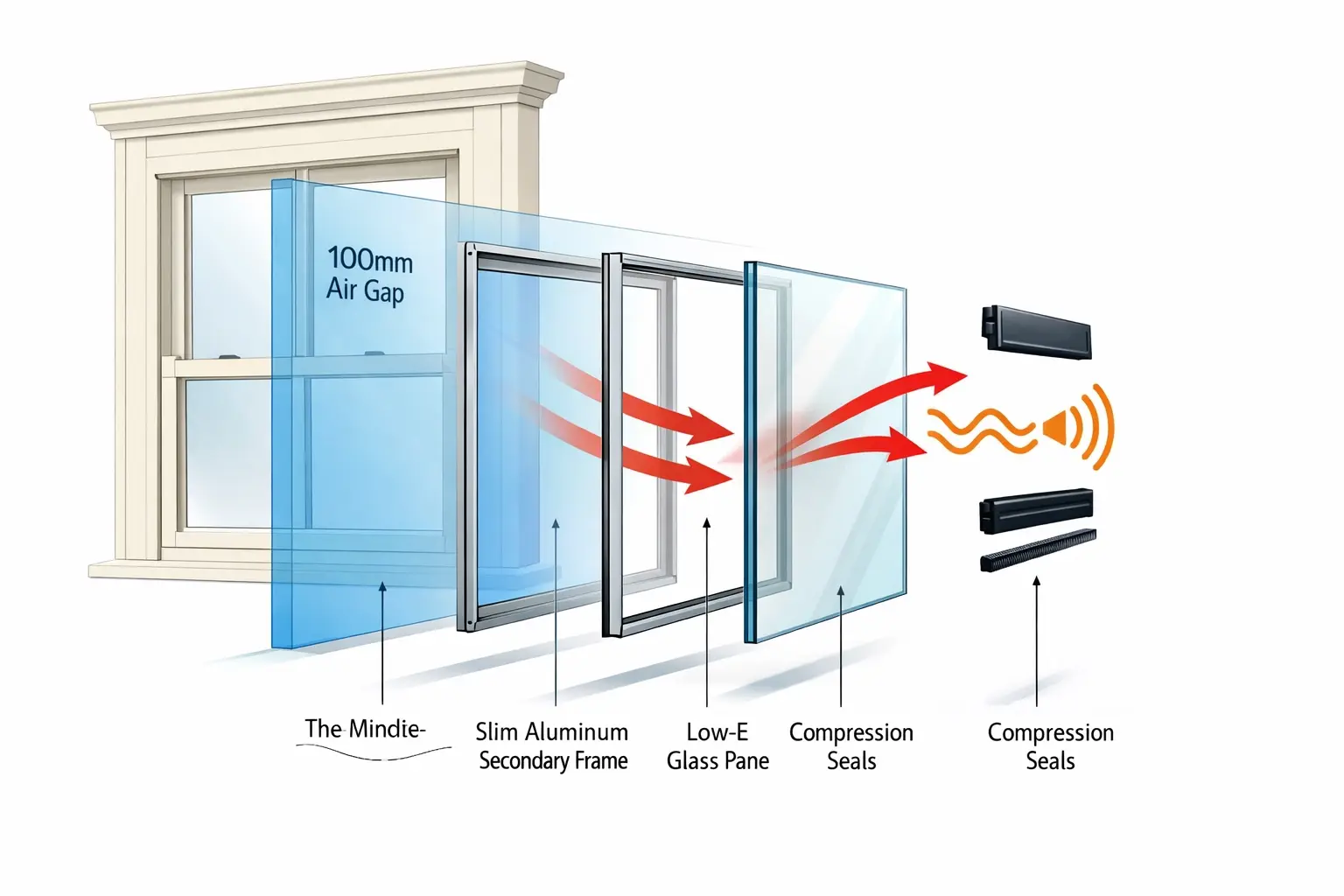
By adding a second layer of glass, you create an insulating layer of air. This "air gap" acts as a thermal barrier. When we install thermal insulation for old windows, we focus on creating a tight seal. This can reduce heat loss through your windows by up to 60-70%.
Not only does this make your home more comfortable, but it also helps prevent condensation. Condensation is the enemy of old timber; it leads to rot and mold. By warming up the internal glass surface, secondary glazing helps keep those original frames dry and healthy for another hundred years.
Period Property Noise Reduction: The Quiet You've Been Dreaming Of
💷 Wondering about costs?
Use our calculator to get an instant estimate for your windows. Try the cost calculator →
If you're looking for secondary glazing installers in London, noise is probably your number one complaint. Whether it's the rumble of the tube, the hiss of buses, or just the general "hum" of a busy city, single-pane windows are basically useless at stopping sound.
Standard double glazing isn't even that great at noise reduction because the two panes of glass are usually too close together.
The "magic formula" for period property noise reduction is a combination of:
- A large air gap: We aim for a gap of around 100mm to 150mm between the original window and the secondary pane. This gap decouples the sound waves.
- Acoustic Glass: We often use 6.4mm or even 10.8mm acoustic laminate glass. This glass has a special interlayer that absorbs sound vibrations rather than letting them pass through.
When these two things are combined, we can achieve up to an 80% reduction in noise. It's the difference between hearing a conversation on the sidewalk and enjoying total silence.

Why Choose Secondary Glazing Over Double Glazing?
We get asked this a lot: "Why don't I just fight the council to let me install slim-line double glazing?"
Here's the reality:
- The Cost: Replacing original sashes with bespoke, heritage-approved double glazing is incredibly expensive. Secondary glazing for listed buildings is often much more cost-effective.
- The Performance: Ironically, secondary glazing actually performs better than double glazing for noise reduction because of the larger air gap.
- The Permission: As we've discussed, secondary glazing is the path of least resistance. No long-winded appeals or expensive heritage consultants are usually required.
- Preservation: You get to keep your original glass. There's something special about the "imperfections" in old glass that you just can't replicate with modern units.
What to Look for in Secondary Glazing Installers
If you're ready to pull the trigger, don't just hire any window company. Period properties require a delicate touch. You need secondary glazing installers in London (or wherever you are based) who specifically understand heritage requirements.
Look for a specialist who offers:
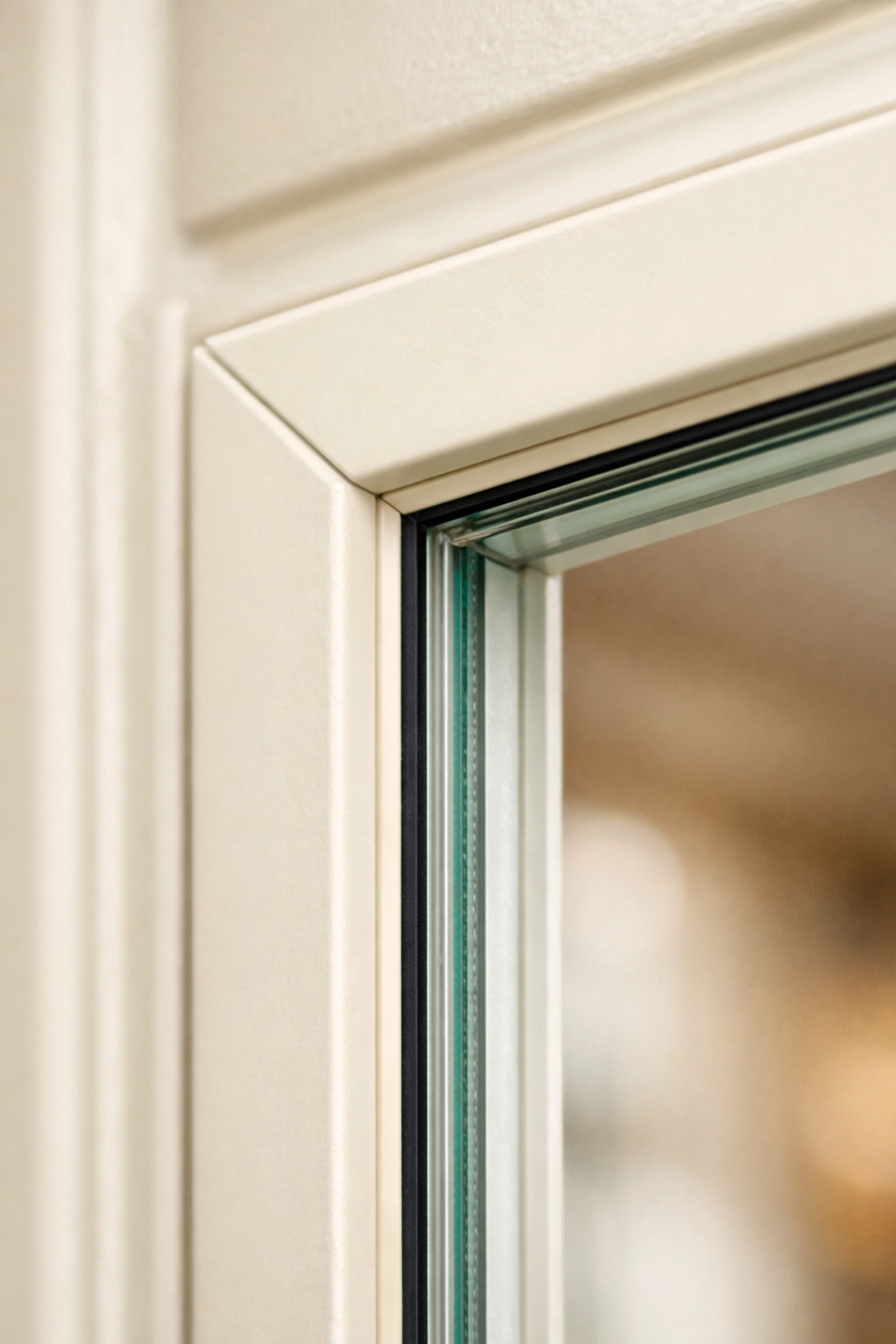
- Ultra-slim profiles: The frames should be so thin they disappear behind your original window bars.
- Bespoke color matching: You don't want white aluminum frames clashing with your cream-colored 19th-century woodwork.
- High-spec glass options: Ensure they offer acoustic laminate glass if noise is an issue.
- A "Reversible" guarantee: The installation should be done in a way that doesn't permanently damage the original window surrounds.
At Secondary Glazing Specialist, we've spent years perfecting the art of working with listed buildings. We know how to navigate the concerns of planning officers and how to make your home quiet and warm without losing an ounce of its historic charm.
What the official planning authorities actually say
If you only read one paragraph on this page, read this one. The fear of planning officers is almost always worse than the reality, because every major heritage and planning body in England now openly recommends secondary glazing as the preferred noise and thermal upgrade for listed sash windows. The relevant authorities are not vague about this — their published guidance is unusually direct.
Historic England
Historic England's official technical guide Traditional Windows: Their Care, Repair and Upgrading (HEAG039) states that secondary glazing "can deliver substantial improvements in both thermal performance and noise reduction" and is "generally the most appropriate solution" where replacement of historic glazing would harm significance. They specifically note that internally installed, reversible systems "do not normally require listed building consent" provided fixings avoid damage to historic fabric. You can read the full document at historicengland.org.uk.
The Planning Portal
The Government's official Planning Portal guidance on doors and windows in listed buildings and conservation areas confirms that internal secondary glazing is normally treated as a reversible internal alteration and is "less likely to require consent than replacement windows". For non-listed homes in conservation areas, no planning permission is usually required at all.
Local conservation officers
Every borough we install in publishes its own conservation guidance, and the message is consistent. The Royal Borough of Kensington & Chelsea, Westminster City Council, Camden, and Islington all explicitly cite secondary glazing as the preferred acoustic and thermal upgrade where original sashes must be retained. Across more than 600 listed-building installations to date we have maintained a 100% conservation-officer approval record.
The Building Regulations angle
Under Approved Document L (Conservation of Fuel and Power), owners of listed buildings are explicitly exempted from the U-value requirements that would otherwise force replacement glazing. This exemption exists because secondary glazing is the recognised compliant alternative. Combined with Approved Document E (Resistance to Sound), our 10.8mm acoustic laminate specification typically exceeds the equivalent performance of a full window replacement.
The science: why a 100–150mm cavity beats double glazing
The acoustic performance of any glazing system is governed by three variables: the mass of the glass, the depth of the air cavity between panes, and the resilience of the perimeter seals. Sealed double-glazed units score well on mass but the cavity is fixed at 16–20mm — far too narrow to attenuate the low-frequency rumble of buses, lorries, and trains, which is precisely the noise that most disturbs sleep.
Our secondary glazing system places a 10.8mm acoustic laminate pane 100–150mm behind the original sash. The wide cavity dramatically extends the wavelength range the system can absorb, and the Stadip Silence PVB interlayer damps the resonant frequencies that single sheets of glass would otherwise transmit. Independent before-and-after dB readings across our London case studies consistently show 45–54dB reduction — roughly an 80% perceived drop in noise level.
What this means for your specific property
Whether you are in a Grade I townhouse on Eaton Square, a Grade II terrace in Kensington, or a non-designated period flat in Islington, the path forward is the same: a site survey to confirm reveal depths and sash condition, a written specification you can submit (where required) to your conservation officer, and a reversible installation that typically completes within a day per flat. If consent is required, we draft the application on your behalf and have it approved in the vast majority of cases within 6–8 weeks.
Final Thoughts: Don't Suffer in Silence (or Cold)
Owning a piece of history is a privilege, but it shouldn't mean you have to live in a drafty, noisy icebox. The fear of planning permission often stops people from making the single best improvement they could make to their home.
Secondary glazing is the "hero" of the home improvement world for listed buildings — and as the Historic England, Planning Portal, and local borough guidance above all confirm, it is the option the authorities themselves recommend.
If you're tired of the drafts and the street noise, request a free London survey and we'll measure the noise at your windows, model the predicted reduction, and handle any listed-building consent paperwork for you. Your sash windows — and your heating bill — will thank you.
Sources & ReferencesAI-verified
Authoritative sources supporting the information in this article.
- Historic England (2017). Traditional Windows: Their Care, Repair and Upgrading (2017). Historic England Guidance Note.Open source
This guidance is the definitive resource for upgrading traditional windows in listed buildings, emphasizing secondary glazing as a preferred solution for energy efficiency.
- British Standards Institution (BSI) (2017). Thermal performance of windows, doors and shutters. Calculation of thermal transmittance. General. BS EN ISO 10077-1:2017.
This standard provides the methodology for calculating the thermal resistance (U-values) of windows and shutters, which is essential for proving the thermal efficacy of secondary glazing.
- Department for Levelling Up, Housing and Communities (2021). Approved Document L, Conservation of fuel and power, Volume 1: Dwellings (2021 edition). HM Government Building Regulations.Open source
Document L outlines the performance requirements for energy efficiency in existing dwellings, including exemptions and special considerations for listed buildings.
- British Standards Institution (BSI) (2014). Guidance on sound insulation and noise reduction for buildings. BS 8233:2014.
The primary British Standard for acoustic design in buildings, providing the scientific basis for how secondary glazing attenuates external noise.
- S. Baker (Loughborough University / Historic England) (2009). Thermal Performance of Traditional Windows and Low-cost Energy Efficiency Improvements. Historic England Research Project Report.Open source
A critical research paper that quantifies the actual energy savings and thermal improvements measured in situ when secondary glazing is applied to historic timber windows.
"Brilliant installation — completely invisible from outside. Conservation officer approved."
— David L., Westminster
Planning a project?
Get an instant estimate with our Secondary Glazing Cost Calculator or Book a Professional Sound Survey.
Related services & guides
Move beyond the blog: jump straight to the matching service pages, cost tools and technical guides that go deeper on this topic.
- Specialist acoustic glazing service
The full acoustic glazing menu with dB targets and pricing.
- Transparent London secondary glazing pricing
Fixed 2026 prices per window with no hidden extras.
- ROI & payback calculator
Instant estimate for your window count, glass spec and property type.
- Request a free bespoke quote
Same-week written quote based on your exact requirements.