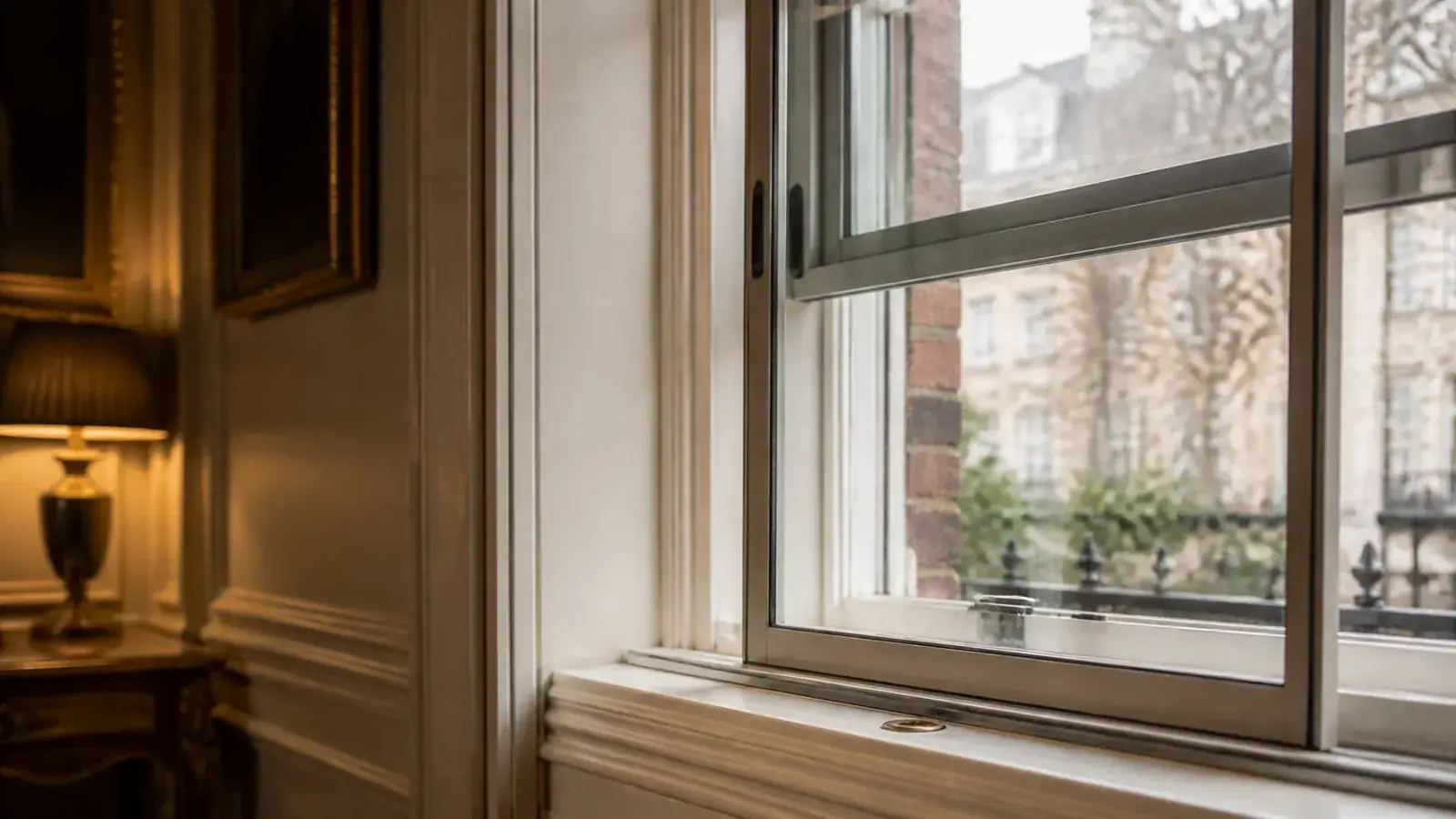
Secondary Glazing for London Offices: Boost Productivity & Eliminate Street Noise
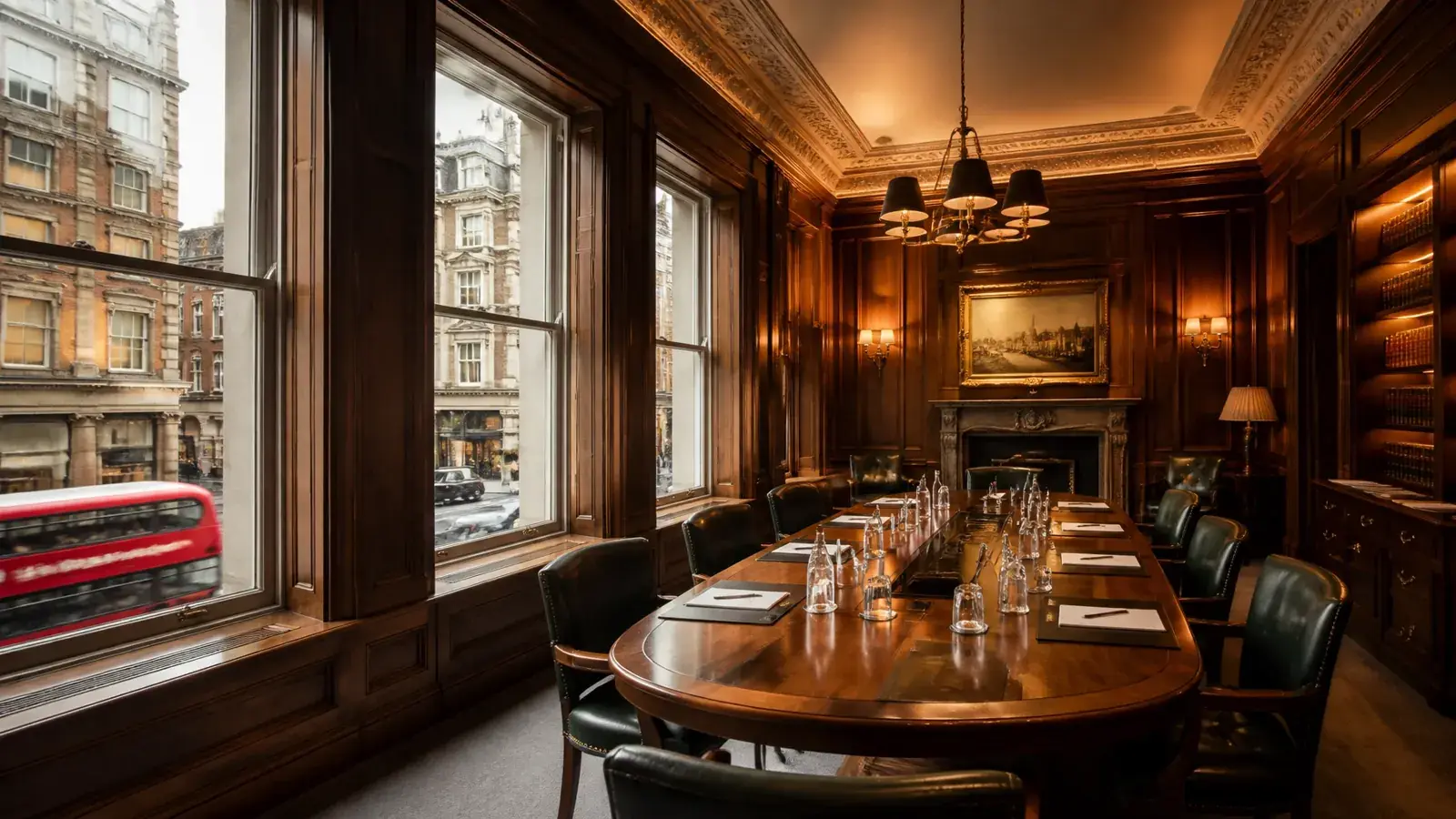
For occupiers of London commercial real estate — whether managing a boutique law firm in Holborn, a financial consultancy in the City, or creative headquarters in Mayfair — the modern urban environment presents a relentless acoustic assault. Sirens wailing down arterial corridors, heavy diesel bus fleets idling at traffic lights, and continuous civil construction create ambient exterior noise levels regularly exceeding 75 to 80 decibels (dB).
While businesses invest heavily in ergonomic furniture, high-speed fibre connectivity and sophisticated HVAC systems, one foundational environmental factor is frequently overlooked: acoustic infiltration. Standard single glazing and ageing double-glazed units offer minimal resistance to low-frequency urban rumble. The consequence is a compromised workspace where video conferences are disrupted, confidential client discussions lack acoustic privacy, and employee cognitive performance steadily degrades.
This technical paper examines the physiological impact of urban noise on office productivity, evaluates the engineering failure of standard window configurations, and outlines how high-performance commercial secondary glazing delivers an airtight acoustic envelope capable of reducing external noise by up to 54dB.
The productivity case: cognitive load and decibel thresholds
To understand the economic justification for acoustic remediation, decision-makers must evaluate noise not merely as an annoyance, but as a quantifiable drain on human capital.
According to workplace acoustics research, continuous background noise exceeding 50dB inside an office environment actively impairs concentration on complex analytical tasks. When employees are subjected to intermittent peak noises such as emergency sirens or pneumatic drills, the autonomic nervous system triggers a micro-stress response. This interruption forces frequent cognitive re-calibration, increasing error rates and mental fatigue.
The decibel scale in professional context
| Environment / noise source | Sound pressure level (dB) | Impact on office function |
|---|---|---|
| Quiet private office / library | 30–35 dB | Optimal for deep focus, legal drafting and strategic planning. |
| Standard open-plan office | 45–50 dB | Acceptable conversational level, mild background hum. |
| Busy London street frontage | 70–80 dB | Severe disruption; makes phone calls difficult, elevates cortisol levels. |
| Unmitigated urban intersection | 85+ dB | Intolerable acoustic barrier; degrades speech intelligibility entirely. |
Bridging the gap between a chaotic London street and an optimal 30–35 dB internal workspace requires acoustic attenuation of 40 to 50dB. Standard double-glazed replacement units, typically yielding a disappointing 28–34dB reduction, fail to bridge this deficit — particularly across the low-frequency bass ranges generated by heavy commercial traffic.
The engineering solution: 10.8mm acoustic laminate and precision air gaps
🏛️ Living in a listed building or conservation area?
See how we navigate planning permission and protect your heritage windows. Read our conservation area guide →
Achieving professional-grade soundproofing in commercial properties requires a departure from standard fenestration approaches. Simply thickening glass is insufficient because of coincidence dips. True noise mitigation relies on decoupling and mass-air-mass resonance control.
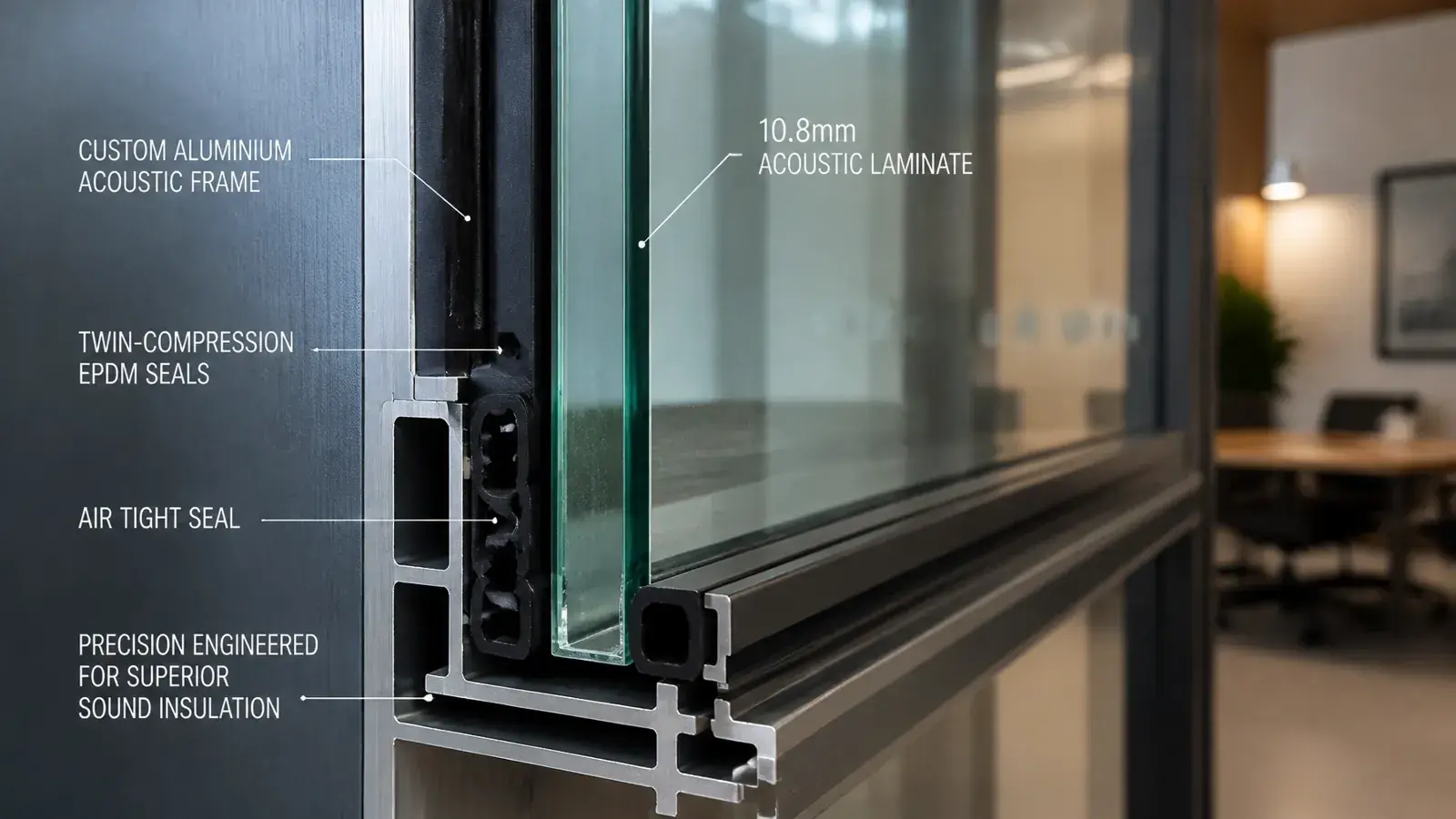
Our commercial systems are engineered around three core technical pillars:
- 10.8mm acoustic laminated glass: unlike monolithic panes that vibrate in unison when struck by sound waves, acoustic laminate incorporates a polyvinyl butyral (PVB) viscoelastic interlayer that shears sound wave energy and converts it into trace thermal energy.
- The precision 100–150mm air gap: sound waves lose momentum when traversing media of differing densities. An independent internal secondary frame separated from the primary window by a generous cavity traps, reflects and neutralises low-frequency energy within the dead air space.
- Twin-compression EPDM seals: acoustic energy escapes through the smallest aperture. Automotive-grade twin-compression EPDM rubber seals establish an airtight perimeter that prevents flanking noise transmission.
For large boardrooms or executive offices requiring flexible access, our hinged secondary glazing systems provide robust thermal and acoustic insulation without compromising operational utility.
Listed and historic office buildings: conservation and planning law
A significant proportion of London's premier corporate real estate sits within designated conservation areas or Grade I and II* listed structures — Mayfair, St James's, Lincoln's Inn and the City of London. For law firms, boutique investment funds and architectural practices occupying period townhouses, external window replacement is strictly prohibited by local planning authorities.
- Zero external alteration: because the system is installed entirely on the interior side of the reveal, the external historic streetscape remains unaltered.
- Conservation approval: our engineering methodology maintains a full conservation officer approval record, allowing historic institutions to modernise their indoor acoustic climate without triggering planning disputes or violating lease covenants.
- Reversibility: the internal frame can be demounted without damaging the historic fabric of the original timber sash or masonry reveals.
For a deeper dive into regulatory compliance, review our dedicated listed building solutions.
Minimal disruption and phased installation
For corporate facilities managers and operations directors, retrofit projects are frequently delayed by concerns over operational downtime. Displacing staff or halting client-facing meetings during a building-wide upgrade is financially prohibitive.
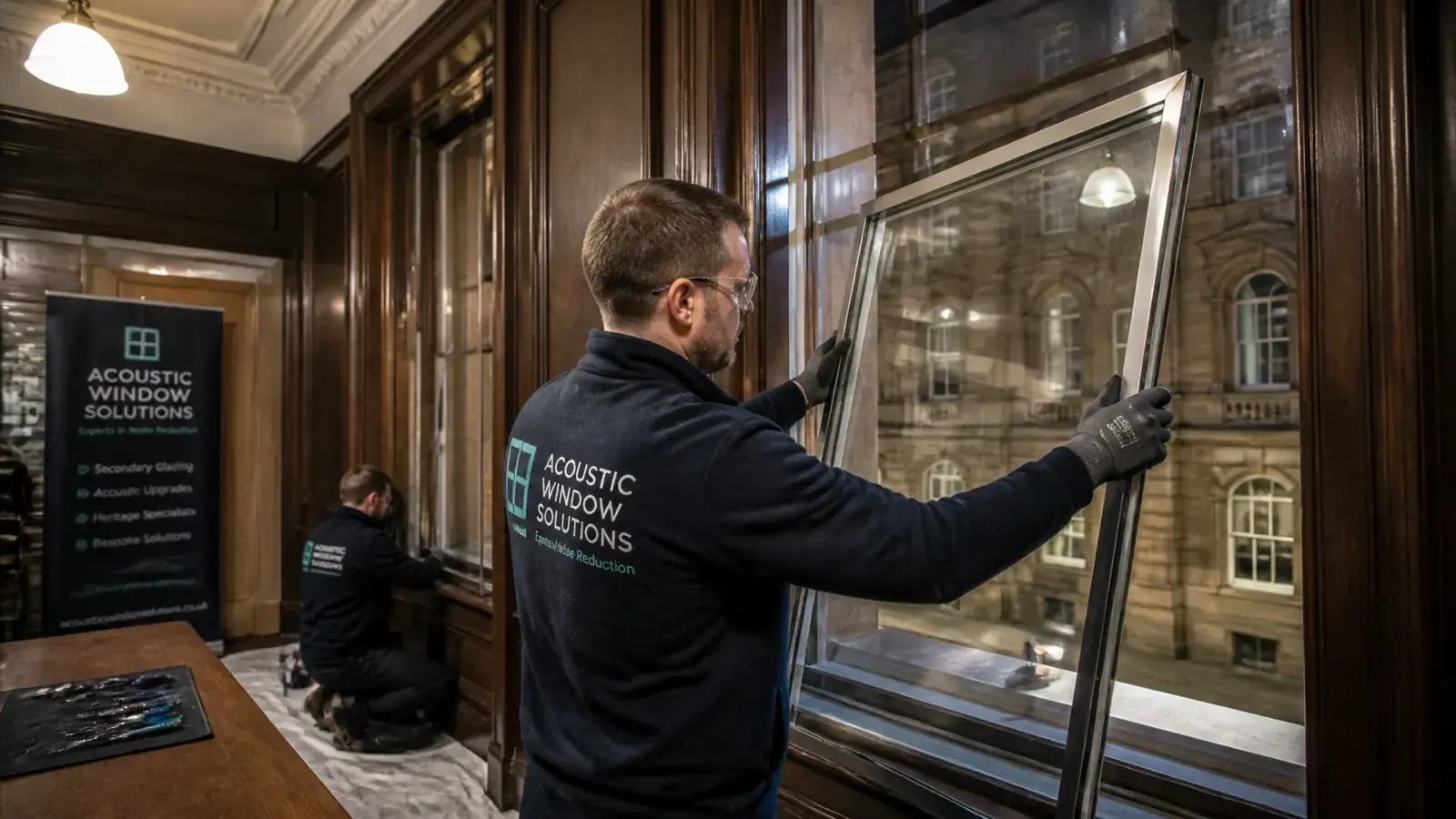
- Off-hours execution: surveys, laser template measurements and final fittings are routinely scheduled during evenings, weekends or phased rolling intervals.
- Dry trades installation: the process requires zero wet trades — no plastering, brickwork or scaffolding — eliminating dust, debris and structural disruption.
- Rapid deployment: bespoke frames are pre-manufactured off-site to exact millimetre tolerances, ensuring on-site installation is swift, clean and quiet.
Case study: a Holborn legal practice
💷 Wondering about costs?
Use our calculator to get an instant estimate for your windows. Try the cost calculator →
- The initial problem: external sound pressure levels at the primary facade registered 78 dB from constant bus routes and emergency sirens. Fee-earners reported frequent interruptions during client conference calls, and tribunal preparation sessions were routinely stalled by street noise.
- The intervention: custom secondary glazing featuring 10.8mm acoustic laminate glass set within a 125mm precision air gap, sealed with twin-compression EPDM gaskets across 14 executive offices and boardrooms.
- The verified outcome: post-installation acoustic testing recorded internal levels of 24 dB — a 54dB reduction. Senior partners reported improved telephone transcription accuracy, enhanced confidentiality during sensitive depositions and a noticeable reduction in afternoon staff fatigue.
Actionable guidance and commercial evaluation
- Conduct an acoustic baseline audit: measure ambient decibel levels across street-facing versus rear-facing rooms during peak morning traffic hours.
- Define confidentiality and speech privacy targets: establish whether meeting rooms meet recognised standards for acoustic privacy.
- Request a technical specification review: ensure prospective suppliers quote verified decibel reduction metrics (targeting 45dB or better) rather than generic manufacturer claims.
- Schedule a professional site survey: engage acoustic engineers who understand the structural nuances of London's commercial architecture.
To discuss an upcoming commercial refit, request an acoustic assessment or explore bulk project quotations, visit our commercial projects service hub or read the wider commercial secondary glazing guide.
Frequently Asked Questions
Solutions covered in this guide
Go straight to the dedicated London landing page for the system or property type discussed above.
- Traffic noise secondary glazingSpecs matched to road-noise frequency profiles on London’s busiest streets.
- Secondary glazing for sash windowsPurpose-built systems for London box sash windows — specs, prices and heritage detailing.
- Sliding secondary glazingHorizontal and vertical sliders for sash and casement windows — up to 51dB with full ventilation access.
- Secondary glazing for listed buildingsFully reversible, consent-friendly specifications for Grade I and Grade II properties.
Sources & References
Authoritative sources supporting the information in this article.
- British Standards Institution (2014). BS 8233:2014 Guidance on sound insulation and noise reduction for buildings. BSI Group.Open source
This is the definitive British standard for sound insulation in buildings, providing the criteria for acceptable noise levels in office environments.
- Saint-Gobain Glass (2021). Glass and Noise Control: The Stadip Silence Technical Guide. Saint-Gobain Glass UK Technical Manual.Open source
Provides technical data on how secondary glazing configurations (using varied glass thicknesses) can achieve acoustic reductions exceeding 50dB.
- Department for Levelling Up, Housing and Communities (2021). Approved Document L, Volume 2: Buildings other than dwellings. HM Government Building Regulations.Open source
Essential for addressing thermal performance requirements (U-values) in existing office buildings and the role of secondary glazing in meeting Part L compliance.
- Historic England (2017). Traditional Windows: Their Care, Repair and Upgrading (Section 6: Secondary Glazing). Historic England Guidance Note.Open source
The primary guidance for London offices located in listed buildings or conservation areas, where secondary glazing is the preferred method for noise reduction without altering the facade.
- BRE (Building Research Establishment) (2012). Information Paper IP 10/12: The energy and acoustic performance of secondary glazing. BRE Trust Report.Open source
A comprehensive study on the efficacy of secondary glazing for improving both thermal efficiency and acoustic privacy in commercial structures.
"We can actually sleep now. The 10.8mm glass made all the difference."
— Sarah M., Kensington
Planning a project?
Get an instant estimate with our Secondary Glazing Cost Calculator or Book a Professional Sound Survey.
Related services & guides
Move beyond the blog: jump straight to the matching service pages, cost tools and technical guides that go deeper on this topic.
- Specialist acoustic glazing service
The full acoustic glazing menu with dB targets and pricing.
- Transparent London secondary glazing pricing
Fixed 2026 prices per window with no hidden extras.
- ROI & payback calculator
Instant estimate for your window count, glass spec and property type.
- Request a free bespoke quote
Same-week written quote based on your exact requirements.
Related Articles
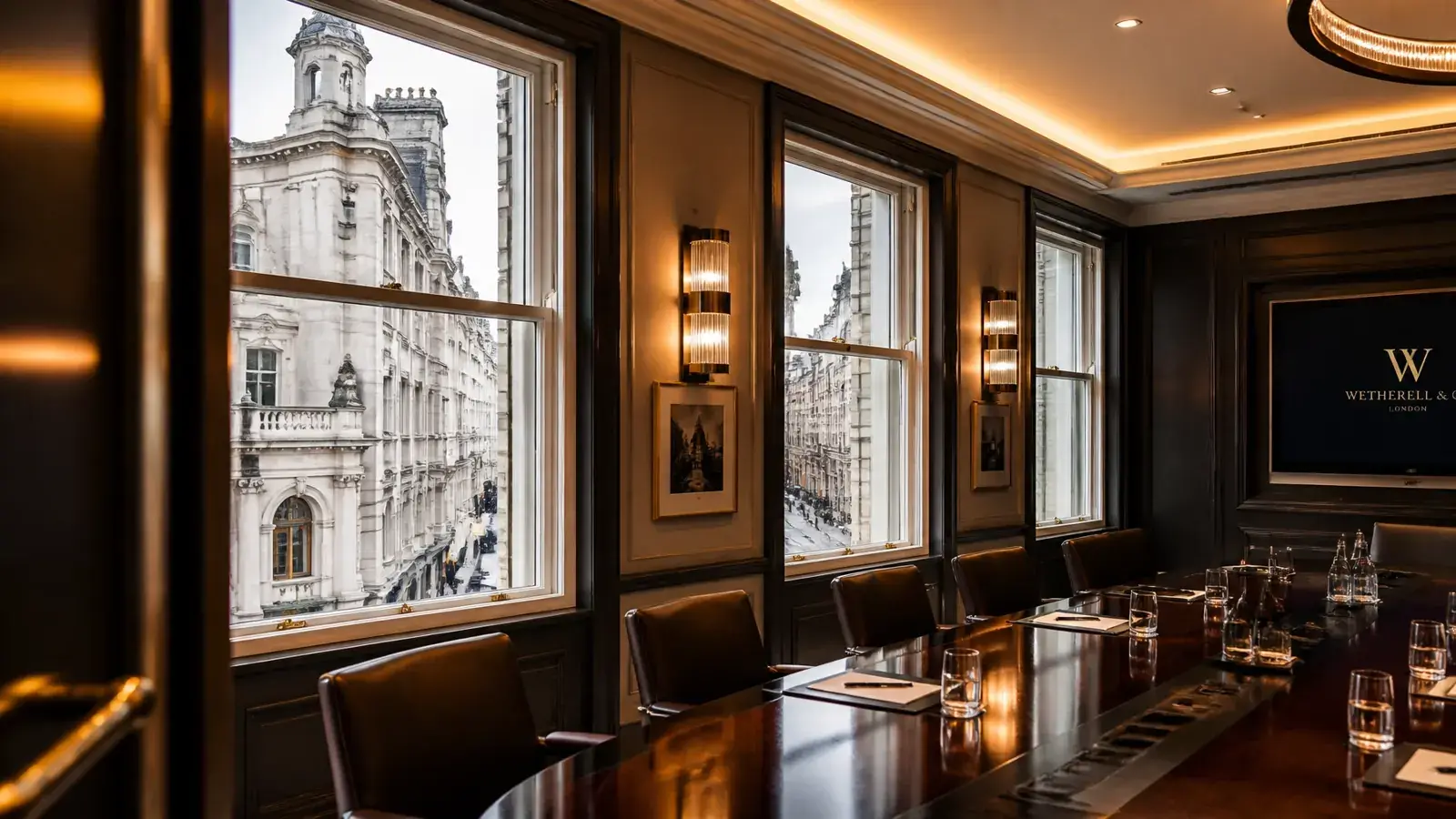
Commercial Secondary Glazing London: Complete Guide for Offices, Hotels & Schools
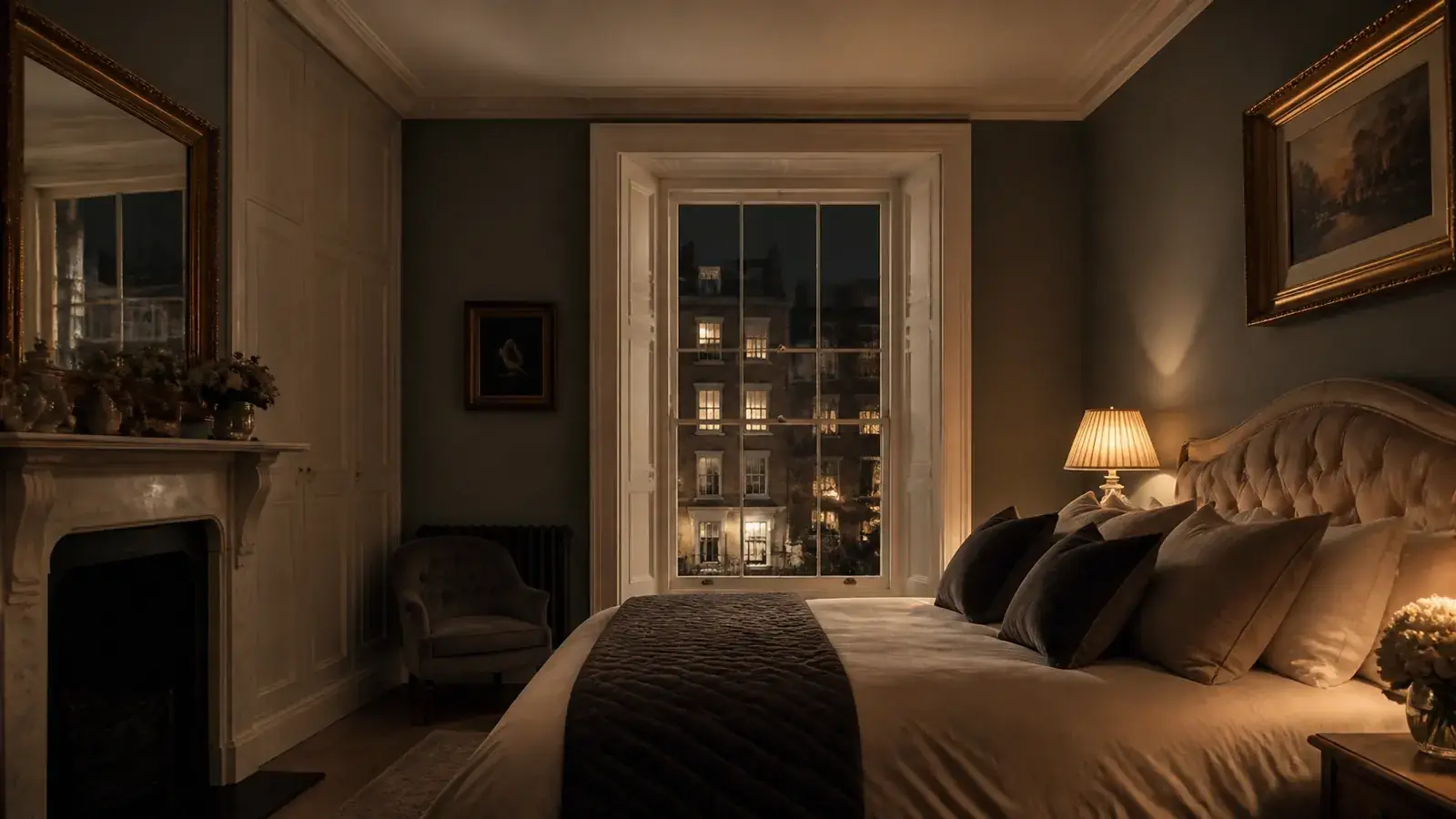
Secondary Glazing for Bedrooms: The Soundproofing Treatment for Better Sleep