Secondary Glazing Cost London 2026: Real Prices by Property Type

For London homeowners, landlords and property managers, the question “how much does secondary glazing cost?” rarely has a single answer. A compact casement window in a modern flat is a very different project from a tall sash window in a listed Kensington townhouse.
The final price depends on the glass specification, window dimensions, opening style, access, heritage detailing and the number of windows being treated. This guide sets out the current indicative starting prices available from Secondary Glazing Noise Reduction, explains the main cost variables and shows how to budget without confusing a headline price with a confirmed quotation.
Section 1: Current secondary glazing prices in London
The current indicative installed prices are:
| Package | Indicative price from | Typical purpose | Warranty |
|---|---|---|---|
| Standard | £450 per window | A practical secondary-glazing specification for suitable residential windows | 10 years |
| Premium | £550 per window | Enhanced specification where acoustic, finish or operational requirements are more demanding | 25 years |
| Heritage | £650 per window | Bespoke treatment for period, listed or conservation-area properties | 25 years |
These are indicative prices from £450, £550 and £650 per window respectively, subject to survey. They should be used for early-stage budgeting rather than treated as a fixed quotation.
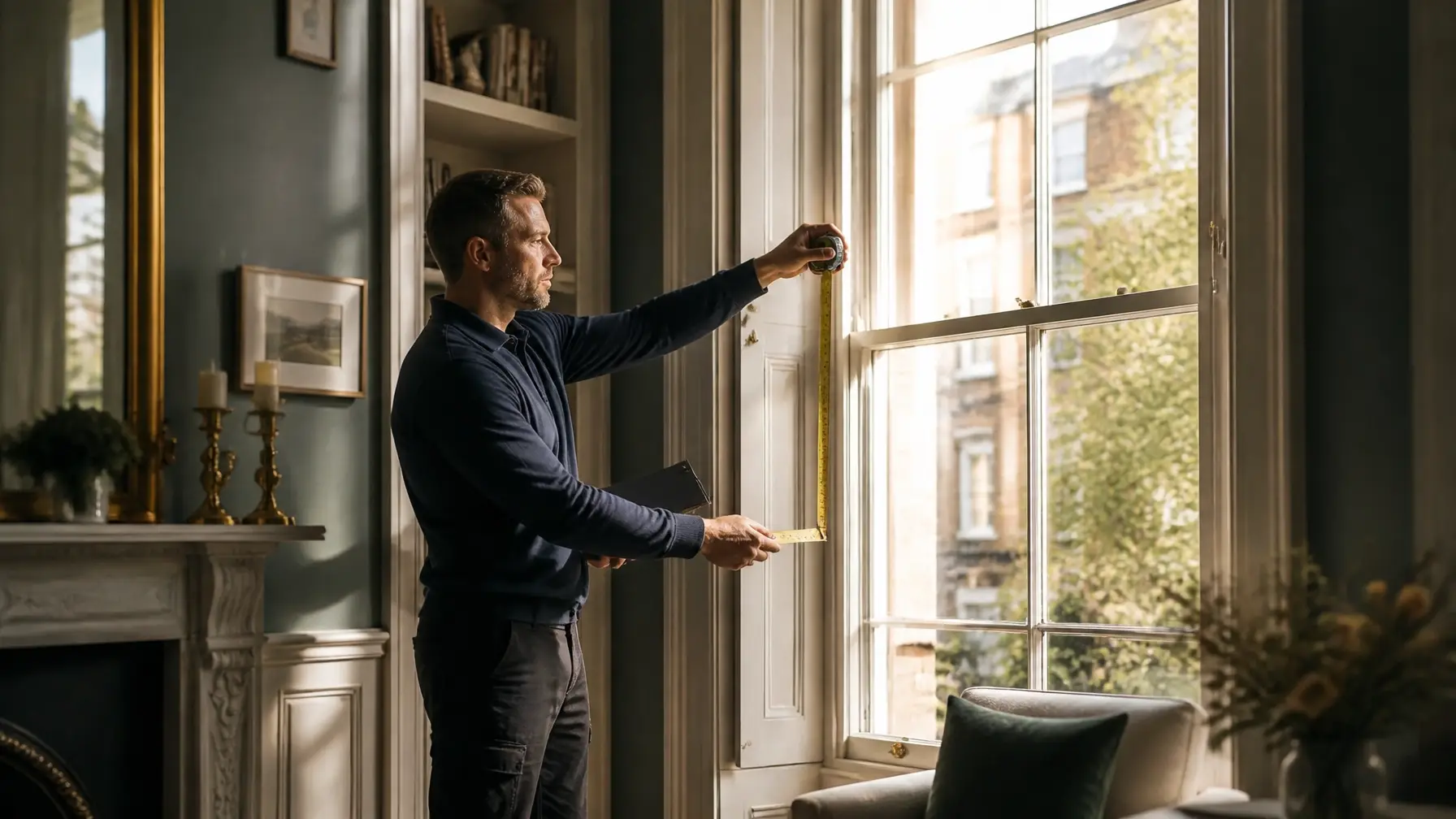
A survey is important because the installer must assess the existing window, available clearance, frame condition, access and the most appropriate opening arrangement. Two windows with similar external dimensions can require different levels of work.
For a detailed breakdown of the available packages, see our secondary glazing pricing guide.
Section 2: Budgeting by property type
🏛️ Living in a listed building or conservation area?
See how we navigate planning permission and protect your heritage windows. Read our conservation area guide →
2.1 London flats
A flat with straightforward access and several similarly sized windows may be relatively efficient to survey and install. A useful starting point is:
- Standard: from £450 per window
- Premium: from £550 per window
- Heritage: from £650 per window
For example, four windows at the Standard starting price would produce a simple planning figure of £1,800, before any site-specific adjustments. Four Premium windows would start at £2,200, while four Heritage windows would start at £2,600.
These calculations are not quotations. Access restrictions, unusual reveals, large panes or communal-building requirements may affect the final price.
2.2 Victorian and Edwardian terraces
Terraced properties often contain original sash windows, narrow reveals and decorative interior detailing. The secondary glazing may need to be designed around:
- Vertical sliding sash mechanisms
- Existing shutters or architraves
- Uneven timber frames
- Limited fixing positions
- Deep window reveals
- The need to retain the original external appearance
The Standard starting price may be suitable for some straightforward openings, but Premium or Heritage specifications are often considered where the window is prominent, the property has conservation constraints or acoustic performance is a primary objective.
2.3 Listed buildings and conservation areas
In a listed building, the cost is not solely about glass and framing. The design may need to respect the character of the original window and avoid unnecessary alteration to historic fabric.
A Heritage package starts from £650 per window, subject to survey. The final price may be influenced by:
- Sash proportions and sightlines
- Existing glazing bars
- Internal shutters
- Concealed or discreet fixings
- Bespoke frame finishes
- Access to upper floors
- Requirements arising from the building’s significance
Secondary glazing is not automatically exempt from planning or listed-building controls. Owners should confirm the position with their local authority or conservation officer before proceeding.
We maintain a planning-aware track record on listed-building submissions. This refers to submitted projects and should not be interpreted as a guarantee that every future application will be approved.
2.4 Large townhouses and bay windows
Bay windows, tall openings and grouped windows require more careful measurement than a standard single opening. A bay may involve several angles, different frame depths and restricted access.
For these properties, the per-window starting price is still a useful first reference, but the quote may be affected by:
- Multiple connected sections
- Larger glass areas
- Structural movement in older frames
- Complex corner junctions
- Difficult installation positions
- The need to coordinate several opening styles
A survey is particularly valuable before deciding whether to treat every window or prioritise the rooms most affected by traffic, sirens or late-night activity.
Section 3: What changes the final secondary glazing cost?
3.1 Window size
Larger panes generally require more material and more robust framing. They may also need a different opening configuration to remain practical for cleaning and ventilation.
3.2 Glass specification
The glass is a major part of the performance assessment. Acoustic laminate glass, including a 10.8mm acoustic laminate specification where suitable, is different from a basic clear pane.
Our specialist systems can reduce external noise by up to 54dB in suitable configurations. Actual performance depends on the existing window, glass specification, air-gap depth, installation quality, room construction and noise frequency.
That wording matters. Decibels are logarithmic, so a numerical reduction should not be translated into a universal percentage or guaranteed result for every room.
3.3 Air-gap depth
A carefully considered air gap helps separate the existing window from the secondary unit. Our systems focus on a precision 100–150mm air gap where the building and window reveal allow it. The available depth must be checked during the survey.
3.4 Opening style
Lift-out, hinged, sliding and fixed arrangements each have different implications for operation, cleaning, ventilation and cost. A simple lift-out panel may be appropriate in one room, while a vertical slider may be more suitable behind an original sash window.
3.5 Access and installation conditions
Upper-floor access, narrow staircases, restricted parking, occupied properties and commercial working hours can all affect the practical installation process. These factors should be discussed before a quotation is accepted.
3.6 Number of windows
A larger project may allow the survey and installation process to be planned more efficiently, but it should not be assumed that every window will have the same price. A London townhouse may contain a combination of small casements, large sashes, bays and secondary openings.
Section 4: Standard, Premium or Heritage?
The correct package depends on the building and the objective.
Standard
Standard is the entry specification, starting from £450 per window. It may suit simpler openings where the primary requirement is a professionally installed secondary-glazing solution without the additional detailing associated with higher specifications.
Premium
Premium starts from £550 per window and may be considered where the property requires a more developed specification, stronger acoustic focus or a refined finish.
Heritage
Heritage starts from £650 per window and is intended for projects where preserving the appearance and character of the original building is central to the assessment.
Warranty length depends on the selected specification; Standard installations carry a 10-year warranty, while Premium and Heritage packages include a 25-year warranty.
Section 5: Secondary glazing versus replacement double or triple glazing
💷 Wondering about costs?
Use our calculator to get an instant estimate for your windows. Try the cost calculator →
| Consideration | Secondary glazing | Replacement double glazing | Replacement triple glazing |
|---|---|---|---|
| Original external window | Usually retained | Removed or substantially altered | Removed or substantially altered |
| Heritage suitability | Often considered for period properties, subject to approval | May be restricted by listing or conservation controls | Often more visually and technically intrusive |
| Acoustic design | Can be specified around the existing window and air gap | Depends on the replacement frame and glass unit | Can provide strong performance, but requires full replacement |
| Installation scope | Internal secondary unit and associated finishing | Removal, new frame, making good and external finishing | More substantial replacement and structural coordination |
| Cost certainty | Dependent on survey and existing window | Dependent on frame, opening and making-good requirements | Dependent on larger specification and installation scope |
| Main advantage | Retains the original window while improving comfort | New complete window system | Maximum replacement specification where permitted |
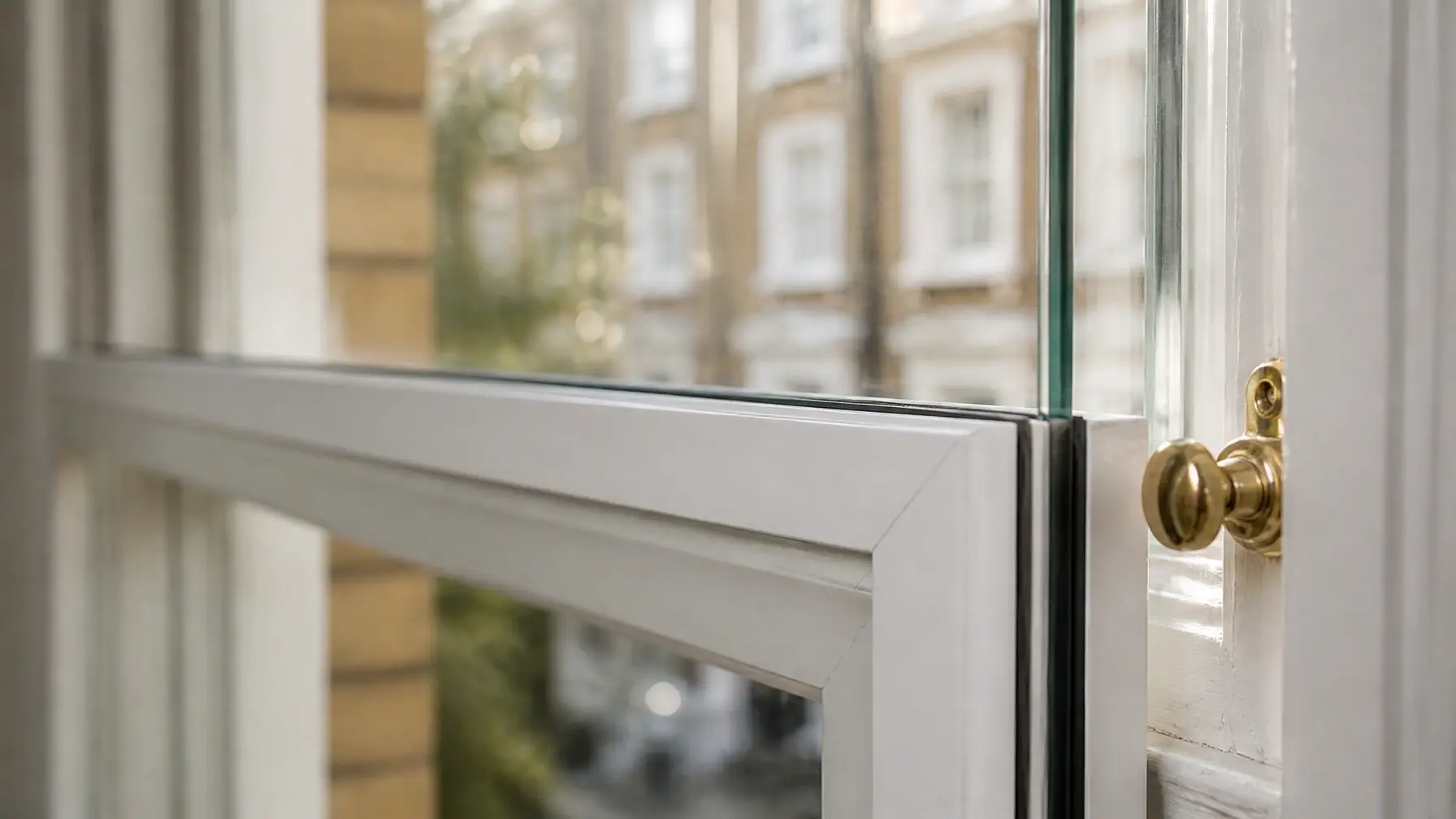
A direct price comparison is not always meaningful. Replacing a window can involve planning considerations, removal of the original frame, external making-good and new finishes. Secondary glazing takes a different approach: it adds a carefully fitted internal layer while retaining the original window.
For a period property, the relevant question is not simply “which option is cheapest?” It is also whether the proposed work is permitted, compatible with the building and appropriate for the existing window.
Section 6: How to budget the work in stages
If the full property cannot be treated at once, use a measured prioritisation plan:
- Start with the bedroom or main living room. These rooms often reveal the practical acoustic and comfort benefits most clearly.
- Prioritise the loudest elevation. Road-facing, nightlife-facing or transport-facing windows may deserve attention before quieter rooms.
- Group similar windows. Treating matching openings together may simplify design and installation planning.
- Allow for survey-led changes. Keep a contingency because the existing frame and access conditions cannot be assessed accurately from photographs alone.
- Compare packages by objective. Do not select a specification solely on the lowest initial price if heritage detailing or acoustic performance is the main requirement.
Our residential secondary glazing service explains how the system can be assessed for London homes. For listed or historically sensitive properties, see our heritage and listed-building service.
Section 7: Questions to ask before accepting a quote
A useful quotation should make the specification understandable. Ask:
- Is the price per window or per opening?
- Is the figure indicative or fixed?
- What glass specification is proposed?
- What air-gap depth is achievable?
- Which opening style will be used?
- Are survey, delivery and installation included?
- Are access requirements or making-good costs excluded?
- How will the original window be protected?
- Is the design suitable for a listed building or conservation area?
- Which warranty applies to the selected package?
- How will performance limitations be explained?
- Will the final quotation identify each window separately?
For technical background on noise, glazing and acoustic performance, read our noise-reduction guide. If you own a period property in West London, our Kensington secondary glazing service provides a useful local starting point.
Verdict: an assessment is more valuable than a headline price
The current London starting points are clear:
- Standard: from £450 per window
- Premium: from £550 per window
- Heritage: from £650 per window
The final cost depends on the building, not simply the number printed on a price list. A proper survey identifies the window condition, glass requirement, opening style, air gap, access and heritage considerations before the specification is confirmed.
For a property where the original windows must remain, secondary glazing can be an intelligent way to improve acoustic comfort while retaining the building’s character. To obtain a project-specific assessment, request a quotation for your London property.
Frequently Asked Questions
Solutions covered in this guide
Go straight to the dedicated London landing page for the system or property type discussed above.
- Secondary glazing for sash windowsPurpose-built systems for London box sash windows — specs, prices and heritage detailing.
- Sliding secondary glazingHorizontal and vertical sliders for sash and casement windows — up to 51dB with full ventilation access.
- Lift-out secondary glazingThe most discreet, highest-sealing option for rarely-opened heritage windows.
- Secondary glazing for listed buildingsFully reversible, consent-friendly specifications for Grade I and Grade II properties.
Sources & References
Authoritative sources supporting the information on this page.
- Historic England (2016). Energy Efficiency and Historic Buildings: Secondary Glazing for Windows. Historic England.Open source
Technical advice on choosing and installing secondary glazing in older and listed buildings.
- British Standards Institution (2014). Guidance on sound insulation and noise reduction for buildings (BS 8233:2014). BSI Standards.
Sets the recommended internal noise levels for bedrooms and living rooms used to judge how much glazing performance a home needs.
- Greater London Authority (2021). The London Plan 2021, Policy D14: Noise. Mayor of London.Open source
The London planning policy on reducing, managing and mitigating noise in homes across the capital.
- HM Government (2021). Approved Document L: Conservation of fuel and power. The Building Regulations 2010.Open source
The statutory guidance on the thermal performance of windows and building fabric in England.
- UK Parliament (2015). The Energy Efficiency (Private Rented Property) (England and Wales) Regulations 2015. legislation.gov.uk.Open source
Sets the minimum EPC standards for privately rented homes, relevant to landlords improving windows.
"Brilliant installation — completely invisible from outside. Conservation officer approved."
— David L., Westminster
Planning a project?
Get an instant estimate with our Secondary Glazing Cost Calculator or Book a Professional Sound Survey.
Related services & guides
Move beyond the blog: jump straight to the matching service pages, cost tools and technical guides that go deeper on this topic.
- Specialist acoustic glazing service
The full acoustic glazing menu with dB targets and pricing.
- Transparent London secondary glazing pricing
Fixed 2026 prices per window with no hidden extras.
- ROI & payback calculator
Instant estimate for your window count, glass spec and property type.
- Request a free bespoke quote
Same-week written quote based on your exact requirements.
Related Articles
Secondary Glazing for Bedrooms: The Soundproofing Treatment for Better Sleep
Sliding Secondary Glazing London: The Complete Guide to the Most Popular System