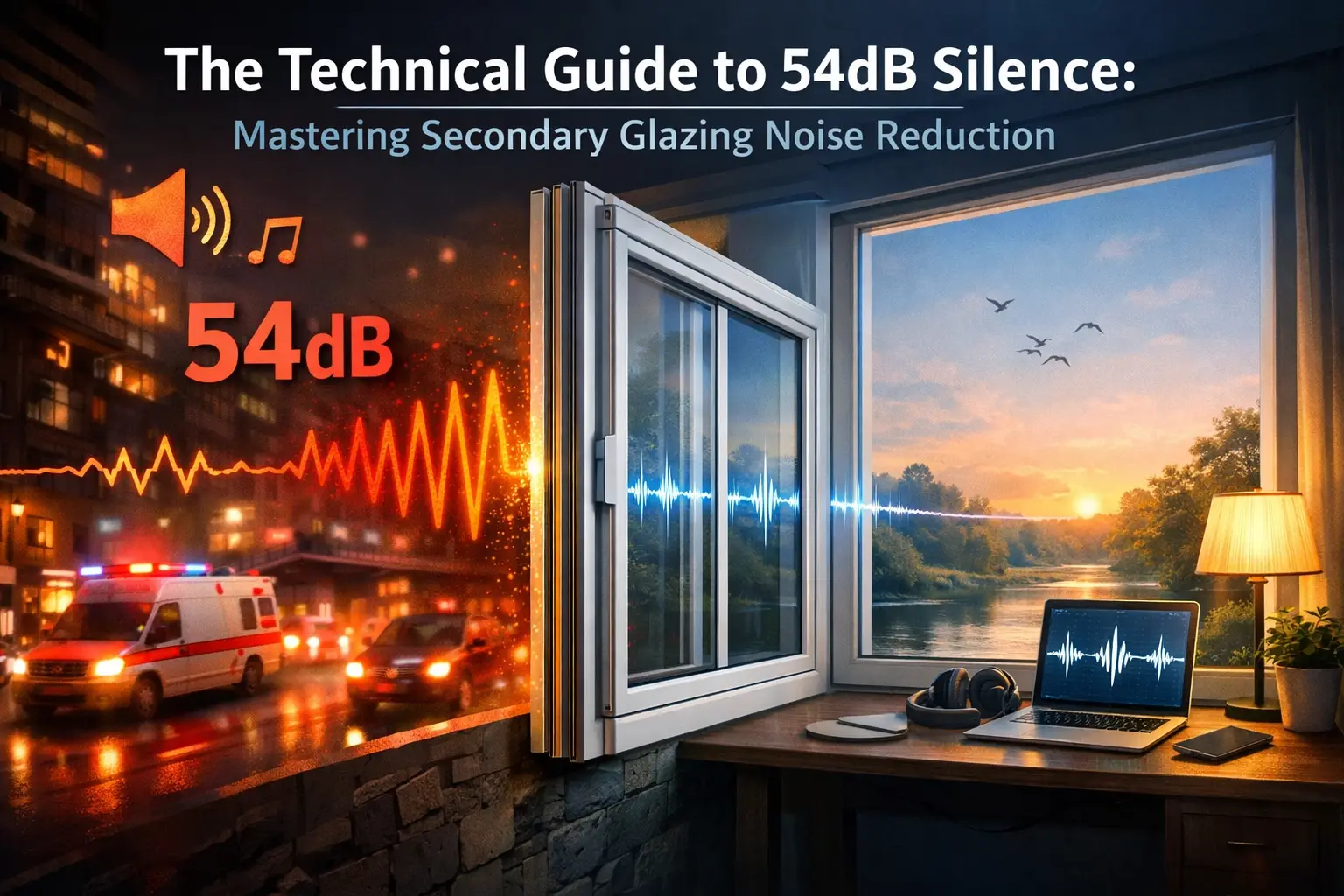
The Technical Guide to 54dB Silence
Mastering Acoustic Performance
Achieving true silence in a London home is not about buying the thickest glass available. It is about understanding the physics of sound transmission and engineering a system where every component — glass mass, air cavity depth, and seal integrity — works in concert to create an impenetrable acoustic barrier.
This whitepaper breaks down the three pillars of high-performance secondary glazing: the decibel scale, the 100mm air gap, and 10.8mm acoustic laminate glass. By the end, you will understand exactly why our installations consistently achieve 45–54dB noise reduction — and why standard double glazing cannot compete.
54dB
Maximum Reduction
100mm
Optimal Air Gap
10.8mm
Acoustic Glass
Understanding the Decibel Scale
The decibel scale is logarithmic, not linear. This is the single most important concept in acoustic glazing. A 10dB reduction does not make things "a bit quieter" — it halves the perceived loudness. A 20dB reduction makes noise seem 75% quieter. At 54dB reduction, you are eliminating over 99.99% of the sound energy entering your room.
For London homeowners living near arterial roads, rail corridors, or under Heathrow flight paths, the practical implications are dramatic. A bedroom facing a busy A-road experiences roughly 80–85dB of external noise during peak hours. With our 54dB secondary glazing system, internal levels drop to 26–31dB — quieter than a country library at midnight. This is not marketing rhetoric; it is the predictable outcome of applied acoustic engineering.
| Sound Source | Level (dB) | After 54dB Reduction |
|---|---|---|
| Heavy traffic / diesel bus | 85 dB | 31 dB — whisper level |
| Aircraft flyover | 90 dB | 36 dB — quiet library |
| Train passing at 30m | 80 dB | 26 dB — silent room |
| Emergency siren | 100 dB | 46 dB — quiet office |
💡 Expert Note
When comparing glazing products, always check whether the quoted dB figure is lab-tested (Rw rating) or field-tested. Lab conditions are idealised — our 54dB figure is achievable in real London homes with proper installation and sealing.
To explore how decibel reduction applies to different noise sources, see our guide to understanding decibel reduction in glazing.
The 100mm Air Gap: Your Acoustic Buffer Zone
The air cavity between your original window and the secondary glazing unit is arguably the most critical component in the entire system. Sound waves are pressure oscillations — as they travel through still air, they lose energy through friction and molecular interaction. The wider the gap, the more energy is dissipated before the wave reaches the inner pane.

Why Double Glazing Falls Short
Standard double glazing units have a cavity of just 16–20mm. At certain frequencies — particularly the low-frequency rumble of traffic — this narrow gap creates a resonance chamber that can actually amplify sound transmission. This is known as the "mass-air-mass resonance" effect, typically occurring between 200–400Hz. Secondary glazing, with its 100mm+ cavity, pushes this resonance frequency well below the range of most urban noise sources, eliminating the problem entirely.
Our acoustic engineers specify a minimum 100mm cavity for residential installations and 150mm wherever the reveal depth allows. In Georgian and Victorian properties — which typically have deep timber box-frame reveals of 150–200mm — the existing architecture is perfectly suited to achieving maximum acoustic performance without any structural modification.
For the complete physics, see our noise reduction science page.
Standard Double Glazing vs. Acoustic Secondary Glazing
| Metric | Standard Double Glazing | Our Acoustic Secondary Glazing |
|---|---|---|
| Overall Noise Reduction | 28–32 dB | 45–54 dB |
| Low-Frequency Performance (traffic) | Poor — resonance at 200–400Hz | Excellent — resonance below audible range |
| Air Cavity | 16–20mm sealed unit | 100–150mm decoupled cavity |
| Glass Mass (per m²) | ~20 kg (2 × 4mm) | ~37 kg (4mm + 10.8mm) |
| Seal System | Factory-sealed IGU perimeter | Twin-compression EPDM acoustic seals |
| Suitable for Listed Buildings | Rarely — alters external appearance | Yes — internal, fully reversible |
| Thermal U-Value Improvement | ~1.2 W/m²K | ~0.8 W/m²K (combined system) |
| Typical Cost per Window | £800–£1,200 | £450–£650 |
Data based on BS EN ISO 10140 laboratory testing and field measurements across numerous London installations.
10.8mm Acoustic Laminate Glass: Mass Meets Damping
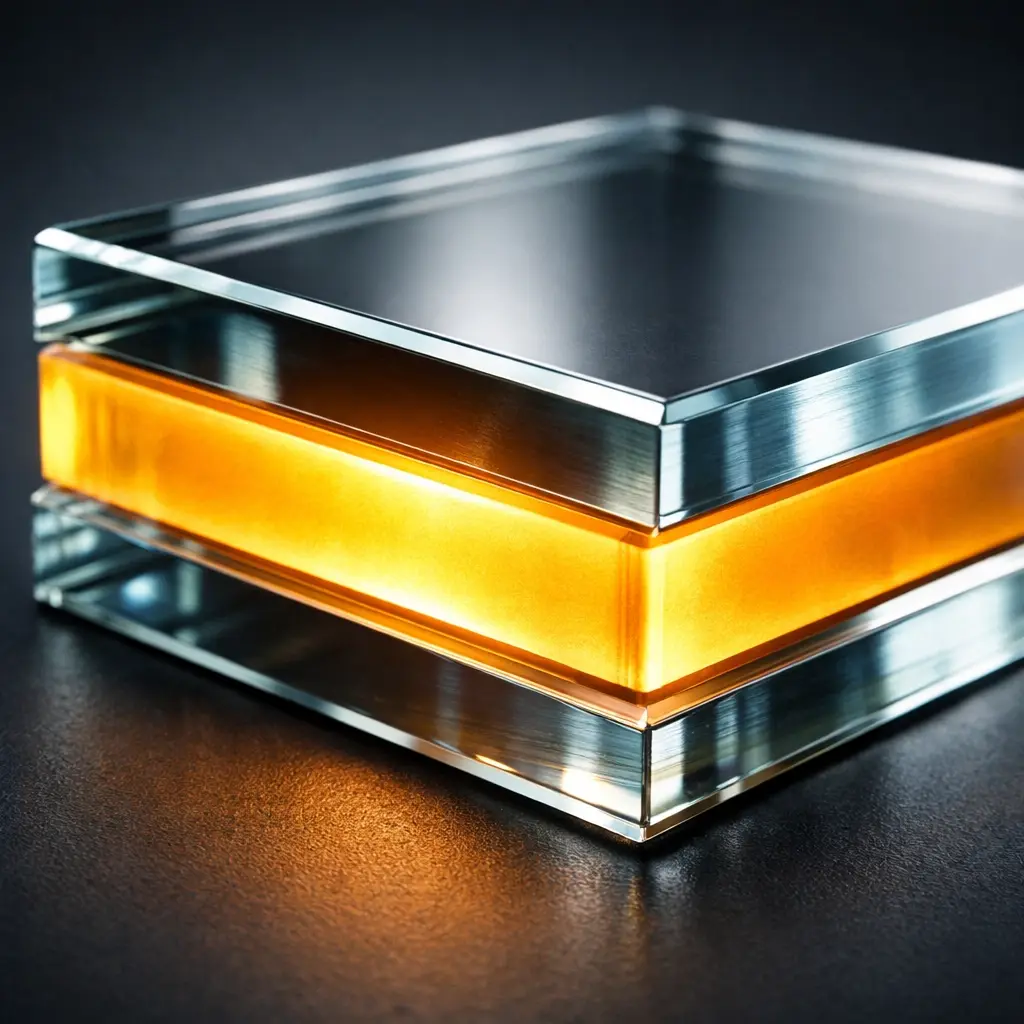
The glass itself is the final piece of the puzzle. Our specification of choice is 10.8mm acoustic laminate glass — a sandwich construction of two glass layers bonded by a specialist PVB (Polyvinyl Butyral) acoustic interlayer. This interlayer is the key differentiator: it converts sound energy into heat through molecular friction, preventing the glass pane from vibrating in sympathy with external noise.
The Mass Law Advantage
The fundamental "mass law" of acoustics states that doubling the mass of a barrier increases its sound insulation by approximately 6dB. At 10.8mm thick, our acoustic laminate weighs roughly 27kg/m² — nearly three times the mass of standard 4mm glass (10kg/m²). This additional mass makes it exceptionally difficult for low-frequency sound waves to set the glass vibrating. Combined with the PVB interlayer's damping properties, the result is a pane that attenuates noise across the entire audible spectrum from 100Hz to 5kHz.
| Property | 4mm Float | 6.4mm Laminate | 10.8mm Acoustic |
|---|---|---|---|
| Mass (kg/m²) | 10 | 16 | 27 |
| Rw Rating | 29 dB | 33 dB | 39 dB |
| Low-Freq Performance | Poor | Moderate | Excellent |
| PVB Interlayer | None | Standard | Acoustic-grade |
💡 Expert Note
The combination of different glass thicknesses on each side of the air cavity (e.g., 3mm original + 10.8mm secondary) creates "asymmetric mass." Because each pane resonates at a different frequency, they don't vibrate in sympathy — dramatically improving broadband noise reduction.
For a full specification comparison, see our 6.4mm vs 10.8mm acoustic glass comparison.
The Complete System: Seals, Installation & Quality Assurance
Even the thickest glass and widest air gap are rendered ineffective if sound can leak around the frame. This is why our installations feature twin-compression EPDM acoustic seals — dual-durometer rubber gaskets that compress against the frame on both the room side and the cavity side, creating an airtight perimeter with zero flanking paths for noise.

Unlike standard brush-pile or single-fin seals — which leave micro-gaps that allow high-frequency hiss and mid-range drone to penetrate — our twin-compression design maintains consistent contact pressure across the full frame length, even as timber frames expand and contract with seasonal temperature changes. Independent testing confirms that a 1mm gap in a perimeter seal can reduce the overall system performance by up to 10dB, which is why precision installation is non-negotiable.
10.8mm acoustic laminate glass
Provides 39dB Rw rating through mass and PVB damping.
100mm+ decoupled air cavity
Dissipates residual sound energy and eliminates mass-air-mass resonance.
Twin-compression acoustic seals
Prevents flanking transmission — even a 1mm gap can reduce performance by 10dB.
Asymmetric mass configuration
Different glass thicknesses prevent coincidence dips across the frequency spectrum.
Frequently Asked Questions
What does 54dB noise reduction actually mean?
A 54dB reduction means external noise at 85dB (heavy traffic) is reduced to just 31dB inside — quieter than a whisper. The decibel scale is logarithmic, so every 10dB drop halves perceived loudness.
Why is the air gap more important than glass thickness?
The air gap dissipates sound energy before it reaches the secondary pane. A 100mm+ cavity provides far superior acoustic decoupling compared to the 16-20mm gap in standard double glazing.
Can I achieve 54dB reduction in a listed building?
Yes. Secondary glazing is an internal, reversible installation that typically doesn't require planning permission — even in conservation areas with Article 4 Directions.
"The noise reduction is extraordinary. Our Victorian terrace is finally peaceful."
— James R., Islington
Sources & References
Authoritative sources supporting the information on this page.
- British Standards Institution (2014). Guidance on sound insulation and noise reduction for buildings (BS 8233:2014). BSI Standards.
Sets the recommended internal noise levels for bedrooms and living rooms used to judge how much glazing performance a home needs.
- HM Government (2015). Approved Document E: Resistance to the passage of sound. The Building Regulations 2010.Open source
The statutory guidance on sound insulation in dwellings in England.
- British Standards Institution (2020). Acoustics: Rating of sound insulation in buildings and of building elements, Part 1: Airborne sound insulation (BS EN ISO 717-1). BSI Standards.
Defines the Rw and Rw+Ctr ratings used to compare the acoustic performance of glazing systems.
- British Standards Institution (2019). Glass in building: Glazing and airborne sound insulation (BS EN 12758). BSI Standards.
Describes how the sound insulation of glass types, including acoustic laminates, is characterised.
- World Health Organization Regional Office for Europe (2018). Environmental Noise Guidelines for the European Region. World Health Organization.Open source
Evidence-based guideline levels for road, rail and aircraft noise and their links to sleep disturbance and health.
Related posts & services
Keep researching with the most relevant guides, service pages and cost breakdowns for this topic.
- The 10.8mm acoustic laminate spec sheet
Layer-by-layer breakdown of the glass responsible for the 54dB benchmark reduction.
- Independent acoustic consultancy for London projects
BS 8233 and ProPG assessments used to specify and validate 50dB+ installations.
- The physics of silence — coincidence dip & mass law
Why standard double glazing fails at low frequencies where secondary glazing succeeds.
- Specialist acoustic glazing — the 54dB specification
The exact glass, gap and seal package used to hit 54dB on real London installations.
Related guides
Explore the dedicated London landing pages for the systems and property types covered above.
- Secondary glazing for sash windowsPurpose-built systems for London box sash windows — specs, prices and heritage detailing.
- Sliding secondary glazingHorizontal and vertical sliders for sash and casement windows — up to 51dB with full ventilation access.
- Secondary glazing for listed buildingsFully reversible, consent-friendly specifications for Grade I and Grade II properties.
- Traffic noise secondary glazingSpecs matched to road-noise frequency profiles on London’s busiest streets.