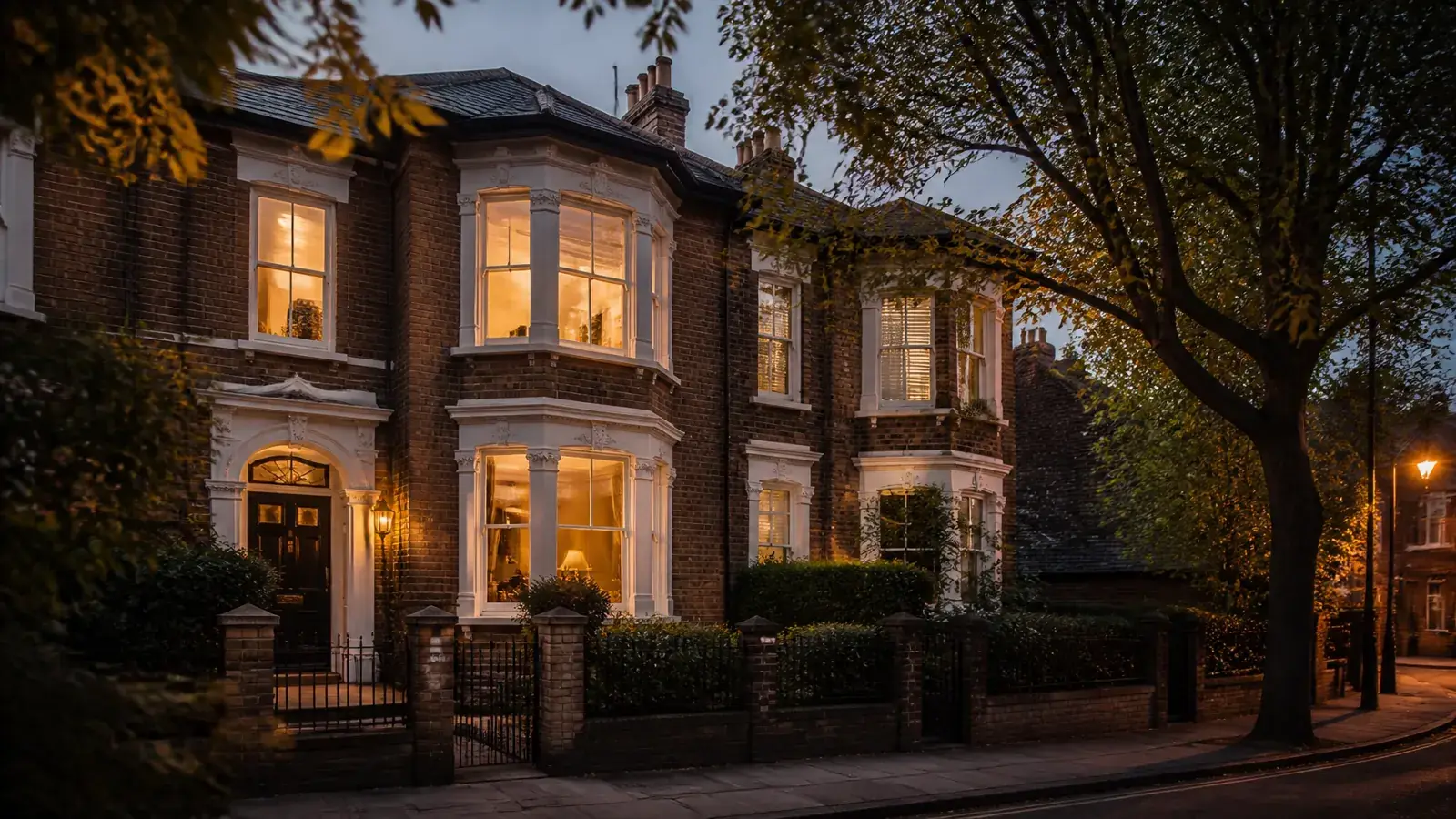
Secondary Glazing for Basement & Garden Flats: Soundproofing Conversions in Conservation Areas
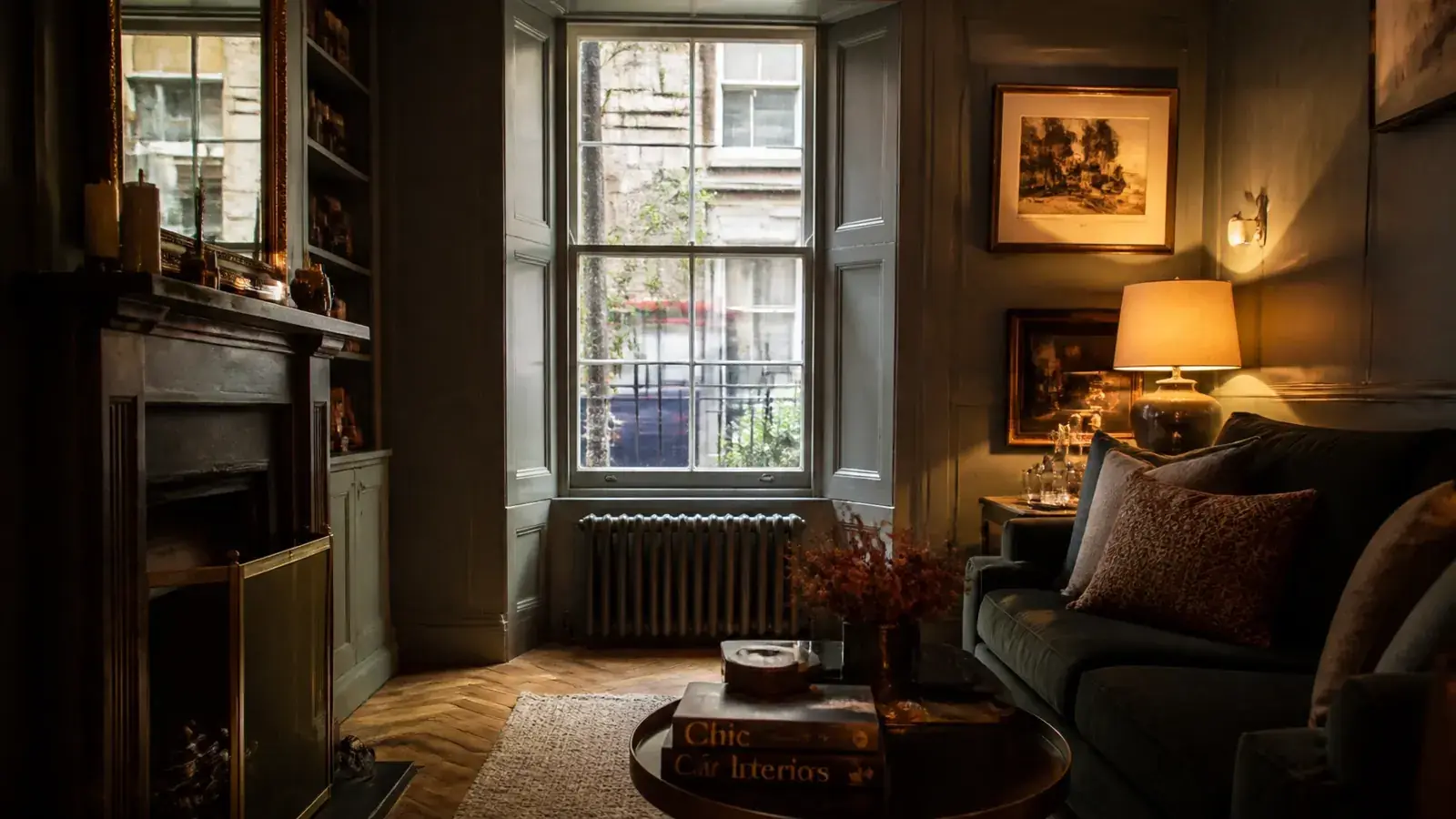
For owners searching for secondary glazing basement flat London solutions, the challenge is rarely limited to one type of noise. Lower-ground and garden flats occupy an acoustically exposed position: close to pavement traffic, directly beneath neighbouring floors, and often adjacent to communal entrances, gardens, bins, delivery routes or busy roads.
At the same time, many are conversions within conservation areas or listed buildings. Replacing original windows may be restricted, refused or incompatible with the building’s character.
This creates a precise technical requirement: reduce noise substantially, preserve the existing façade and avoid invasive building work. High-performance acoustic secondary glazing is designed to meet that requirement.
Why Basement and Garden Flats Experience More Noise
1.1 Street-level exposure
A flat above the first floor benefits from distance. Sound disperses as it travels upward, while a basement or garden flat sits close to the source.
Typical intrusions include:
- Vehicle engines, buses and HGV rumble
- Tyres passing over uneven road surfaces
- Pavement conversations and late-night activity
- Motorcycles, sirens and delivery vehicles
- Gates, communal doors and refuse collection
- Construction noise and street cleaning
- Footfall immediately outside below-ground windows
Even when external noise is not exceptionally loud, its proximity can make it feel relentless. A passing vehicle may become a sharp interruption rather than a distant urban sound.
1.2 Neighbours above and garden activity
Basement flats also receive noise from above. Footsteps, furniture movement and dropped objects can transmit through the building structure, while voices and music may enter through windows, doors and ventilation routes.
Garden flats face a different but related problem. Shared gardens and rear access paths may appear peaceful during the day but become active spaces in the evening. Conversations, children playing, maintenance equipment and neighbouring patios can all compromise privacy and rest.
Secondary glazing primarily addresses airborne noise entering through the window. It will not eliminate impact noise travelling through walls, ceilings or floors, but it can remove one of the weakest points in the acoustic envelope: the original window assembly.
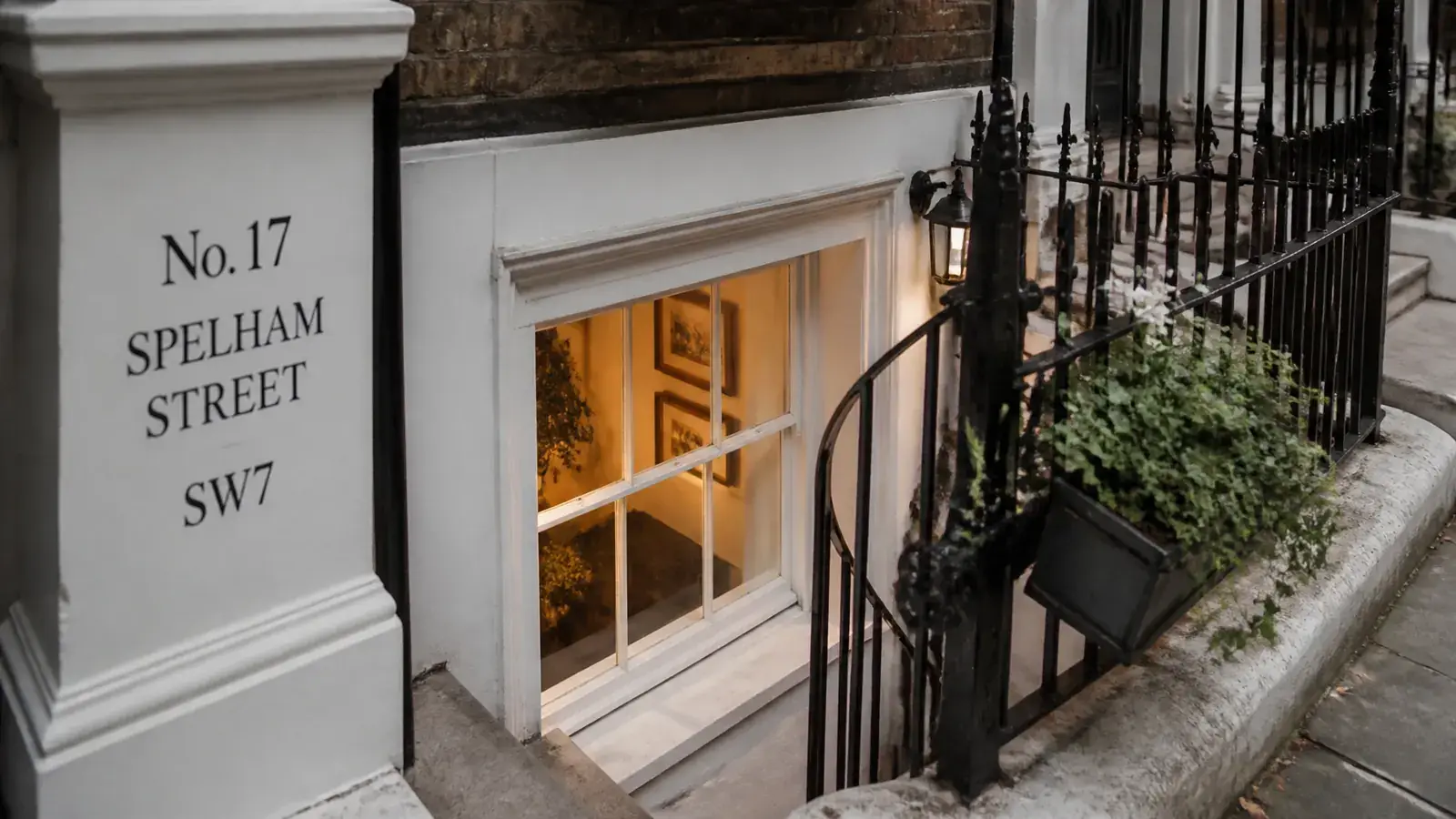
The Acoustic Solution: Mass, Air and Decoupling
🏛️ Living in a listed building or conservation area?
See how we navigate planning permission and protect your heritage windows. Read our conservation area guide →
The principle is straightforward but technically important. A bespoke secondary window is installed inside the original window, creating a substantial sealed cavity between the two panes.
This forms a mass-air-mass system:
- The external window provides the first barrier.
- The air gap separates the two window systems.
- The secondary pane provides additional mass.
- The seals prevent sound leaking around the frame.
The separation is known as decoupling. In simple terms, the two panes are prevented from vibrating as one. This is why a deep secondary-glazing cavity can outperform a standard replacement double-glazed unit, whose panes are typically separated by a much narrower gap.
Our preferred specification for demanding London noise environments includes:
- 10.8mm acoustic laminate glass
- A precision 100–150mm air gap
- A viscoelastic PVB interlayer within the laminate
- Continuous twin-compression EPDM seals
- A discreet internal frame designed around the existing window
The PVB interlayer acts like a microscopic damping layer. When sound energy causes the glass to vibrate, the interlayer helps dissipate that energy rather than allowing it to pass directly into the room.
2.1 What does 54dB reduction mean?
Decibels are logarithmic, not linear. A reduction of 10dB is generally perceived as approximately half as loud, although the exact experience depends on the character and frequency of the sound.
Our acoustic secondary-glazing systems can reduce external city noise by up to 54dB, subject to the existing window, wall construction, ventilation, installation quality and the noise spectrum being measured.
A realistic assessment is essential. Traffic, sirens and voices contain different frequencies, and low-frequency bus or HGV rumble can behave differently from high-frequency voices. The following table shows the principal factors.
| Factor | Lower specification | High-performance target |
|---|---|---|
| Acoustic glass | Standard thin glass | 10.8mm acoustic laminate |
| Air gap | Narrow cavity | 100–150mm |
| Frame seals | Basic perimeter seal | Twin-compression EPDM |
| Installation | Generic fit | Bespoke survey and sealed installation |
| Potential noise reduction | Highly variable | Up to 54dB |
| Heritage impact | May alter original fabric | Internal and reversible |
As previously noted, the headline figure is not a promise that every room will achieve exactly 54dB. It is the upper performance potential of a carefully designed system. The objective is to specify the right glass, cavity and seals for the actual property.
Conservation Areas, Listed Buildings and Leasehold Approval
For many basement and garden flats, planning restrictions are decisive. The original façade may form part of a terrace, mansion block or architecturally significant conversion. External replacement windows can alter sightlines, frame profiles and historic detailing.
Secondary glazing is installed internally. The original windows remain in position, while the new acoustic units sit behind them. This means the external appearance is preserved and the intervention is generally reversible.
Historic England’s guidance on traditional windows and secondary glazing is a useful starting point for owners of heritage properties. You can also review the government’s Approved Document E guidance on resistance to the passage of sound.
Our specialist approach holds a planning-aware track record on listed-building submissions for submitted projects. This does not remove the need for property-specific advice, but it demonstrates the importance of using an experienced heritage installer.
Leasehold considerations
Planning permission and leasehold consent are separate matters. Even where an internal installation does not require planning permission, a lease may require written approval from:
- The freeholder
- The managing agent
- A residents’ management company
- A conservation or refurbishment committee
Before work begins, owners should check:
- Whether the window reveals are demised to the flat
- Whether alterations require a licence to alter
- Whether fire-escape windows must remain fully operable
- Whether ventilation routes may be affected
- Whether the proposed frame finish meets building-management requirements
A professional survey should document the proposed fixing method, frame position, access requirements and reversibility. This gives the freeholder or conservation officer a clear basis for evaluation.
Discreet Internal Installation with Minimal Disruption
Basement properties can have awkward reveals, low ceilings, restricted access and limited natural ventilation. These constraints make accurate measurement particularly important.
The installation process typically follows four stages:
- Acoustic and window survey
We assess the noise source, existing window condition, reveal depth, ventilation and any escape-window requirements.
- Bespoke design
The secondary unit is designed to maximise the air gap without obstructing shutters, radiators, curtains or window operation.
- Manufacture and preparation
The acoustic laminate glass, frame and EPDM seals are prepared to the measured dimensions.
- Internal installation
The unit is fitted from inside the property, with no external scaffolding or removal of the original window. Most residential installations are planned to minimise disruption and can often be completed within a day, depending on the number and complexity of windows.
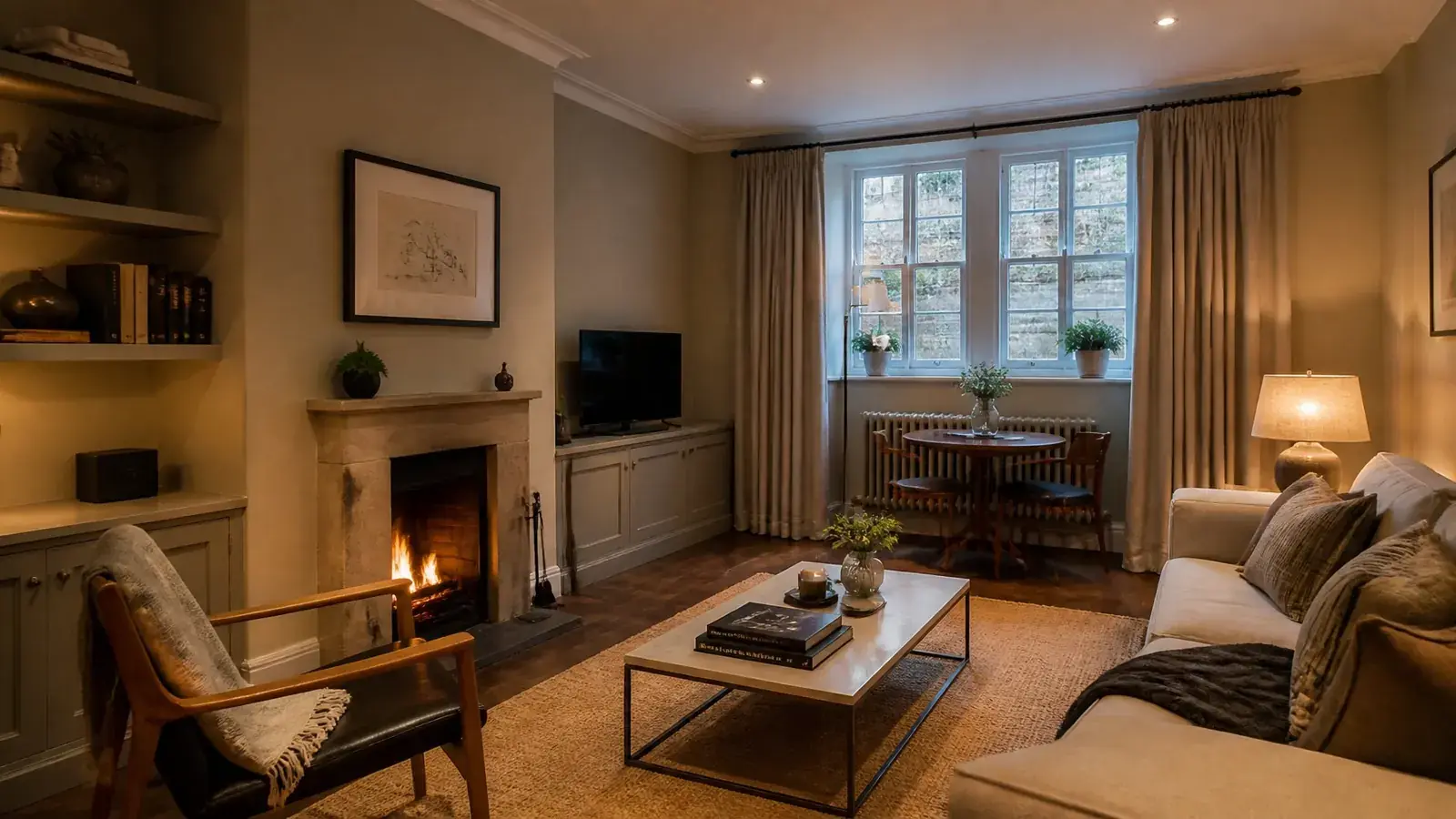
For garden flats, sliding or hinged configurations may be considered where access to the original window is important. In basement rooms, the design must also account for condensation management and ventilation. Secondary glazing can make the internal pane warmer and reduce surface condensation, but it should not be used to conceal damp, defective pointing or inadequate ventilation.
Cost per Window for a London Basement Flat
💷 Wondering about costs?
Use our calculator to get an instant estimate for your windows. Try the cost calculator →
The cost of garden flat soundproofing varies according to window size, frame style, access, glass specification and the depth available for the cavity.
As an initial planning guide:
| Installation type | Indicative cost per window |
|---|---|
| Smaller, straightforward secondary unit | From approximately £450 |
| Typical bespoke acoustic window | £450–£950 |
| Large sash, bay or complex basement reveal | Often above £950 |
| Multi-window projects | Usually priced after a measured survey |
These figures should be treated as an indication rather than a quotation. A basement flat may require additional detailing around deep reveals, vents, shutters or escape windows. The cost of the acoustic glass is also higher than that of a basic secondary-glazing unit, but it is the glass-and-cavity combination that determines whether the installation is suitable for serious urban noise.
Our residential installations are backed by a 10-year warranty as standard, with Premium and Heritage packages covered by a 25-year warranty, providing long-term confidence in the frame, seals and workmanship.
Real-World Evidence: The Moment It Clicks
The most meaningful result is not a specification sheet. It is the change in how the room feels.
Before treatment, a basement bedroom may register every bus, raised voice and passing motorcycle as a direct intrusion. After a properly sealed acoustic installation, those sounds can become distant and indistinct. The road remains outside, but it no longer dominates the room.
A sitting room may shift from a space where conversation pauses for passing traffic to a genuine refuge. A garden flat may retain its connection with the outdoors while preventing the surrounding activity from becoming an involuntary soundtrack.
For further technical background, see our London Noise Reduction Guide, or review our residential secondary glazing service. Owners in central areas can also find location-specific guidance for Westminster and SW1, Chelsea and SW3, and Kensington and W8.
Verdict: A Conservation-Friendly Acoustic Investment
For a London basement or garden flat, the window is often the most vulnerable part of the property’s acoustic envelope. Replacing the original windows may be unacceptable, while curtains and window films rarely provide sufficient protection against traffic, voices or low-frequency rumble.
A bespoke internal system using 10.8mm acoustic laminate glass, a 100–150mm air gap and twin-compression EPDM seals offers a more rigorous solution. It preserves the façade, respects heritage requirements and can reduce city noise by up to 54dB without major structural disruption.
Secondary Glazing Noise Reduction is London’s only dedicated acoustic secondary-glazing specialist. We combine conservation-sensitive design with a 10-year warranty as standard (Premium and Heritage packages covered by a 25-year warranty) and a documented planning-aware track record on listed-building submissions.
Book a free home noise assessment to discuss your basement or garden flat, understand the available cavity depth and receive a property-specific recommendation.
Your home should be a sanctuary( not an extension of the pavement outside.)
Frequently Asked Questions
Solutions covered in this guide
Go straight to the dedicated London landing page for the system or property type discussed above.
- Conservation area secondary glazingWhat London conservation officers accept — sightlines, finishes and reversibility.
- Secondary glazing for listed buildingsFully reversible, consent-friendly specifications for Grade I and Grade II properties.
- Secondary glazing for sash windowsPurpose-built systems for London box sash windows — specs, prices and heritage detailing.
- Sliding secondary glazingHorizontal and vertical sliders for sash and casement windows — up to 51dB with full ventilation access.
Sources & References
Authoritative sources supporting the information on this page.
- British Standards Institution (2014). Guidance on sound insulation and noise reduction for buildings (BS 8233:2014). BSI Standards.
Sets the recommended internal noise levels for bedrooms and living rooms used to judge how much glazing performance a home needs.
- Greater London Authority (2021). The London Plan 2021, Policy D14: Noise. Mayor of London.Open source
The London planning policy on reducing, managing and mitigating noise in homes across the capital.
- World Health Organization Regional Office for Europe (2018). Environmental Noise Guidelines for the European Region. World Health Organization.Open source
Evidence-based guideline levels for road, rail and aircraft noise and their links to sleep disturbance and health.
- HM Government (2015). Approved Document E: Resistance to the passage of sound. The Building Regulations 2010.Open source
The statutory guidance on sound insulation in dwellings in England.
- British Standards Institution (2020). Acoustics: Rating of sound insulation in buildings and of building elements, Part 1: Airborne sound insulation (BS EN ISO 717-1). BSI Standards.
Defines the Rw and Rw+Ctr ratings used to compare the acoustic performance of glazing systems.
"We can actually sleep now. The 10.8mm glass made all the difference."
— Sarah M., Kensington
Planning a project?
Get an instant estimate with our Secondary Glazing Cost Calculator or Book a Professional Sound Survey.
Related services & guides
Move beyond the blog: jump straight to the matching service pages, cost tools and technical guides that go deeper on this topic.
- Specialist acoustic glazing service
The full acoustic glazing menu with dB targets and pricing.
- Transparent London secondary glazing pricing
Fixed 2026 prices per window with no hidden extras.
- ROI & payback calculator
Instant estimate for your window count, glass spec and property type.
- Request a free bespoke quote
Same-week written quote based on your exact requirements.
Related Articles
Secondary Glazing for Flats & Apartments: Soundproofing Above Shops and Tube Lines

Noise Solutions for Victorian Mews Houses: Restoring Peace in Tight London Streets