
Secondary Glazing for Listed Buildings: The Ultimate Heritage Guide
If you own a Grade I or Grade II listed building in London, you already know the paradox: the same architectural features that make your property special are also the reason your heating bills are astronomical and the rumble of double-decker buses rattles through your bedroom at 6 AM.
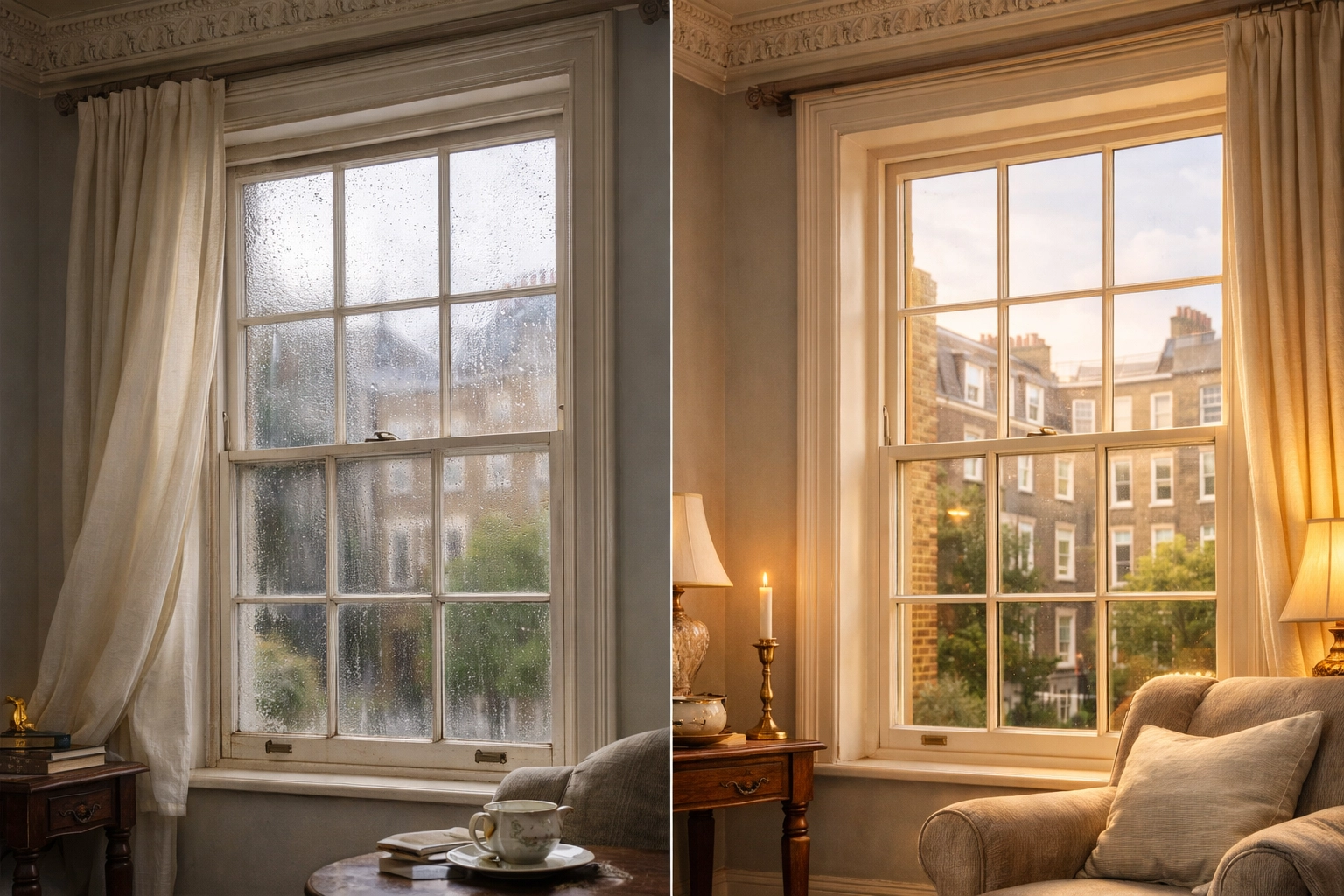
Grade II listed properties retain their heritage character while achieving modern acoustic and thermal performance with secondary glazing.
You can't simply rip out 200-year-old windows and replace them with modern double glazing. Historic England won't let you. Your conservation officer won't let you. And honestly, you probably don't want to. So what's the answer?
Secondary glazing for listed buildings is the only reversible, regulation-friendly solution that delivers serious thermal and acoustic performance without touching a single piece of original fabric. Here's how it works, why it's the preferred route, and what you need to know about planning permission.
Why Original Windows Fail (And Why You Can't Just Replace Them)
Single-pane Georgian or Victorian windows are beautiful. They're also thermally disastrous. A single 4mm pane of glass has a U-value of around 5.7 W/m²K — more than five times worse than current Building Regulations standards. Heat pours out. Noise pours in. Draughts find every gap in the timber frame.
But here's the constraint: if your building is listed, replacing those windows is almost certainly off the table. Historic England's position is clear — original windows are historic fabric and must be retained wherever possible. Even if you could get consent, the cost of replicating period joinery to conservation standards would be eye-watering.
That's where secondary glazing comes in.
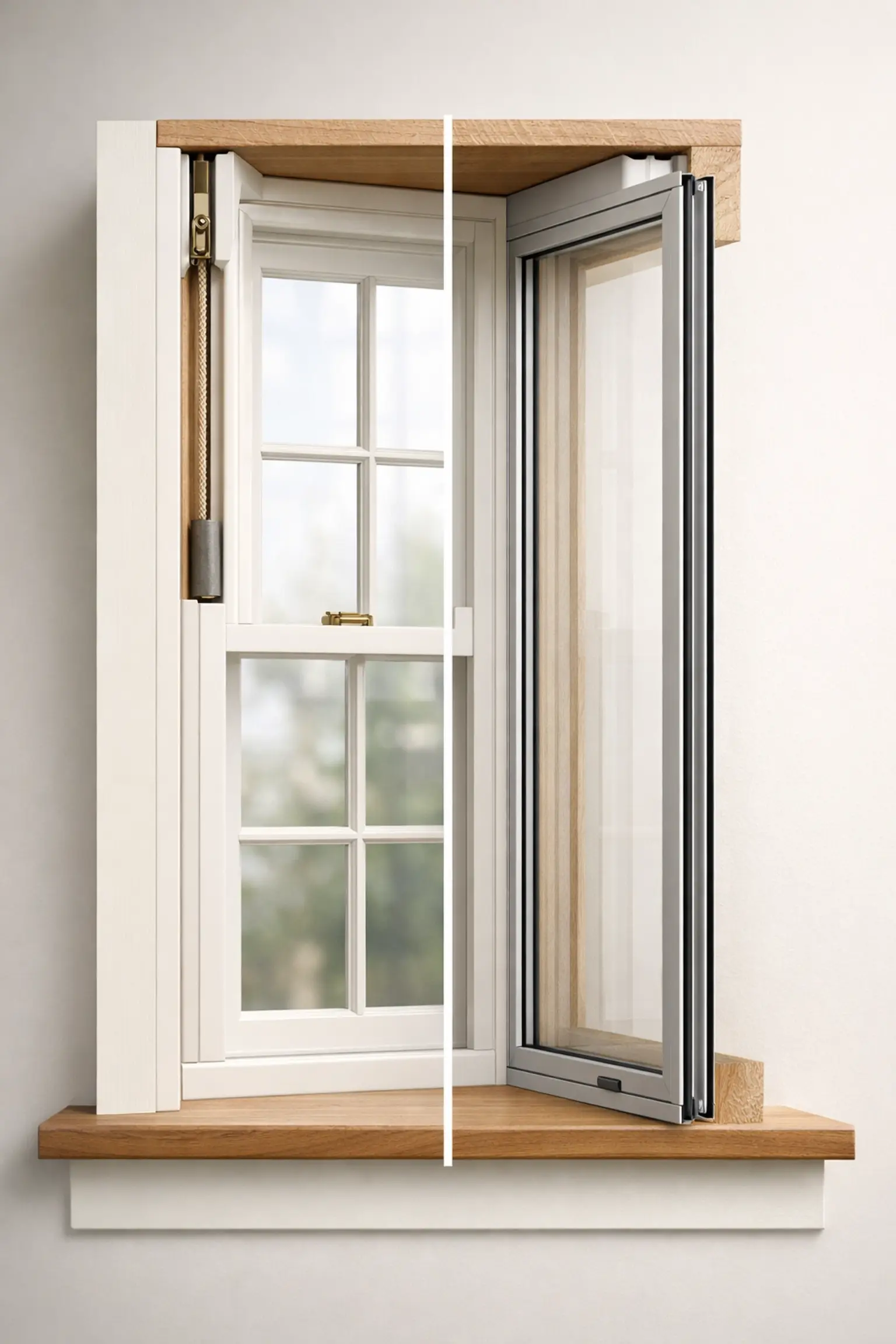
The critical 100mm+ air gap between original glass and secondary pane is what delivers the acoustic and thermal performance gains.
What Secondary Glazing Actually Is
Secondary glazing installs a discrete internal pane behind your existing window, creating an insulating air gap between the old glass and the new. The secondary unit sits inside the room, typically fixed to the window reveal or the internal face of the original frame.
The key difference from double glazing? Nothing permanent happens to the original window. The historic frame, glazing bars, and glass remain completely untouched. The secondary system is fully reversible — remove it, and your Grade II sash window looks exactly as it did in 1842.
This reversibility is precisely why secondary glazing is the preferred solution for heritage window soundproofing and thermal improvement. You're adding performance, not replacing history.
The Discreet Installation: How It Works With Your Sash Windows
The best secondary glazing systems are designed to be invisible from the outside and near-invisible from the inside. Here's how:
Slim aluminium frames
Typically 20–30mm, colour-matched to your existing joinery. Whether your windows are painted white, heritage cream, or stained hardwood, the secondary frame blends seamlessly.
Alignment with existing sash bars
If your original window has a six-over-six pane configuration, the secondary unit mirrors that pattern. Vertical and horizontal bars align precisely, so the eye reads it as a single unit.
Sliding or hinged operation
Modern secondary systems include sliding sashes that track independently, so you can still open your original window for ventilation without dismantling anything.
The Glass Specification: Acoustic Performance Meets Thermal Efficiency
This is where secondary glazing for listed buildings gets technical — and where the performance gains become real. For a deeper dive into the physics behind low-frequency noise elimination, read our Physics of Silence guide.
For acoustic performance, you want 10.8mm acoustic laminate glass. This isn't standard float glass. It's two panes of 4mm glass with a 0.8mm acoustic PVB (polyvinyl butyral) interlayer that dampens sound waves. When paired with a 100mm+ air gap, you create a sound barrier capable of achieving 50–54dB noise reduction. That's the difference between hearing every word of a street conversation and hearing… nothing.
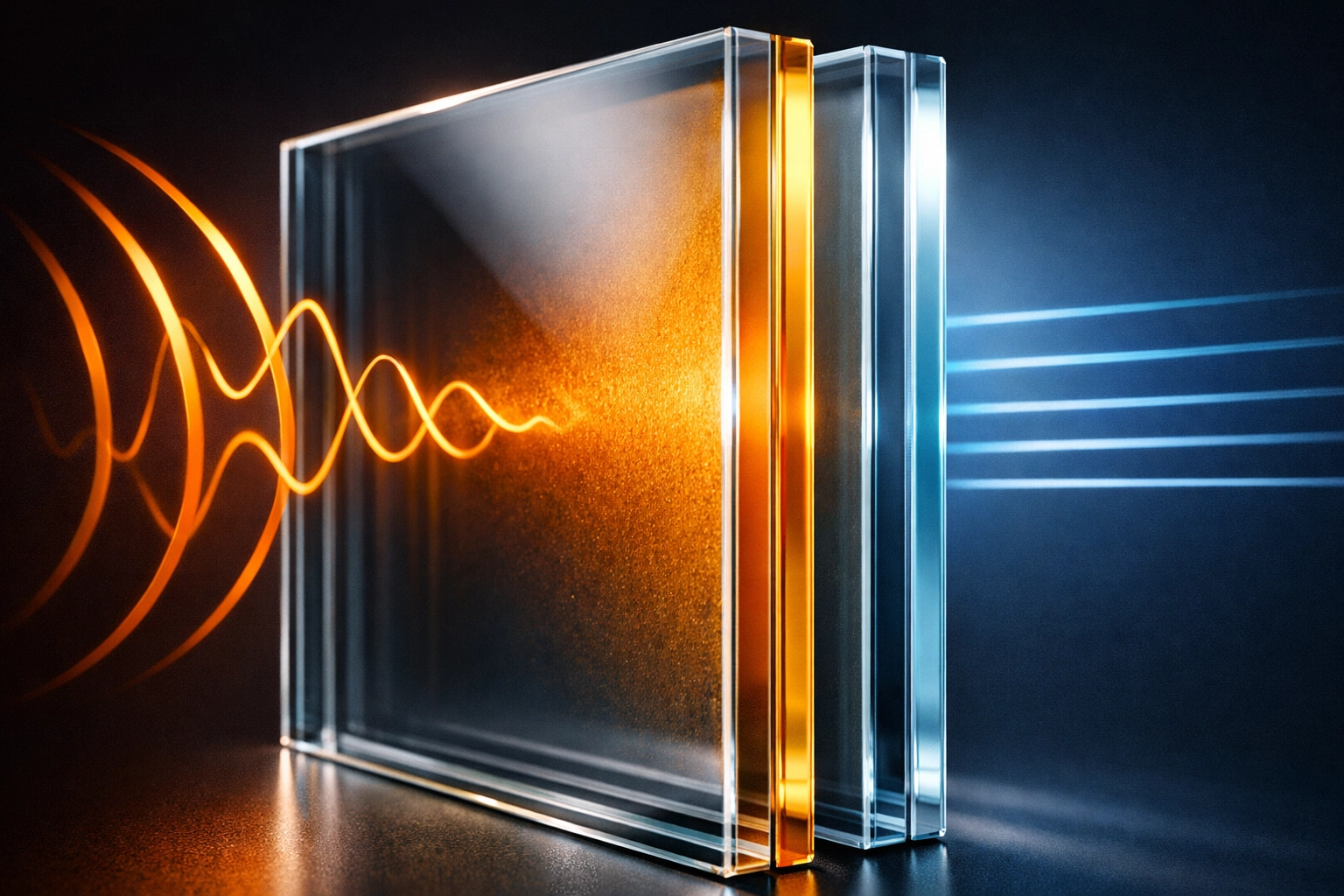
10.8mm acoustic laminate glass: two 4mm panes bonded with a PVB interlayer that absorbs vibration energy rather than transmitting it.
For thermal performance, specify Pilkington K Glass or equivalent low-emissivity (low-e) glass in the secondary unit. This coated glass reflects heat back into the room, significantly reducing radiant heat loss. Combined with the insulating air gap, secondary glazing can bring the effective U-value of your original single-glazed window down to around 1.8–2.0 W/m²K — an enormous improvement over 5.7.
The beauty of the dual specification — acoustic laminate for sound, low-e glass for heat — is that you're solving two problems at once. Less noise, lower heating bills, no planning battle.
Planning Permission: What You Actually Need to Know
Here's the good news: secondary glazing is usually exempt from planning permission because it doesn't alter the external appearance or structure of your building.
But — and this is a critical but — if your property is listed, you may still need Listed Building Consent depending on your local authority's interpretation of what constitutes "alteration of historic fabric."
The key factors that conservation officers consider:
- Reversibility: Can the secondary glazing be removed without leaving permanent damage or fixings?
- Visual impact: Is it visible from the street? Does it obscure the appearance of the original window?
- Fixing method: Are you drilling into historic masonry or original timber frames?
Most local authorities accept secondary glazing installed with non-invasive fixings. Providing a clear reversibility statement in your application — "All fixings will be made to modern timber sub-frames; no original fabric will be drilled or altered" — goes a long way.
Pro Tip
Contact your conservation officer before you commission drawings. A five-minute phone call can save you weeks of back-and-forth. Ask specifically: "Do you require Listed Building Consent for internal secondary glazing with non-permanent fixings?" Many officers will confirm verbally that it's exempt.
From the street, the building looks identical. From the inside, the acoustic and thermal difference is transformative.
System Options: Matching Secondary Glazing to Your Period Windows
Slimline fixed units
Most discreet option. Ideal for non-opening windows in stairwells or bathrooms. Maximum thermal and acoustic performance with minimal visual impact.
Horizontal sliding sashes
Ideal for Georgian or Victorian sash windows. The secondary unit operates exactly like the original: slide up to open, slide down to close.
Hinged casement panels
Suited to side-opening period casements. The secondary pane hinges inward, allowing you to open the original window for cleaning or fresh air.
Removable magnetic systems
The ultimate reversible solution. Held in place by magnetic strips — no screws, no permanent fixings. Perfect for the most restrictive conservation areas.
The Thermal and Acoustic Data: What You'll Actually Notice
Thermal improvement: Expect your heating costs to drop by 20–30% in rooms with single-glazed windows. Condensation on your original windows will also reduce significantly, because the inner pane stays warmer.
Acoustic improvement: A well-installed secondary glazing system with 10.8mm acoustic laminate glass and a 100mm air gap can achieve 50–54dB noise reduction. To put that in perspective:
| Sound source | Before | After (−52dB) |
|---|---|---|
| Busy London street | 80 dB | 28 dB |
| Normal conversation outside | 60 dB | 8 dB (inaudible) |
| Quiet library (reference) | 40 dB | — |
The Installation Process: What to Expect
Installation is non-invasive and typically takes 1–2 hours per window. There's no mess, no structural work, and no damage to original fabric.
Survey your windows
A specialist surveys your existing windows and measures precisely. Sash windows in period properties can be out of square by several millimetres, so accurate measurement is essential for a proper acoustic seal.
Fabricate bespoke frames
Secondary glazing frames are custom-made to match your existing joinery colour and profile. Slim aluminium frames (20–30mm) are colour-matched to your painted or stained timber, and glazing bar positions align precisely with your original sash configuration.
Install with non-invasive fixings
Secondary units are fitted using compression seals or discreet fixings to modern timber sub-frames. No drilling into original historic fabric or masonry. The installation is entirely reversible, satisfying even the most conservation-minded local authority.
Test operation and seal integrity
The installer checks that sliding or hinged panels operate smoothly, acoustic seals are fully compressed around all edges, and the system functions independently from the original window. Any gaps — even 1mm — are closed, as they would compromise acoustic performance.
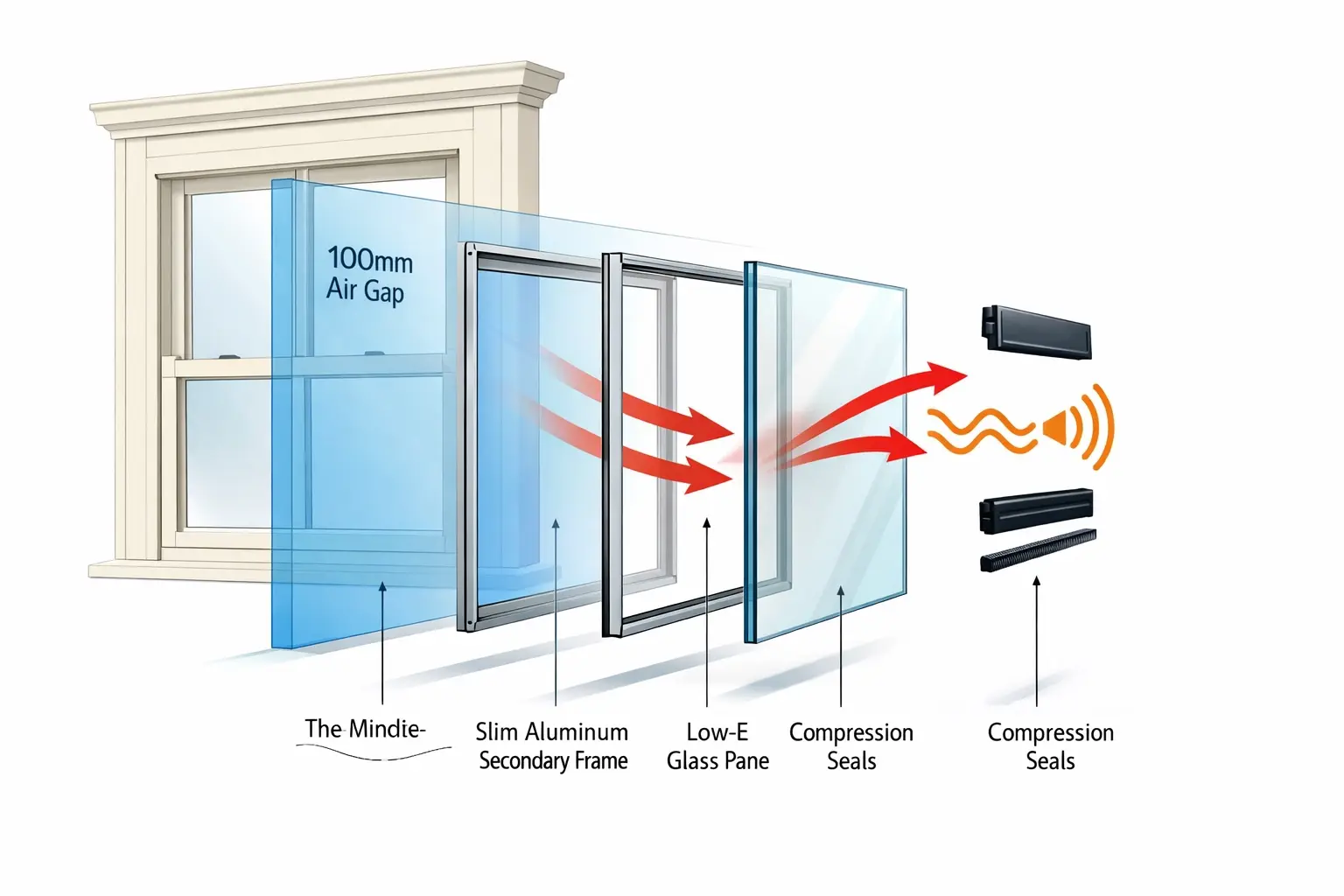
A complete secondary glazing system: slim frame, acoustic laminate glass, compression seals — all installed without touching the original window.
The Bottom Line: Why Secondary Glazing Is the Only Real Option
If you own a listed building in London, secondary glazing isn't just a good idea — it's the only practical solution for improving thermal and acoustic performance without violating planning restrictions.
It's reversible. It's effective. It's explicitly endorsed by Historic England. And when specified correctly — 10.8mm acoustic laminate glass for sound, Pilkington K Glass for heat, aligned with your original sash bars — it's virtually invisible.
You preserve your building's character. You silence the present. And you finally get a decent night's sleep.
Further reading
For official guidance on what alterations require consent, see the Historic England Listed Building Consent guidance.
Related Articles
The Physics of Silence: How to Block London's Low-Frequency Rumble
The science of mass law, PVB interlayers, and 100mm+ air gaps — why 10.8mm acoustic glass defeats low-frequency bus rumble where standard glazing fails.
The Silent Nursery: 54dB Noise Reduction for Better Infant Sleep
How the same acoustic principles that protect listed buildings also create the quietest, most sleep-friendly nursery environment in urban London.