

All London Boroughs
    0207 060 1572
    Blurred London traffic at night with red bus light streaks representing urban noise
    Professional Service

    Professional Sound Survey for London Homes

    Stop guessing with phone apps. Get precision acoustic data that drives the right glazing specification — first time.

    Book Your Sound Survey

    If you live in London, you know the "London Hum." It's that constant, low-frequency vibration of buses, the screech of the Tube through the ground, and the rhythmic thumping of sirens that seem to follow you into your bedroom at 2:00 AM.

    When you finally decide you've had enough and start looking into soundproofing, your first instinct is probably to reach for your pocket. You download a "Decibel Meter" app, stand by your window, and watch the needle bounce around. You see a number — maybe 65dB — and think, "Right, I need to get rid of 65 decibels."

    Here's the hard truth: that app is lying to you. Or, at the very least, it's giving you a tiny, distorted fraction of the truth.

    At Secondary Glazing Noise Reduction, we've seen hundreds of homeowners try to diagnose their noise problems with a smartphone. But if you want to turn a noisy London street into a silent sanctuary, you don't need an app — you need a professional sound survey.

    Reality Check

    Why Your Phone App Is Lying to You

    Modern smartphones are incredible — but they are designed to record voices, not perform scientific acoustic analysis.

    Inaccurate

    Your Smartphone

    • Hardware Limitations

      Tiny, uncalibrated microphone programmed to filter out background noise — the very noise you want to block.

    • Frequency Blindness

      Shows volume (dB) but not frequency (Hz). Stopping a whistle requires a completely different approach than stopping a bus rumble.

    • Software Compression

      A-weighting ignores low-frequency bass noise — the hardest to block. Your app says 40dB, but you can still feel the road vibrating.

    Precision

    Our Professional Equipment

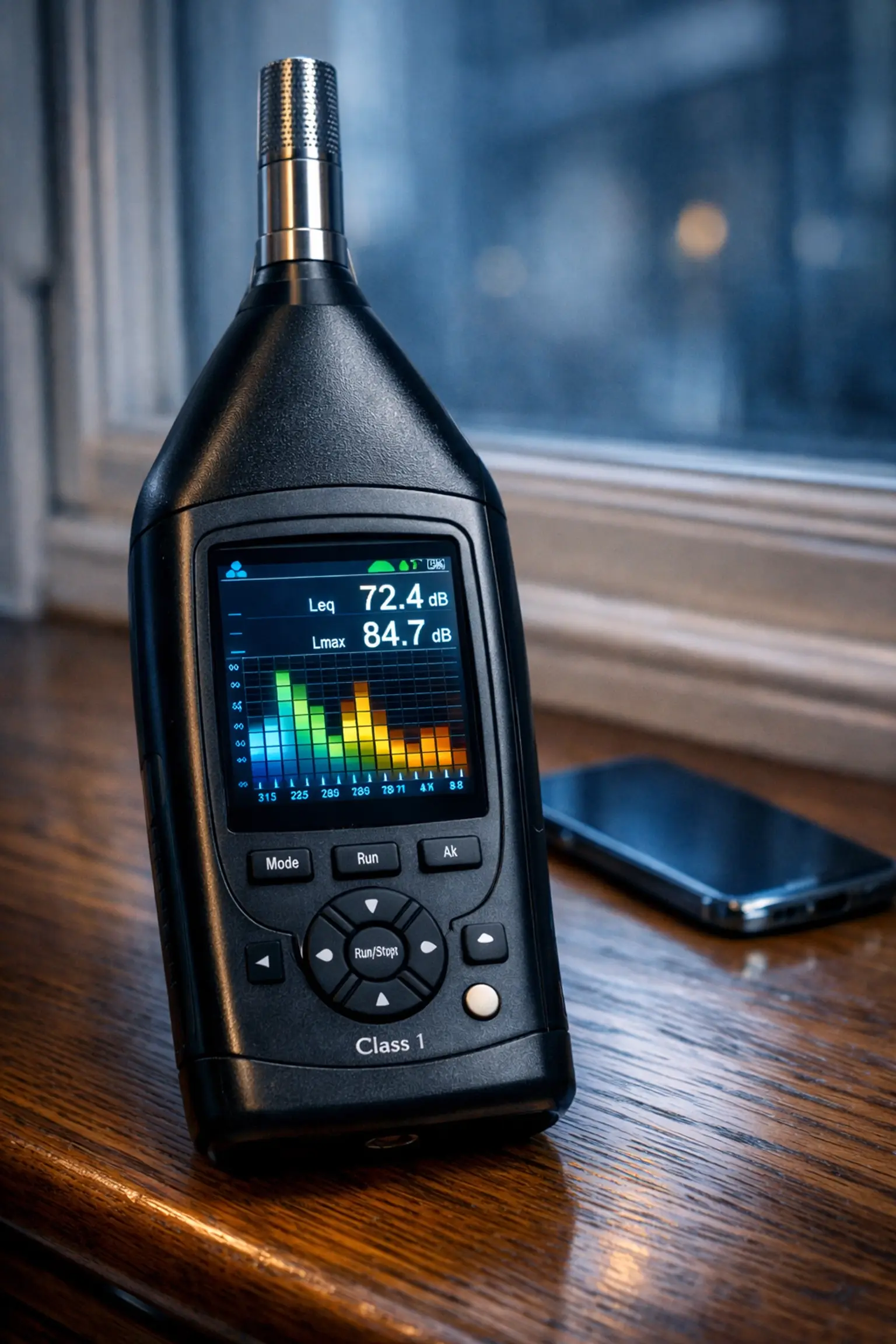
    • Class 1 Sound Level Meter

      Calibrated to capture the full frequency range (20Hz–20kHz) with laboratory-grade accuracy.

    • Full Frequency Analysis

      Identifies exactly which frequencies dominate — traffic rumble, siren mid-range, or high-pitched wind noise — so we specify the right glass.

    • Real-World Measurement

      We measure peak levels, ambient floor, and flanking paths. No compression, no filtering — just the truth about your noise.

    Professional sound level meter measuring traffic noise on a sash window sill in London
    Our Process

    What Happens During a Professional Sound Survey

    1

    On-Site Frequency Measurement

    We measure peak noise levels and the ambient noise floor using a calibrated Class 1 meter. We also perform a full frequency analysis to map your home's unique "sonic fingerprint" — identifying whether your problem is low-frequency traffic rumble, mid-range voices, or high-frequency wind noise.

    2

    Identifying Structural Noise Leaks

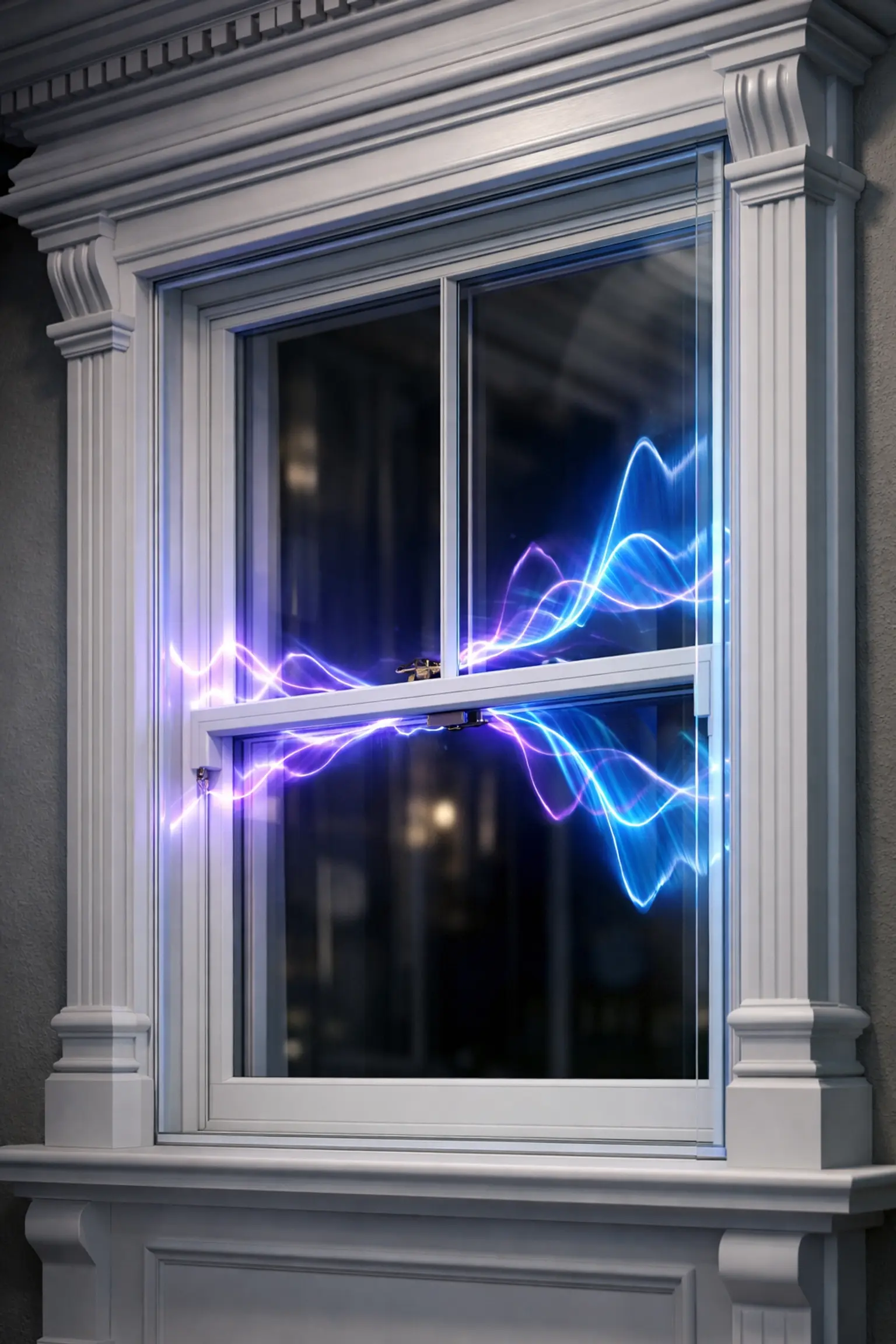
    Noise behaves like water — if there's a hole, it pours through. We inspect every sash meeting rail, pulley stile, and frame joint to find where sound is flanking around your existing windows. In period properties, warped timber and worn seals create invisible acoustic leaks that phone apps cannot detect.

    3

    Bespoke Acoustic Glazing Specification

    Using the survey data, we recommend the exact glass type (10.8mm acoustic laminate for heavy traffic, 6.4mm for lighter noise), the optimal air cavity depth (100–150mm), and the seal system needed to achieve your target dB reduction. No guesswork — pure acoustic engineering.

    Finding the "Noise Leaks" in Period Sash Windows

    If you live in a period property or a listed building, your windows are beautiful — but they are also acoustic sieves. Even if you have thick curtains, noise behaves like water: if there is a hole, it will pour through.

    During a sound survey, we look for "noise leaks." In traditional sash windows, these are usually found:

    • Between the sashes— where the top and bottom windows meet.
    • In the pulley stiles— where the weights live.
    • At the meeting rail— if the wood has warped over the last 100 years.

    A professional survey identifies exactly where the sound is flanking around your existing windows. This allows us to design a secondary glazing system that doesn't just "add glass," but creates an airtight acoustic seal using twin-compression seals — ensuring the 54dB noise reduction we promise is actually achieved in reality.
    Secondary glazing blocking sound waves and sealing a traditional Victorian sash window

    Data-Driven Solutions: Why 10.8mm Glass Matters

    Once we have the data from the survey, we don't guess. We use the science of acoustics to recommend a solution.

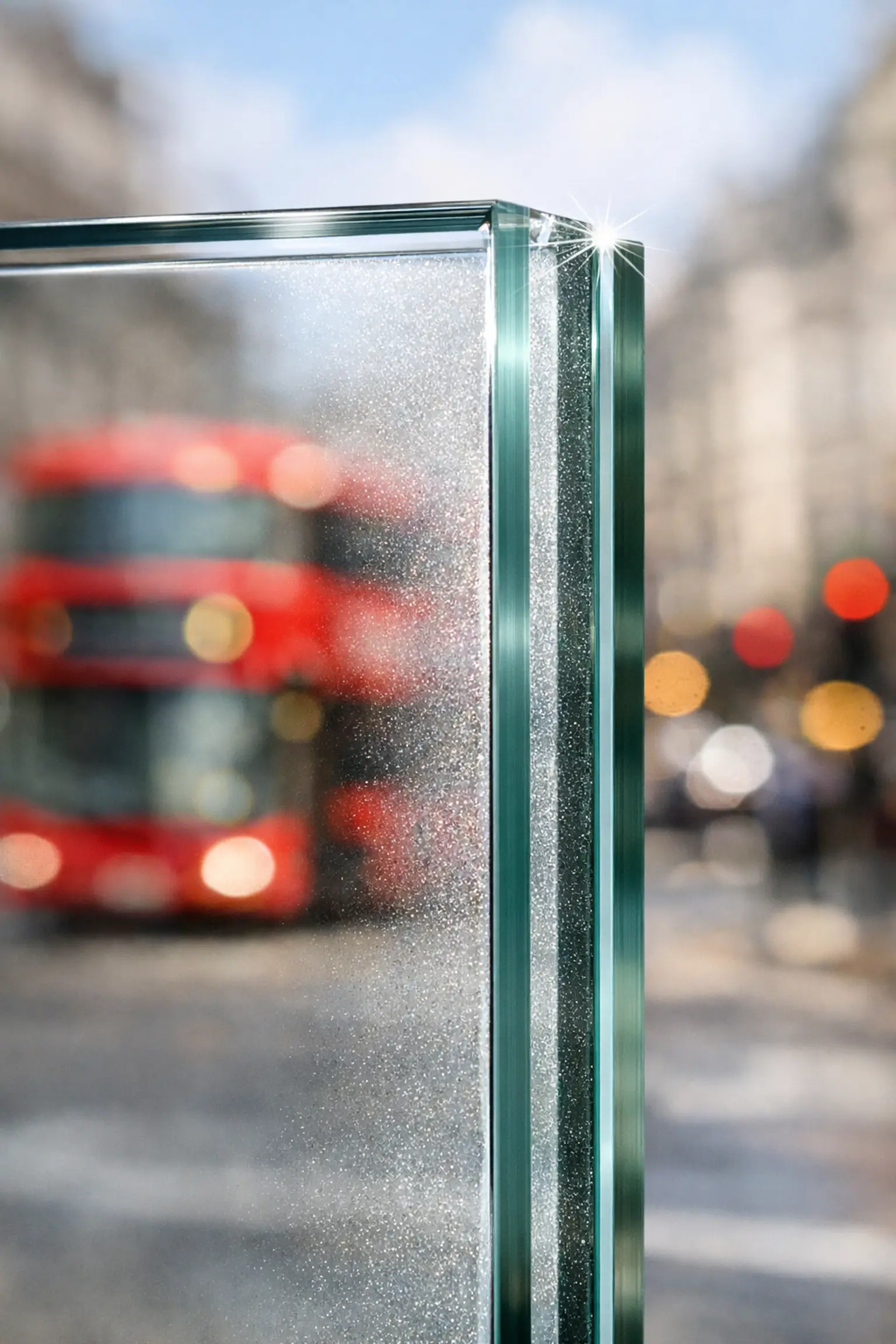
    If your survey shows a high level of low-frequency rumble from a nearby bus route, standard 4mm or 6mm glass won't cut it. You need mass. This is where our 10.8mm acoustic laminate comes into play. It is significantly heavier and denser than standard glass, providing the "inertia" needed to stop sound waves from vibrating through the pane.

    Furthermore, the survey helps us determine the optimum air cavity. To get the best results, you need a gap of 100–150mm between your existing window and the secondary glazing. This air gap acts as a "buffer zone" where sound waves lose energy before hitting the second barrier. Without a professional survey, you might install the glazing too close to the original window, "coupling" the two panes and actually making the noise worse at certain frequencies.
    10.8mm acoustic laminate glass for secondary glazing with a sound-dampening interlayer

    The "Sanctuary" Benefit: More Than Just Numbers

    We talk a lot about decibels and glass thickness, but the real goal of a sound survey is your quality of life.

    Living in a high-decibel environment is scientifically proven to increase cortisol (stress) levels, disrupt sleep cycles, and even impact cardiovascular health. When we provide a soundproofing solution, we aren't just selling a home improvement product — we are selling a "Sanctuary."

    Imagine sitting in your living room in the middle of Kensington or Camden. Outside, the world is chaotic. But inside, you can hear yourself think. You can hear the subtle notes of your music. You can sleep through the night without being jolted awake at 5:00 AM by the first bus of the morning. That peace of mind starts with a survey.

    A peaceful and quiet London living room protected from street noise by secondary glazing

    Why Guess When You Can Know?

    Buying secondary glazing without a sound survey is like buying glasses without an eye test. You might get lucky, but you'll probably end up with something that doesn't quite fit your needs.

    1

    Certainty

    You'll know exactly how much noise reduction is possible.

    2

    Accuracy

    You'll get the right glass — like our 10.8mm acoustic laminate — for your specific noise profile.

    3

    Savings

    You won't over-invest in features you don't need, or under-invest in the ones you do.

    Our team are experts in the unique acoustic challenges of London's period homes. We don't just "fit windows" — we engineer silence. If you are tired of the noise and ready to take the first scientific step toward a quieter life, it's time to move past the phone apps and talk to the pros.

    Book Your Sound Survey Today

    Find out what your home sounds like when the world finally turns the volume down. Free when you proceed with installation.

    Frequently Asked Questions

    How long does a professional sound survey take?

    A typical residential sound survey takes 45–60 minutes. We measure at multiple positions and during different traffic conditions to build a complete acoustic profile of your home.

    Do I need a sound survey before getting secondary glazing?

    While not mandatory, a professional survey ensures you get the right glass specification for your specific noise profile. Without one, you risk over-spending or under-performing.

    How much does a sound survey cost?

    Our sound surveys are complimentary when you proceed with a secondary glazing installation. As a standalone service, surveys start from £150.

    4.9/5 from 247 reviews

    "We can actually sleep now. The 10.8mm glass made all the difference."

    — Sarah M., Kensington

    Trusted by homeowners across London, Surrey & Kent