
If you live in London, or any major city for that matter, you know the sound of the "city hum." It's the low-frequency rumble of a bus idling outside your window, the high-pitched screech of a siren three streets away, and the constant chatter of pedestrians.
For most homeowners, the first instinct is to look at new double glazing. You see the glossy brochures from big names like Hugo Carter or Selectaglaze, and you think a window replacement is the only way out. But here is the professional truth that many window salesmen won't tell you: standard double glazing is designed for thermal insulation, not soundproofing.
If you want to turn your home into a sanctuary — a place where you can actually hear yourself think — you need to understand the physics of silence. Specifically, you need to understand why a 100mm air gap combined with 10.8mm acoustic laminate glass is the undisputed heavyweight champion of noise reduction.
The Problem with Modern Double Glazing
Let's start with a common misconception. People assume that because two panes of glass are better than one, they must be great at stopping noise. While double glazing is fantastic at keeping your heating bill down, it often fails at soundproofing.
Why? Because of a little thing called "coupling." In a standard double-glazed unit, the two panes of glass are usually only 16mm to 20mm apart. Because they are so close together and sealed into a single unit, they act like a drum. The sound hits the first pane, the vibration travels through the small air gap almost instantly, and the second pane vibrates in sympathy.
Expert Tip: The Coupling Effect
In some cases, double glazing can actually amplify certain low-frequency sounds because of resonance. The panes vibrate in sympathy at specific frequencies, making the problem worse than a single pane of glass.
To truly stop sound, you need to "decouple" the glass. This is where secondary glazing noise reduction becomes the superior choice.
The Physics of the 100mm Air Gap
If you want to achieve a 50dB+ noise reduction, the most critical factor isn't just the glass — it's the space between the glass.
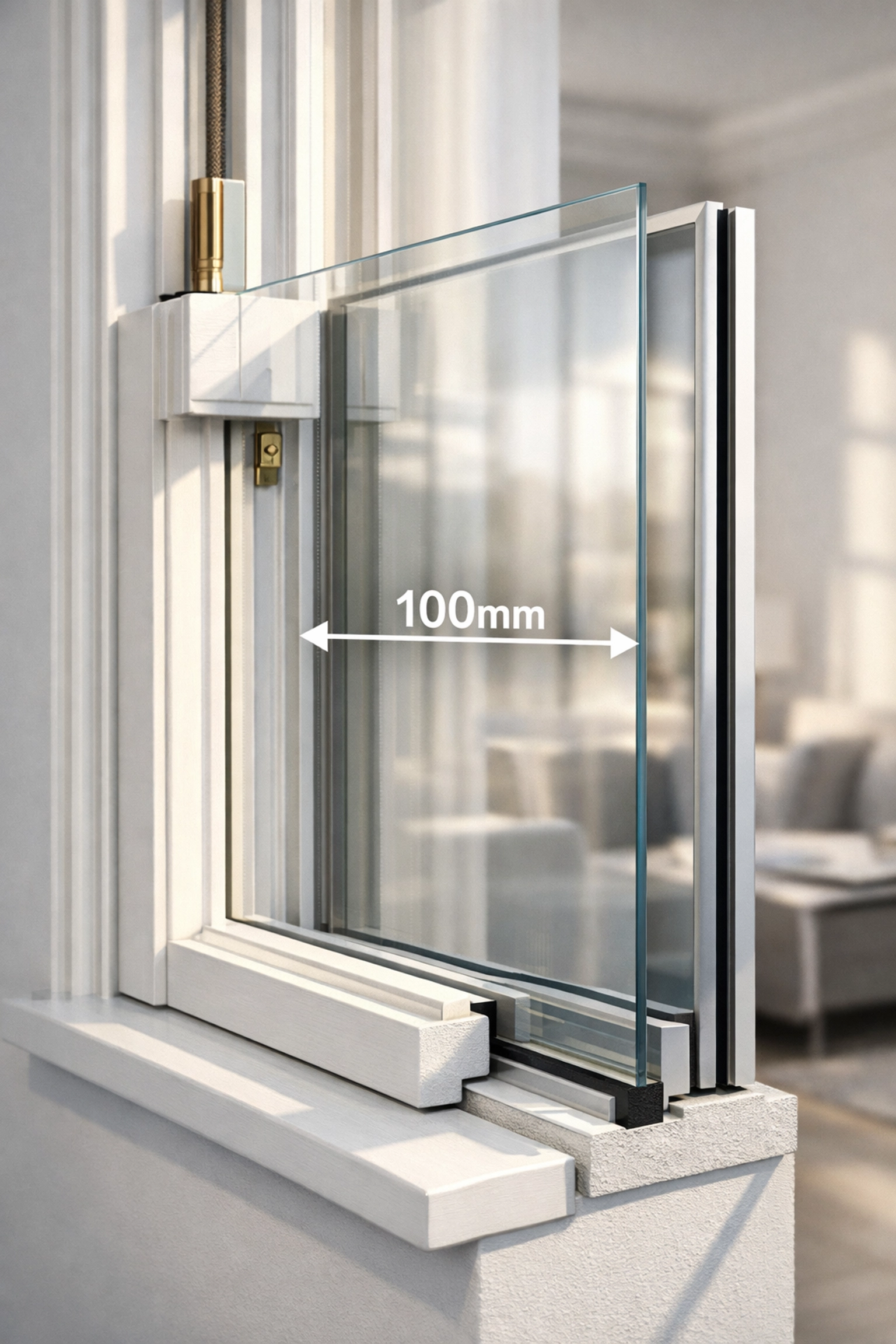
Sound is essentially a pressure wave. When it hits a window, it tries to push through. When you install a secondary glazing system, you are creating a "mass-air-mass" barrier. By leaving a gap of at least 100mm between your existing window and the new secondary unit, you create a massive buffer zone.
Why 100mm?
Research and acoustic testing have shown that an air gap of 100mm to 200mm is the "sweet spot" for domestic soundproofing.
- Low-Frequency Absorption: Smaller gaps (like those in double glazing) struggle with low-frequency sounds like traffic and heavy engines. A 100mm gap is deep enough to disrupt these long wavelengths.
- Breaking the Vibration: By the time the sound energy has travelled through your original window and across a 100mm void, it has lost a significant amount of its power. The secondary pane doesn't vibrate in sympathy because the air cushion is too deep to pass the vibration efficiently.
Expert Tip: Understanding Decibels
The decibel scale is logarithmic. A 10dB reduction is perceived by the human ear as a 50% reduction in noise. A 50dB reduction is effectively silencing the outside world. You could have a pneumatic drill outside, and inside, it would sound like a distant hum.
Why 10.8mm Acoustic Laminate Glass is the Gold Standard
The gap does the heavy lifting, but the glass provides the knockout blow. Standard window glass is usually 4mm or 6mm thick. If you want serious results, you need 10.8mm acoustic laminate glass.
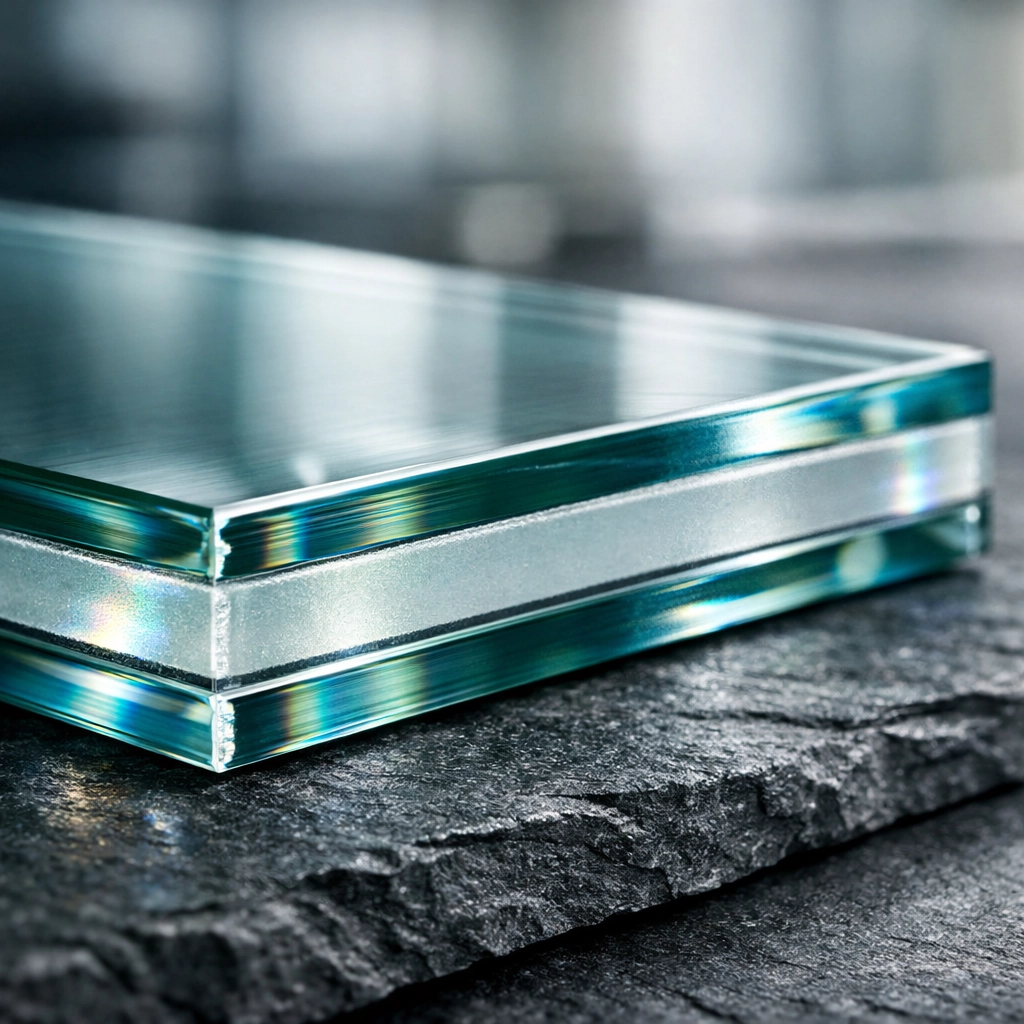
This isn't just a thick piece of glass. Acoustic laminate is a "sandwich" of two layers of glass held together by a special acoustic interlayer, usually made of Polyvinyl Butyral (PVB).
The Secret of the PVB Interlayer
This interlayer acts as a dampening core. When sound waves hit the glass, the PVB layer absorbs the energy and converts it into a tiny amount of heat rather than letting it vibrate through the pane.
Expert Tip: Why Thickness & Mass Matter
- Mass: At 10.8mm, the glass is heavy. In the world of acoustics, mass is your friend. The heavier the barrier, the harder it is for sound to move it.
- Differentiation: By using a different thickness for your secondary glazing than your primary window (e.g., 4mm original + 10.8mm secondary), you prevent "coincidence frequency" — where both panes would vibrate at the same frequency, letting sound leak through.
Secondary vs. Double Glazing: Why There is No Contest
We often get asked, "Why wouldn't I just buy the most expensive triple glazing instead?"
The answer is simple: acoustic glass secondary glazing outperforms triple glazing in almost every noise-related test. Triple glazing adds mass, but it adds more "coupling." You have three panes of glass vibrating in a very tight space.
Secondary glazing is different because it is a completely separate system. It is "decoupled" from the main window frame. It has its own seals, its own frame, and that all-important 100mm+ air gap. This setup is exactly how recording studios and luxury hotels in busy city centres stay quiet. They don't use fancy double glazing; they use secondary systems with massive air gaps.
| Solution | Typical Gap | dB Reduction | Verdict |
|---|---|---|---|
| Standard Double Glazing | 16–20mm | 28–32 dB | Thermal only — poor for noise |
| Triple Glazing | 24–32mm | 32–36 dB | More coupling, marginal gain |
| Basic Secondary Glazing | 50–75mm | 35–40 dB | Good improvement |
| 10.8mm + 100mm Air Gap 🏆 | 100–200mm | 45–50+ dB | Gold standard — studio-grade |
Perfect for Sash Windows and Listed Buildings
One of the biggest hurdles for homeowners in London — especially in areas like Kensington, Mayfair, or Chelsea — is heritage building regulations. If you live in a Grade II listed building or a conservation area, you often aren't allowed to replace your original timber sash windows.
This is where soundproof secondary glazing truly shines. Because the unit is installed on the internal side of your existing window, it doesn't change the external appearance of the building.

- ✓Preservation: You keep your beautiful, original sash windows and the historic character of your home.
- ✓Performance: You get 21st-century silence in an 18th-century building.
- ✓Functionality: Our secondary units are designed to align perfectly with your sash window meeting rails, meaning you can still open your windows for ventilation just as easily as before.
Achieving the 50dB Goal: It's All in the Installation
You can buy the best 10.8mm acoustic laminate glass in the world, but if there is a tiny gap in the seal, the sound will find it. Sound is like water; if there is a hole, it will leak through.
Expert Tip: Professional Installation is Non-Negotiable
To hit that 50dB+ target, the secondary glazing unit must be perfectly airtight. We use specialist acoustic sealants and precision-engineered frames to ensure that the 100mm air gap is a completely sealed "dead zone" for sound.
Is It Worth the Investment?
When you look at the cost of high-end window replacements from companies like Selectaglaze or Hugo Carter, you might be surprised to find that secondary glazing is often a more cost-effective solution that yields better acoustic results.
But beyond the monetary cost, there is the lifestyle ROI:
- 1Better Sleep: Eliminating the "startle" noise of sirens or early morning rubbish trucks.
- 2Productivity: A quiet home office is essential in the age of remote work.
- 3Property Value: In a noisy city, "silence" is a premium luxury feature that buyers will pay for.
Final Thoughts
If you are tired of the noise and you want a solution that actually works, don't just look for "new windows." Look for a system designed by experts who understand the physics of sound.
The combination of 10.8mm acoustic laminate glass and a 100mm air gap is the gold standard for a reason — it works. It's the difference between hearing the city and just seeing it through the glass.
Ready to reclaim your peace and quiet? At Secondary Glazing Specialist, we don't just install windows; we engineer silence. Let's talk about how we can transform your home.
Book Your Free Noise Reduction Assessment
Find out exactly how much noise we can eliminate from your London home. Our acoustic specialists will assess your property, measure the noise levels, and recommend the perfect solution.
Frequently Asked Questions
Why is a 100mm air gap important for noise reduction?
A 100mm air gap creates a 'mass-air-mass' barrier that disrupts sound waves — especially low-frequency noise from traffic and trains. Smaller gaps like those in double glazing (16–20mm) allow vibrations to pass through via coupling, while 100mm+ gaps break this transmission chain.
How much noise can 10.8mm acoustic laminate glass reduce?
On its own, 10.8mm acoustic laminate glass achieves 40–45 dB reduction. Combined with secondary glazing and a 100mm+ air gap, it can deliver up to 50dB+ noise reduction — enough to make a busy London street sound like a quiet library.
Is secondary glazing better than triple glazing for soundproofing?
Yes. Triple glazing adds mass but also adds more coupling between panes in a tight space. Secondary glazing is a completely decoupled system with its own frame, seals, and a 100mm+ air gap — the same principle used in recording studios and luxury hotels.
Can secondary glazing be installed on listed buildings?
Absolutely. Because secondary glazing sits on the interior side and doesn't alter the external appearance, it's ideal for Grade I and II listed buildings. Your original sash windows remain untouched, and it's completely reversible.
What does 50dB noise reduction actually sound like?
The decibel scale is logarithmic — a 10dB reduction sounds like a 50% reduction. A 50dB reduction effectively silences the outside world. A pneumatic drill outside would sound like a distant hum inside.
Secondary Glazing Across London
We provide expert noise reduction assessments and installations across London's finest neighbourhoods.
Related Articles
10.8mm Acoustic Laminate Glass Guide
How much noise reduction can 10.8mm acoustic glass really give you?
Secondary vs Double Glazing
Why secondary glazing outperforms double glazing for soundproofing
Planning Permission Guide
Do you really need planning permission for secondary glazing in London?
Low Frequency Noise Solutions
Tackling bass and rumble sounds from traffic and trains