
The Three Types of London Noise (And Why They're All Annoying)
Let's break down what you're actually hearing through those single-pane sash windows.
Road noise is the constant, low-frequency rumble of buses, lorries, and taxis. It's the kind of noise that sits in the background all day and keeps you awake at night. Even when traffic slows down, that deep vibration never fully goes away. If you live anywhere near the South Circular or Euston Road, you know exactly what I'm talking about.
Rail noise is different. It's higher-pitched: metal wheels on metal tracks create that distinctive squeal, especially around curves. Then there's the vibration. If you're near the Tube or Overground lines, you feel it as much as you hear it. That low-frequency rumble travels through the ground and straight into your walls.
Aircraft noise is the overhead roar that cuts through everything else. If you're anywhere near Heathrow, City Airport, or under the flight path into Gatwick, you get hit with bursts of high-decibel sound every few minutes. It's the kind of noise that stops conversations mid-sentence.
Each type of noise operates at a different frequency. Road noise sits in the low range (around 50-200 Hz). Rail noise spans low to mid frequencies (100-500 Hz). Aircraft noise covers a wider spectrum but peaks in the mid-to-high range (500-2000 Hz).
So how do you block all three? That's where secondary glazing comes in: but not just any secondary glazing.
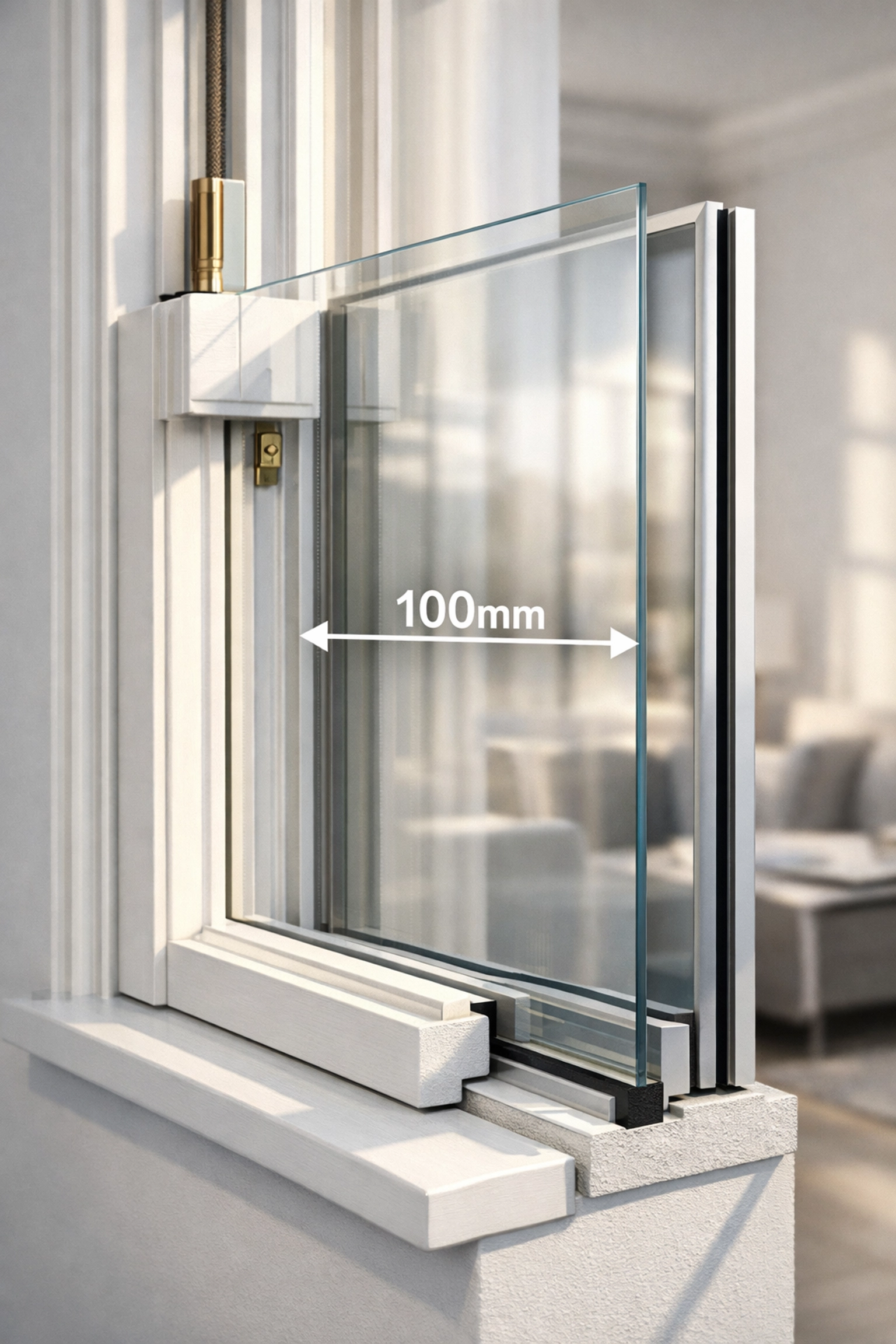
Cross-section showing the 100-150mm air gap that makes secondary glazing superior for noise reduction
Why Standard Double Glazing Doesn't Cut It
Here's the problem with modern double glazing: the air gap is too small. Most double-glazed units have a gap of around 12-20mm between the panes. That's fine for insulation, but it does very little for low-frequency noise like road traffic.
When sound waves hit your window, they cause the glass to vibrate. If the two panes are too close together, they vibrate in sympathy with each other, basically passing the sound right through. It's called sympathetic resonance, and it's why so many people with double glazing still hear everything outside.
Traffic noise reduction requires a much bigger air gap. We're talking 100mm to 150mm. That's the secret weapon.
The Air Gap Factor: Why Size Actually Matters
Think of the air gap as a buffer zone. When sound waves hit your primary window, they cause vibrations. But if there's a substantial air gap before they reach the secondary glazing unit, those vibrations lose energy. The sound waves literally run out of steam.
A 100mm air gap is roughly five times larger than what you get with double glazing. That makes a massive difference, especially for low-frequency road noise. The bigger the gap, the more effective the noise reduction.
But here's where it gets interesting: different noise types need different approaches.
For road noise (low frequency, constant), you want the maximum air gap you can get: ideally 150mm. This gives those deep, rumbling sound waves enough space to dissipate before they reach the secondary unit.
For rail noise (mid-frequency with vibration), the air gap still helps, but you also need to address the physical vibration traveling through your window frames. That's where proper seals and acoustic-rated glass come into play.
For aircraft noise (higher frequency, intermittent), the air gap is less critical than the glass itself. High-frequency sounds are easier to block, but they're also more directional and intense. You need glass that can absorb and distort those sound waves.
The beauty of secondary glazing? When it's done properly, it handles all three.
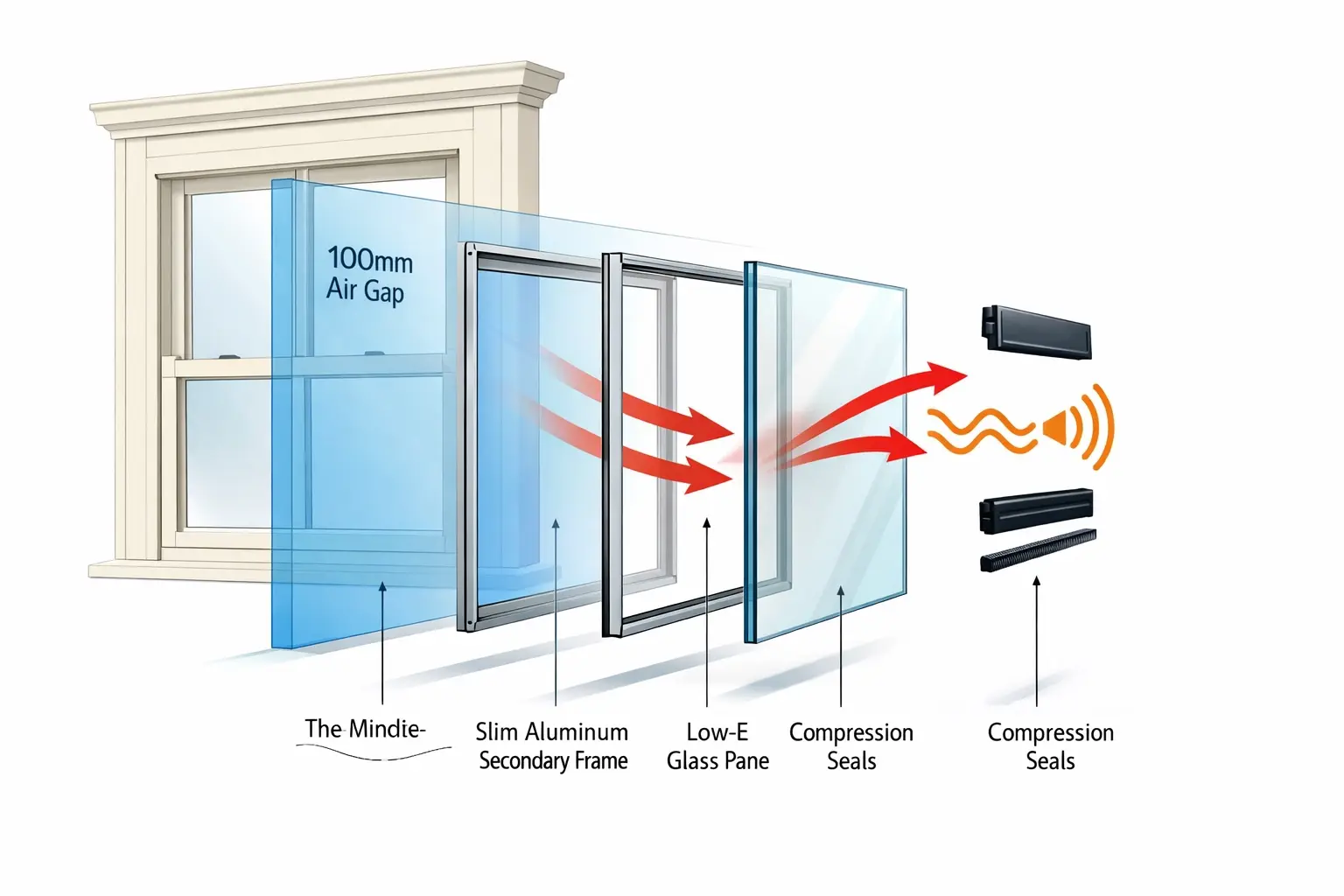
How secondary glazing's large air gap blocks sound waves compared to standard double glazing
Glass Choice: Why 10.8mm Acoustic Laminate Is Essential
Not all glass is created equal when it comes to soundproofing. Standard 4mm or 6mm glass might look the same, but it performs completely differently when sound waves hit it.
10.8mm acoustic laminate glass is the gold standard for noise reduction windows in high-decibel environments. Here's why.
Acoustic laminate glass is made by bonding two sheets of glass together with a special acoustic interlayer (usually a PVB resin). This creates a glass "sandwich" that's specifically designed to absorb sound energy rather than vibrate and transmit it.
When sound waves hit the laminate, the acoustic interlayer distorts and weakens them. The two glass sheets also vibrate at different frequencies, which prevents sympathetic resonance. Essentially, the glass itself becomes a sound dampener.
The 10.8mm thickness is important because it provides enough mass to block higher-frequency sounds (like aircraft noise) while the laminate construction handles mid-range frequencies (like rail noise). Combined with the large air gap, it creates a system that can achieve 45-54 dB noise reduction: enough to turn the roar of the A4 into a distant hum.
For context, a 50 dB reduction is the difference between a busy London street (around 70-80 dB) and a quiet library (around 30 dB). That's the difference between constant stress and actual peace.
London-Specific Scenarios: What Works Where
Let's get specific. If you live near certain parts of London, you're dealing with very particular noise challenges.
Near the A4 or A40: You're getting constant, heavy road traffic: buses, lorries, and motorcycles. This is classic low-frequency rumble. You need the full package: 100mm+ air gap and 10.8mm acoustic laminate glass. Anything less won't make a meaningful difference.
Under the Heathrow or City Airport flight path: Aircraft noise is intense but intermittent. The 10.8mm acoustic glass is critical here. Even with a smaller air gap (say, 100mm), the acoustic laminate will handle those high-decibel bursts effectively.
Near Overground or Tube lines: Rail noise is tricky because it's both sound and vibration. You need the air gap to handle the low-frequency rumble, acoustic glass for the high-pitched squeal, and proper seals to prevent vibration from traveling through the frames. This is where professional installation really matters.
Victorian or Georgian terraces in busy areas: If you've got single-pane sash windows in a period home, you're basically living with no sound barrier at all. Secondary glazing transforms these properties because it doesn't require replacing the original windows: you're just adding a discreet internal layer.

Discreet secondary glazing fitted inside a Georgian period window, preserving original features
Why This Works for Period Homes (Without Ruining Them)
Here's the best part: secondary glazing doesn't touch your original windows.
If you live in a conservation area or a listed building, ripping out your sash windows isn't an option. Planning permission issues aside, those original windows are part of the character of your home. You don't want plastic replacements.
Secondary glazing fits neatly on the inside of your existing window frames. It's discreet, reversible, and designed to complement period features rather than replace them. From the street, your home looks exactly the same. From the inside, you've just gained 50 dB of noise reduction.
For Victorian terraces in areas like Clapham, Islington, or Richmond, this is a game-changer. You keep the heritage aesthetics while creating an acoustic barrier that actually works. Learn more about discreet soundproofing for period homes in conservation areas.
Does It Really Work? The Numbers Don't Lie
Let's talk evidence. Standard secondary glazing installations deliver around 35-40 dB noise reduction. That's noticeable: you'll definitely hear less traffic.
But when you upgrade to acoustic-rated glass (like 10.8mm laminate) and maximize the air gap, you can hit 45-54 dB reduction. That's the difference between "it's a bit quieter" and "I forgot I live on a main road."
To put that in perspective: a reduction of 50 dB means that external noise at 80 dB (equivalent to a busy street) becomes 30 dB inside your home (equivalent to a whisper in a library). One specialist put it perfectly: "It can turn a jackhammer outside your home into a quiet whisper."
And because secondary glazing creates a much larger air gap than double glazing (100mm+ vs. less than 20mm), it's up to five times more effective for noise reduction. That's not marketing hype: that's physics.

The transformation: secondary glazing turns a noisy London home into a peaceful sanctuary
The Bottom Line: One Solution, Three Noise Types
Road, rail, or aircraft: it doesn't matter. Properly installed secondary glazing with 10.8mm acoustic laminate glass and a 100-150mm air gap will handle all three.
The key is understanding that different noise types require the same core solution, just optimized slightly differently:
- Road noise: Maximize the air gap
- Rail noise: Focus on vibration seals and acoustic glass
- Aircraft noise: Prioritize the acoustic laminate glass thickness
For London homeowners dealing with constant noise pollution, this isn't just about comfort: it's about quality of life. Being able to open your windows in summer without being drowned out by traffic, or sleeping through the night without earplugs, makes a real difference.
And if you're in a period property, you're doing it without compromising the character of your home.
Ready to finally get some peace and quiet? Proper secondary glazing isn't just an upgrade; it's an investment in your sanity.
Frequently Asked Questions
Which type of London noise is hardest to block?
Low-frequency road noise (50-200 Hz) is the hardest to block because it requires a larger air gap. Secondary glazing with a 100-150mm air gap and 10.8mm acoustic laminate glass is the most effective solution, achieving up to 54dB noise reduction.
Does secondary glazing work for aircraft noise near Heathrow?
Yes. Aircraft noise peaks in the mid-to-high frequency range (500-2000 Hz), which 10.8mm acoustic laminate glass is specifically engineered to absorb. Combined with a proper air gap, secondary glazing can reduce aircraft noise by 45-54dB.
Can secondary glazing reduce rail vibration noise?
Secondary glazing addresses both airborne rail noise and reduces vibration transfer through proper seals and acoustic-rated glass. The large air gap handles low-frequency rumble while the laminate glass targets high-pitched squealing.
Why is secondary glazing better than double glazing for noise?
Secondary glazing creates a 100-150mm air gap — up to five times larger than double glazing's 12-20mm gap. This dramatically improves low-frequency noise reduction, making it the superior choice for London's road, rail, and aircraft noise.
Ready for Peace and Quiet?
Whether you're battling road rumble, rail screeching, or aircraft roar, our secondary glazing installers London team can specify the perfect acoustic solution for your property.
Get Your Free Acoustic AssessmentSources & References
Authoritative sources supporting the information on this page.
- British Standards Institution (2014). Guidance on sound insulation and noise reduction for buildings (BS 8233:2014). BSI Standards.
Sets the recommended internal noise levels for bedrooms and living rooms used to judge how much glazing performance a home needs.
- HM Government (2015). Approved Document E: Resistance to the passage of sound. The Building Regulations 2010.Open source
The statutory guidance on sound insulation in dwellings in England.
- British Standards Institution (2020). Acoustics: Rating of sound insulation in buildings and of building elements, Part 1: Airborne sound insulation (BS EN ISO 717-1). BSI Standards.
Defines the Rw and Rw+Ctr ratings used to compare the acoustic performance of glazing systems.
- British Standards Institution (2019). Glass in building: Glazing and airborne sound insulation (BS EN 12758). BSI Standards.
Describes how the sound insulation of glass types, including acoustic laminates, is characterised.
- Greater London Authority (2021). The London Plan 2021, Policy D14: Noise. Mayor of London.Open source
The London planning policy on reducing, managing and mitigating noise in homes across the capital.