
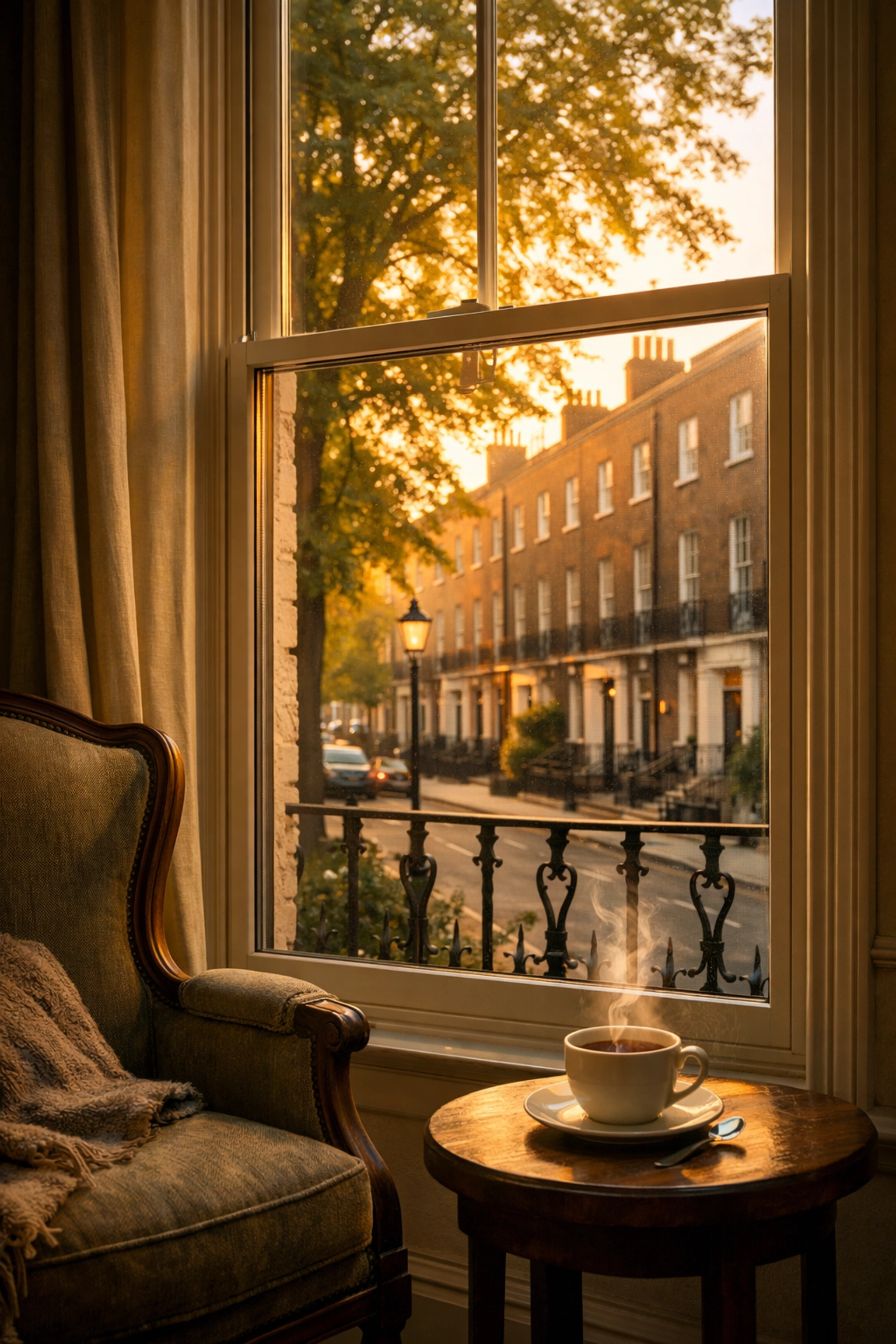
Owning a Grade II or Grade I listed property is a bit like being a custodian of history. Whether it's a Georgian townhouse with towering sash windows or a cozy Tudor cottage, these buildings have character that modern new-builds simply can't replicate.
However, there's a trade-off. If you live in one of these beautiful homes, you probably know the "listed building struggle" all too well: original single-glazed windows that rattle in the wind, let in every ounce of street noise, and practically invite the heat to leave the house the moment you turn the radiator on.
In a modern home, you'd just swap them out for uPVC double glazing. But in a listed building or a strict conservation area? That's usually a one-way ticket to a very awkward conversation with a Planning Officer.
That is where secondary glazing for listed buildings becomes the ultimate "secret weapon" for homeowners. It allows you to keep your historic windows exactly as they are while enjoying the comfort of a 21st-century home.
Why Standard Double Glazing is Often a "No-Go"
If your property is Grade I or Grade II listed, the exterior of the building is protected by law. This includes the "historic fabric" of the windows. Planning authorities are extremely protective of original timber sash windows and leaded lights because they are central to the building's heritage.
Replacing these with standard double glazing is rarely permitted. Even "slimline" double-glazed units often require the original frames to be routed out or replaced entirely, which is seen as a permanent loss of history.
This is why secondary glazing is the preferred — and often the only — solution approved by conservation officers. Because it is installed on the interior of the window and is technically "reversible" (meaning it can be removed without damaging the original structure), it satisfies the strict requirements of Historic England and local councils.
What Exactly is Secondary Glazing?
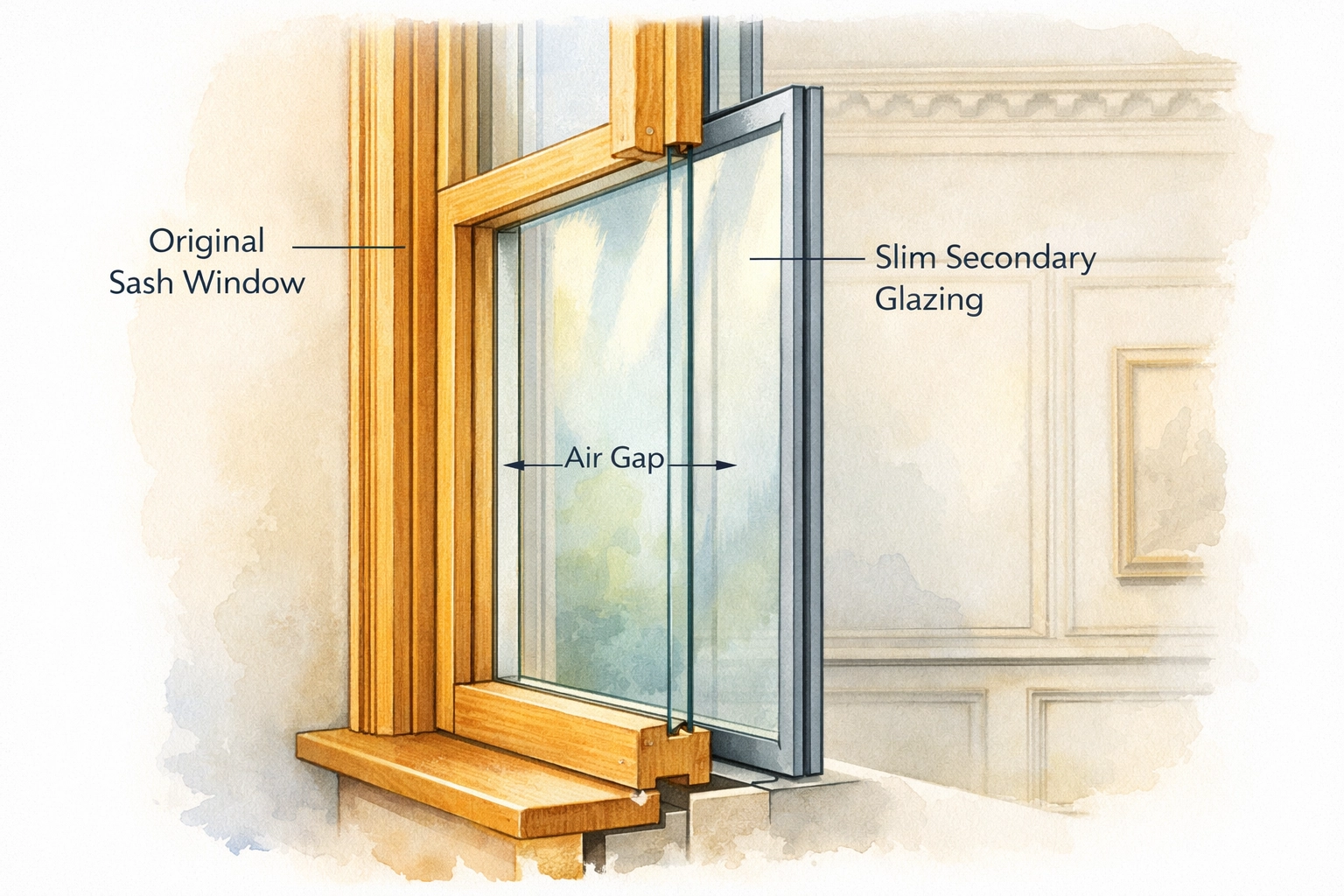
To keep it simple: secondary glazing is an independent window system installed on the room side of your existing windows. It's not a "film" or a temporary fix; it's a high-quality internal frame made from slimline aluminium that houses a second pane of glass.
At Secondary Glazing Specialist, we design these units to be as discreet as possible. When done correctly, you barely notice they are there from the inside, and they are completely invisible from the street.
The Big Benefits for Listed Properties
Thermal Insulation
High-quality secondary glazing can meaningfully reduce heat loss, with the exact figure depending on your existing windows and installation. By creating an insulating layer of air between the original window and the secondary pane, you trap the heat inside — significantly lowering your energy bills.
Preserving Original Sash Windows
Secondary glazing allows you to keep the original weights, pulleys, and timber frames fully intact. Vertical sliders align perfectly with your existing meeting rails for full ventilation.
Incredible Noise Reduction
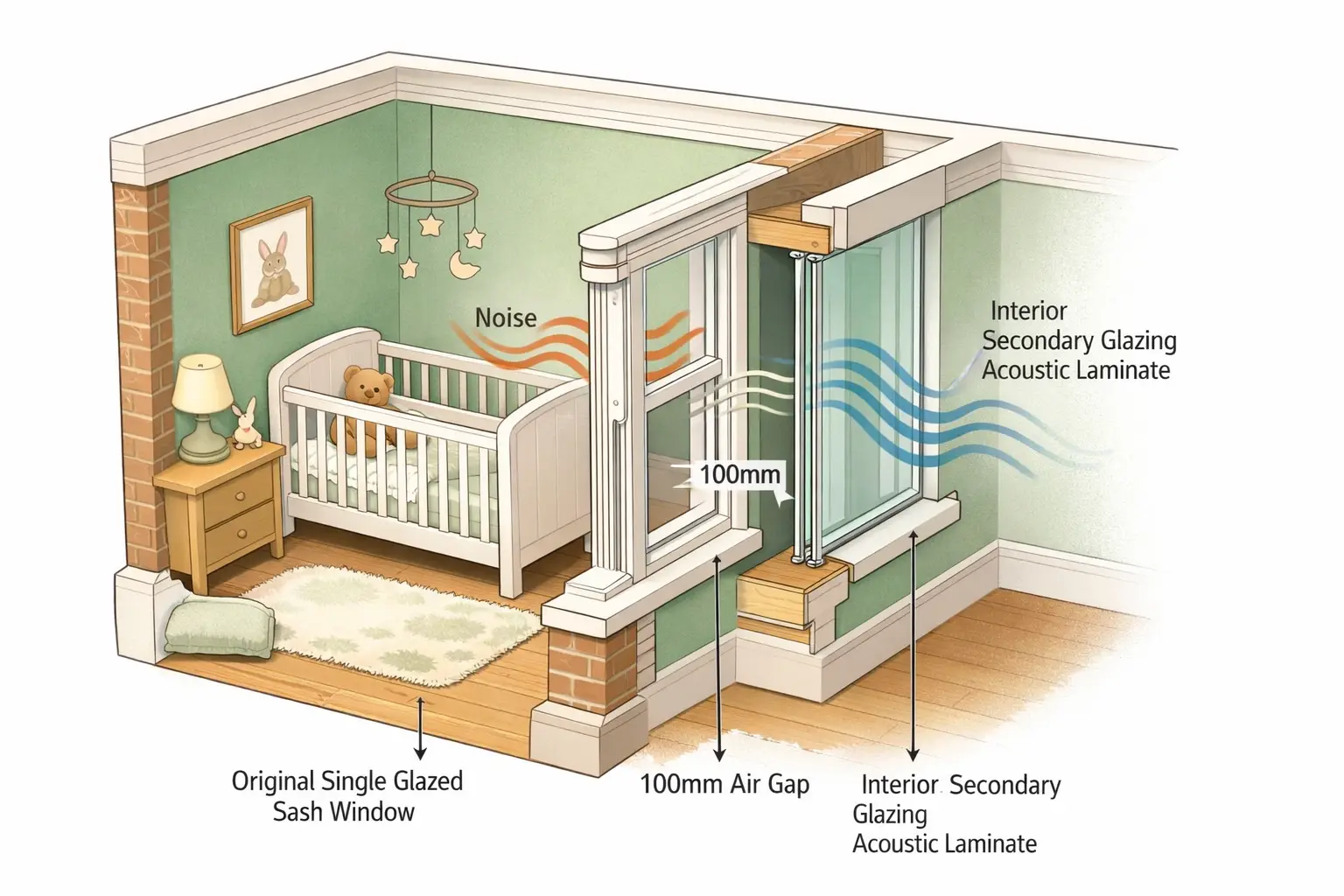
Secondary glazing is actually better at soundproofing than standard double glazing. A 100mm–150mm air gap creates an acoustic barrier that can block up to 80% of external noise.
Condensation Control
Secondary glazing regulates the temperature of the internal glass surface, significantly reducing the "fogging" effect. Combined with proper ventilation, it's a life-saver for historic wood frames.
Navigating Planning Permission and Conservation Areas
One of the most common questions we get at Secondary Glazing Specialist is: "Do I need planning permission for secondary glazing?"
The short answer is: Usually, no.
Because secondary glazing is an internal alteration that doesn't affect the external appearance of the building, it is often considered "Permitted Development." However, for Grade I and some Grade II* properties, it is always best practice to consult your local planning authority or a conservation officer first.
Historic England's own guidance, "Traditional Windows: Their Care, Repair and Upgrading," specifically highlights secondary glazing as a highly effective way to improve energy efficiency without harming the character of a historic building.
Design Options: Making it Invisible
We know that aesthetics are everything. You don't want a bulky metal frame ruining the look of your period shutters or ornate plasterwork. Modern secondary glazing for listed buildings is designed with "slimline" profiles:
- Color Matching: Frames can be powder-coated in over 200 RAL colors to match your existing interior woodwork.
- Bespoke Shapes: Whether you have arched windows, Gothic points, or circular "ox-eye" windows, frames can be curved and shaped to match the original architecture.
- Discreet Fittings: The secondary glazing lines up with the original window bars (muntins) so that visual impact is minimized.
Types of Secondary Glazing for Heritage Homes
Depending on the style of your original windows, there are several ways to approach the installation:
- 1Vertical Sliders: The perfect match for traditional sash windows. These use spring balances or pulleys to mirror the movement of the original window.
- 2Horizontal Sliders: Ideal for casement windows or wider window openings.
- 3Hinged Units: These open like a door, providing full access to the original window for cleaning or maintenance. Often used for smaller windows or those with leaded lights.
- 4Lift-out Units: Great for windows that you rarely need to open, providing a very clean, minimalist look.
Professional Installation vs. DIY
While there are DIY kits available, we strongly recommend professional installation for listed buildings. Historic windows are rarely "square" — they settle over centuries. A professional survey ensures that the secondary glazing is measured to the millimetre, accounting for any bows or tilts in the original masonry.
At Secondary Glazing Specialist, we focus on a "tight seal." If the secondary glazing isn't fitted perfectly, you lose the acoustic and thermal benefits that you're paying for. Plus, a professional install ensures that the original fabric of the building is respected and protected during the process.
Is it Worth the Investment?
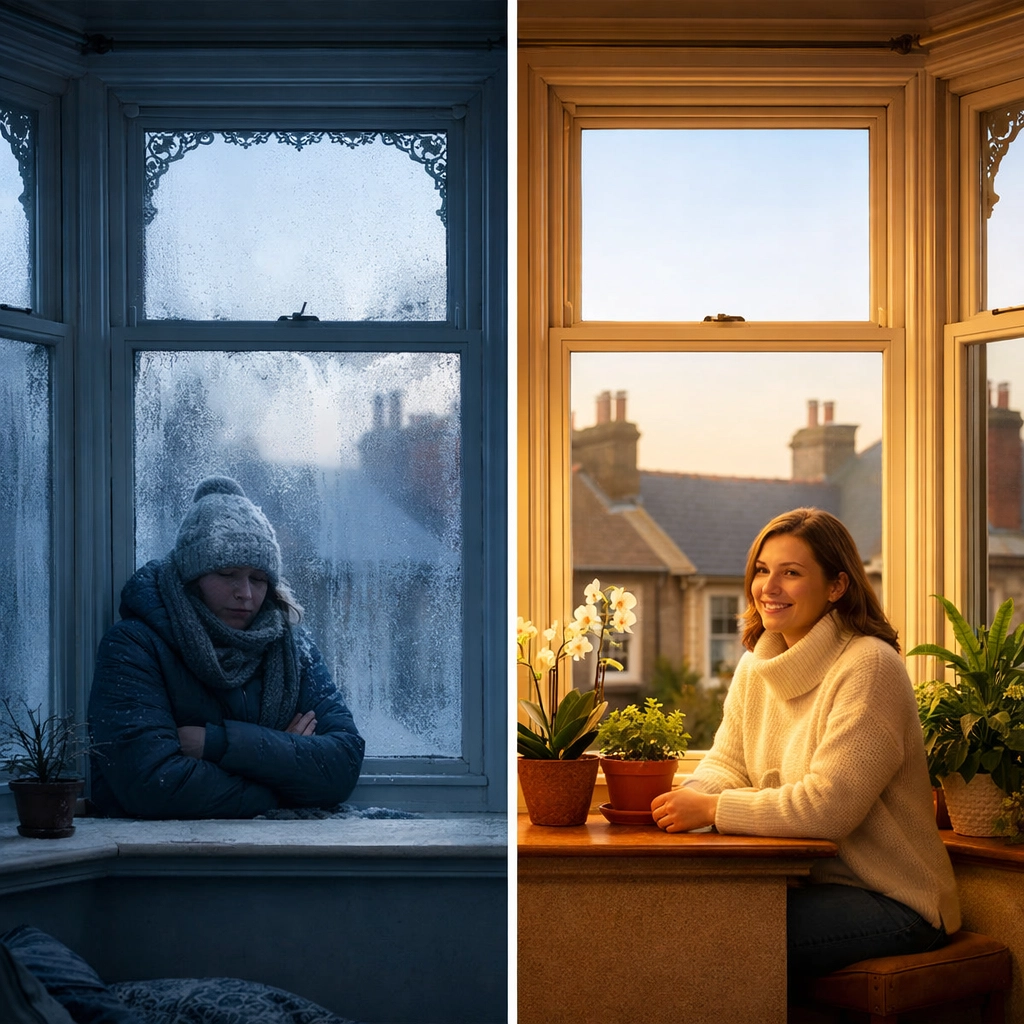
Living in a listed building shouldn't mean living in a cold, noisy environment. While the initial cost of high-quality secondary glazing is an investment, the ROI comes in three ways:
- Energy Savings: Drastic reduction in heating costs during the winter months.
- Property Value: Maintaining original features while providing modern comfort makes your home much more attractive to future buyers.
- Quality of Life: The peace and quiet of an 54dB noise reduction cannot be overstated, especially in urban areas.
Final Thoughts
If you are looking for the best way to upgrade your Grade I or Grade II listed property, secondary glazing for listed buildings is the gold standard. It's the only solution that satisfies the "reversible" requirement of conservationists while providing the thermal and acoustic performance of a brand-new home.
Don't let your historic windows be the reason your home feels drafty or loud. You can preserve the past and enjoy the present at the same time.
If you're ready to see how secondary glazing can transform your heritage home, get in touch with us at Secondary Glazing Specialist. We're experts in working with sensitive properties and can help you find a solution that both you and your conservation officer will love.
Ready to Protect Your Heritage Home?
Get a free, no-obligation estimate for secondary glazing tailored to your listed property. Use our instant cost calculator or book a consultation.
Planning a project?
Get an instant estimate with our Secondary Glazing Cost Calculator or Book a Professional Sound Survey.
Sources & References
Authoritative sources supporting the information on this page.
- Historic England (2016). Energy Efficiency and Historic Buildings: Secondary Glazing for Windows. Historic England.Open source
Technical advice on choosing and installing secondary glazing in older and listed buildings.
- Historic England (2017). Traditional Windows: Their Care, Repair and Upgrading. Historic England.Open source
Guidance on keeping historic windows while improving comfort, including secondary glazing.
- UK Parliament (1990). Planning (Listed Buildings and Conservation Areas) Act 1990. legislation.gov.uk.Open source
The legal framework for listed building consent and works in conservation areas.
- British Standards Institution (2014). Guidance on sound insulation and noise reduction for buildings (BS 8233:2014). BSI Standards.
Sets the recommended internal noise levels for bedrooms and living rooms used to judge how much glazing performance a home needs.
- HM Government (2015). Approved Document E: Resistance to the passage of sound. The Building Regulations 2010.Open source
The statutory guidance on sound insulation in dwellings in England.
Related guides
Explore the dedicated London landing pages for the systems and property types covered above.
- Secondary glazing for listed buildingsFully reversible, consent-friendly specifications for Grade I and Grade II properties.
- Conservation area secondary glazingWhat London conservation officers accept — sightlines, finishes and reversibility.
- Lift-out secondary glazingThe most discreet, highest-sealing option for rarely-opened heritage windows.
- Secondary glazing for sash windowsPurpose-built systems for London box sash windows — specs, prices and heritage detailing.