Top 5 Noisiest Streets in Wandsworth & Battersea – Before/After dB
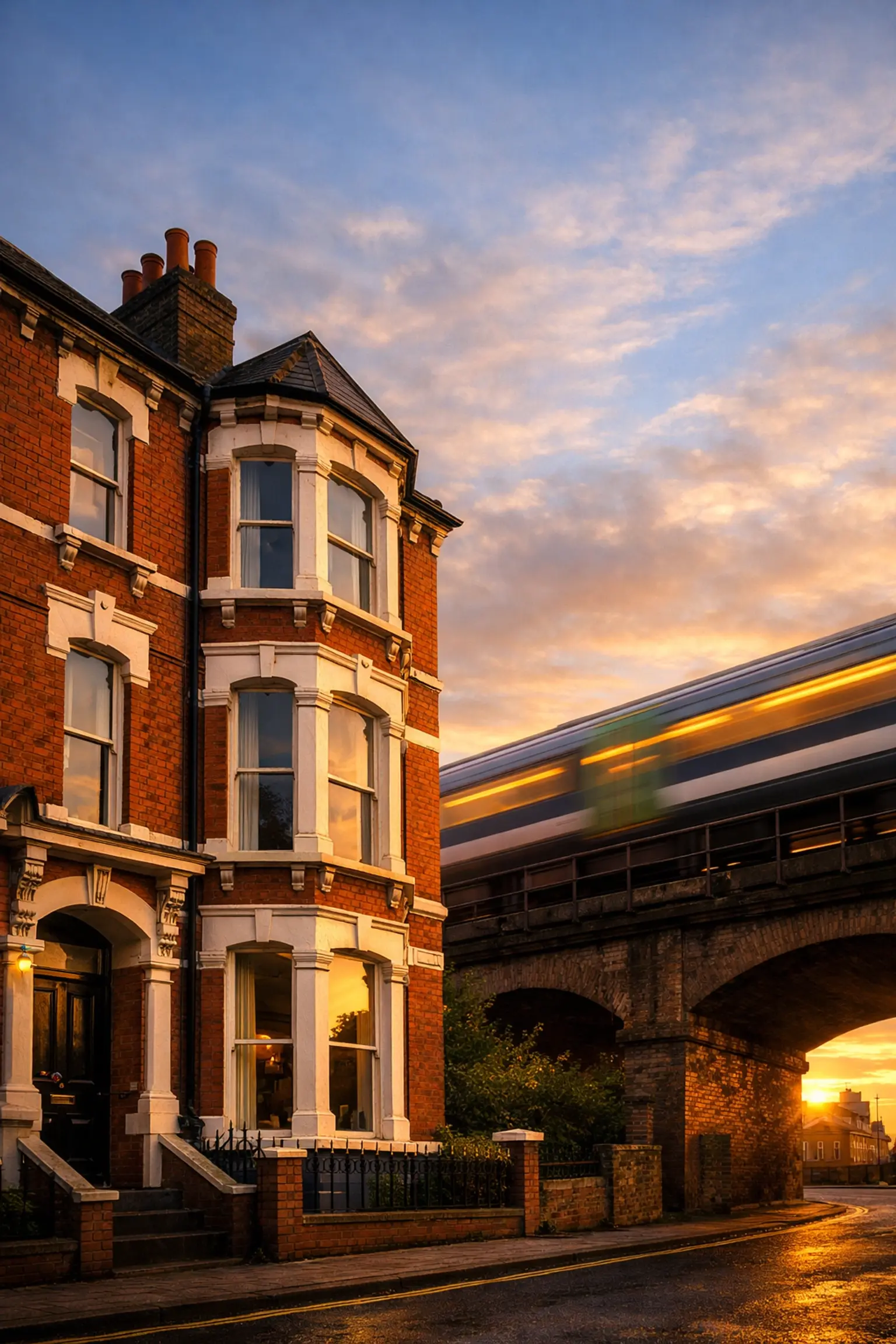
Wandsworth and Battersea have transformed from affordable South London to some of the city's most desirable family areas. But they share a persistent acoustic challenge: Clapham Junction, Britain's busiest railway station, pumps 2,000+ train movements per day through the borough. Add the arterial road network and you have a noise problem that affects thousands of Victorian homes.
Here's where we measure the worst levels — and the results we deliver.
1. Lavender Hill (SW11) — 76–80 dB Peak
The stretch between Clapham Junction and Lavender Hill curves past hundreds of Victorian terraces that sit just 50 metres from the main Brighton/South Western railway lines. Residents get both railway noise (including early-morning freight) and heavy road traffic from the A3036.
| Metric | Before | After |
|---|---|---|
| Peak train pass (morning rush) | 78 dB | 28 dB |
| Night freight (4 AM) | 72 dB | 24 dB |
| Noise reduction | 50 dB (80% perceived reduction) | |
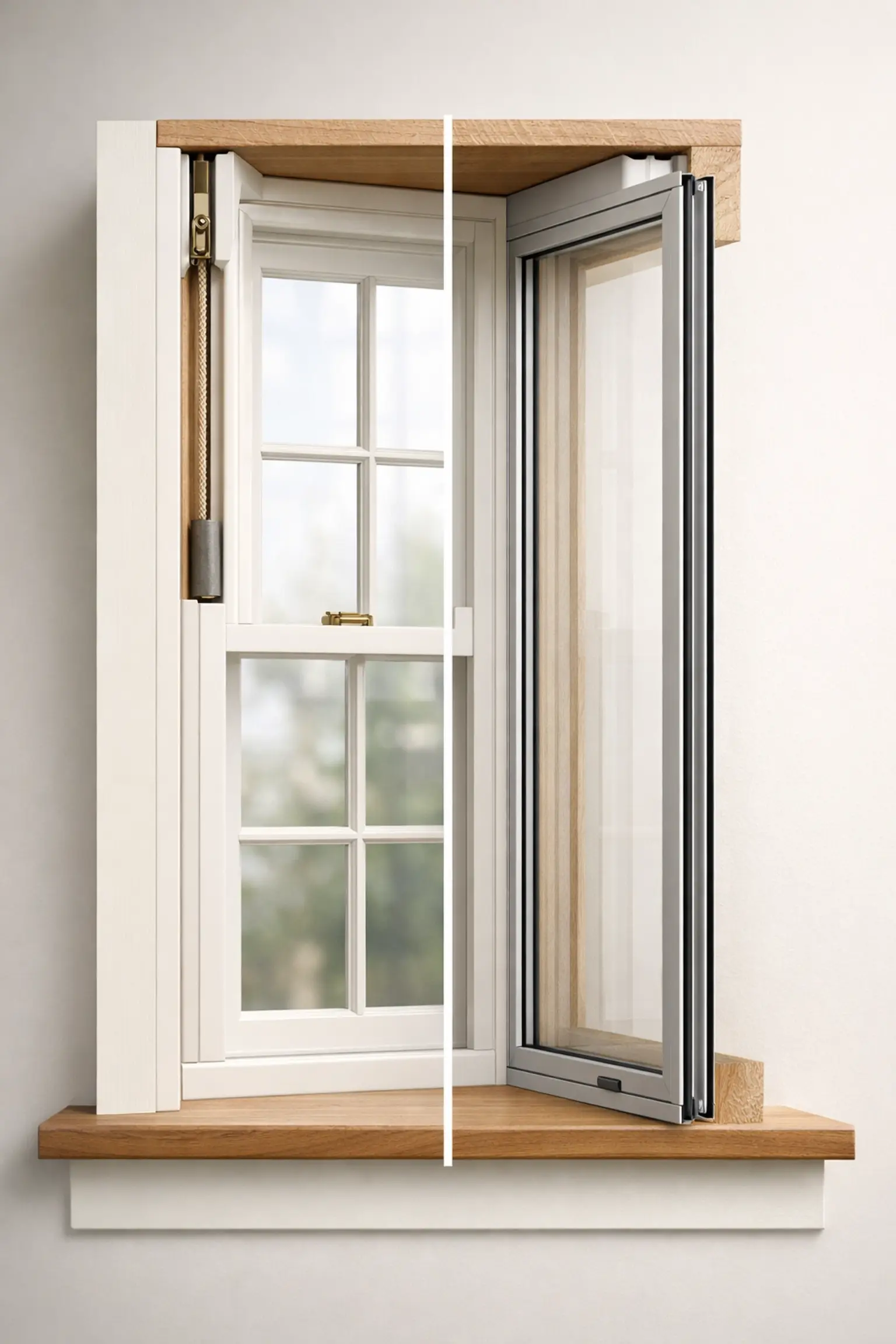
The fix: 10.8mm acoustic laminate with 100mm air gap and vibration-isolating mounting brackets. The brackets are essential near railways — they prevent the secondary frame from transmitting track vibration through the wall.
2. Trinity Road / Burntwood Lane (SW17 / SW18) — 74–78 dB Peak
🏛️ Living in a listed building or conservation area?
See how we navigate planning permission and protect your heritage windows. Read our conservation area guide →
The A214 Trinity Road is Wandsworth's main north-south artery. Combined with the railway bridge at Earlsfield, properties between Wandsworth Common and Tooting Bec face a constant background drone punctuated by train passes every 3–4 minutes.
Typical result: 76 dB → 26 dB. Victorian bay windows fitted with three-panel systems — each panel independently sealed to maintain the bay geometry while maximising acoustic isolation.
3. Battersea Bridge Road (SW11) — 72–76 dB Peak
Connecting Chelsea Bridge to Battersea Park Road, this route carries heavy traffic including construction vehicles heading to the Nine Elms development. The converted mansion blocks on Albert Bridge Road catch reflected noise from the river embankment.
Typical result: 74 dB → 24 dB. Full-height acoustic panels for the generous Edwardian windows, with powder-coated frames in heritage white.
4. Garratt Lane (SW18) — 72–76 dB Peak
Wandsworth's high street is a heavy bus and delivery route that runs from Wandsworth Town station to Earlsfield. The Victorian workers' cottages here have shallow window reveals, which makes acoustic performance harder to achieve — but not impossible.
Typical result: 72 dB → 25 dB. We use our slim-profile system with 80mm air gap and 10.8mm glass — slightly less gap than ideal, but the heavier glass compensates. Still achieves 47 dB reduction.
5. East Hill / West Hill (SW18) — 70–74 dB Peak
💷 Wondering about costs?
Use our calculator to get an instant estimate for your windows. Try the cost calculator →
The steep roads connecting Wandsworth town centre to the common carry accelerating traffic that generates more noise than flat-road equivalents. The handsome Victorian semis near Spencer Park get engine noise amplified by the gradient.
Typical result: 72 dB → 24 dB. Standard 10.8mm system with 100mm air gap. The deep Victorian reveals on these larger houses allow the optimal gap distance.
The Clapham Junction Factor
Railway noise is fundamentally different from road noise. Trains produce a low-frequency rumble (80–250 Hz) combined with high-frequency wheel squeal (2–4 kHz). Standard glazing barely touches the low end.
Our 10.8mm acoustic laminate is specifically engineered with a PVB interlayer tuned to absorb these frequencies. Combined with vibration-isolating mounts and a minimum 100mm air gap, we achieve the full-spectrum reduction that railway-adjacent homes demand.
Sleep through the 5:15 to Brighton. Book your free noise assessment →
See also: Wandsworth area guide · Full SW11 & SW18 guide
Solutions covered in this guide
Go straight to the dedicated London landing page for the system or property type discussed above.
- Traffic noise secondary glazingSpecs matched to road-noise frequency profiles on London’s busiest streets.
- Railway & Tube noise secondary glazingLow-frequency rumble control with heavier laminate and deeper air gaps.
- Secondary glazing for sash windowsPurpose-built systems for London box sash windows — specs, prices and heritage detailing.
- Sliding secondary glazingHorizontal and vertical sliders for sash and casement windows — up to 51dB with full ventilation access.
Sources & References
Authoritative sources supporting the information in this article.
- British Standards Institution (2014). Guidance on sound insulation and noise reduction for buildings. BS 8233:2014.Open source
The primary UK standard for measuring and assessing noise impact on residential buildings, essential for calculating dB reductions.
- Department for Environment, Food & Rural Affairs (DEFRA) (2022). Strategic Noise Mapping: England (Road and Rail Noise). Strategic Noise Mapping Data 2022.Open source
Provides the strategic noise maps used to identify high-decibel areas in Wandsworth and Battersea near rail and road links.
- HM Government (2021). Approved Document L: Conservation of fuel and power, Volume 1: Dwellings. Building Regulations 2010 (amended 2021).Open source
The fundamental building regulation governing energy efficiency and thermal performance, relevant for secondary glazing retrofits.
- Historic England (formerly English Heritage) (2016). Secondary Glazing for Windows: Improving Energy Efficiency and Acoustic Performance. Energy Efficiency and Historic Buildings Guidance Notes.Open source
Guidance on how to improve acoustic and thermal performance in Wandsworth's many conservation areas without affecting heritage aesthetics.
- Ross, P. and Association of Noise Consultants (2018). Sound Insulation of Windows: The Role of Secondary Glazing in Noise Control. The Guide to Secondary Glazing Performance.
A standard industry reference for the specific acoustic performance of secondary glazing compared to single and double glazing.
"We can actually sleep now. The 10.8mm glass made all the difference."
— Sarah M., Kensington
Planning a project?
Get an instant estimate with our Secondary Glazing Cost Calculator or Book a Professional Sound Survey.
Related services & guides
Move beyond the blog: jump straight to the matching service pages, cost tools and technical guides that go deeper on this topic.
- Specialist acoustic glazing service
The full acoustic glazing menu with dB targets and pricing.
- Transparent London secondary glazing pricing
Fixed 2026 prices per window with no hidden extras.
- ROI & payback calculator
Instant estimate for your window count, glass spec and property type.
- Request a free bespoke quote
Same-week written quote based on your exact requirements.