

If you're reading this, you've probably reached the "I can't take this noise anymore" stage of home ownership. Maybe it's the constant low-frequency thrum of the A1, the high-pitched squeal of the District Line, or just that one neighbour who thinks 11 PM is the perfect time to practice the drums.
You've done your research, you know that secondary glazing is the best way to keep the peace without ripping out your beautiful original sash windows, and you've narrowed it down to the glass. But now you're staring at two numbers: 6.4mm and 10.8mm.
One sounds like a standard choice; the other sounds like it belongs in a bank vault. Does an extra 4.4mm of glass really make that much of a difference? Is it worth the extra cost?
Let's get into the straight-talk guide on acoustic laminate glass and find out which one you actually need for your London home.
The Secret Sauce: What Makes Glass "Acoustic"?
Before we compare sizes, we need to talk about why this isn't just regular glass. If you put a single 6mm pane of standard float glass in your window, it would help a little, but it wouldn't be "acoustic."
Acoustic laminate glass is a "glass sandwich." It's made of two layers of glass bonded together with a special plastic interlayer called Polyvinyl Butyral (PVB).
Expert Tip: How the PVB Interlayer Works
- Two layers of glass are bonded with a noise-dampening PVB layer
- In standard laminate (like car windscreens), PVB prevents shattering
- In acoustic laminate, the PVB is engineered to absorb sound vibrations
- Sound energy is converted into tiny amounts of heat instead of passing through
When sound waves hit a standard piece of glass, the glass vibrates and passes that sound right into your living room. When sound hits acoustic laminate, the PVB layer acts like a sponge, absorbing the vibration and "killing" the sound energy before it gets through.
The 6.4mm Contender: The "City Hum" Specialist
6.4mm acoustic laminate is the entry-level heavy hitter. It usually consists of two 3mm panes of glass with a 0.38mm acoustic PVB interlayer.
When is 6.4mm enough?
If you live on a relatively quiet residential street in a London borough like Richmond or parts of Hampstead, 6.4mm might be all you need. It's excellent at tackling what we call "general city hum."
- Distant traffic: The sound of cars a few streets over.
- Birds and wind: High-frequency sounds that find their way through gaps.
- Thermal benefits: Because it's a laminate, it's also great at keeping heat in — a nice bonus for drafty Victorian sashes.
The Pros:
- Lightweight: Easier on the secondary glazing frames; doesn't require heavy-duty hinges.
- Cost-effective: Cheaper than the thicker 10.8mm option.
- Thin profile: Fits into almost any secondary glazing frame without looking bulky.
The Cons:
It has its limits. If a double-decker bus stops right outside your bedroom window, or if you live near an ambulance route, 6.4mm is going to struggle. It lacks the mass required to stop deep, low-frequency vibrations.
The 10.8mm Champion: The "Gold Standard"
Now we're talking. 10.8mm acoustic laminate is what we call the Gold Standard for noise reduction windows in London. This is a beast of a glass pane, usually made of two 5mm glass sheets with a much thicker 0.76mm acoustic PVB interlayer.
Expert Tip: Mass Matters in Acoustics
In the world of acoustics, mass matters. To stop low-frequency noise (the kind you feel in your chest, like a rumbling truck engine), you need heavy material. 10.8mm glass is significantly heavier and denser than 6.4mm.
When you pair 10.8mm glass with a 100mm to 200mm air gap, you create a sound-blocking barrier that can reduce noise by up to 50 decibels. To put that in perspective, that's like turning a shouting match into a whisper.

When do you absolutely need 10.8mm?
- Red Routes & Main Roads: Constant traffic flow.
- Bus Stops & Traffic Lights: Engines idling then revving.
- Sirens: Near a hospital or police station.
- Pubs and Clubs: High-density foot traffic and loud music.
- Railway Lines: Backing onto the Overground or a main line.
The Pros:
- Ultimate Silence: Simply the best performing glass for secondary glazing.
- Low-Frequency Blocking: The only real choice for stopping heavy vehicle rumble.
- Security: Incredibly difficult to break through — you'd need a sledgehammer.
The Cons:
- Weight: Very heavy (~27kg/m²). Requires professional-grade frames with reinforced hinges.
- Price: More glass and more PVB means higher cost.
6.4mm vs 10.8mm: The Full Comparison
| Specification | 4mm Standard | 6.4mm Acoustic | 10.8mm Acoustic ⭐ |
|---|---|---|---|
| Noise Reduction (Rw) | ~29 dB | 34–35 dB | 38–39 dB |
| With 100mm Air Gap | ~35 dB | 40–45 dB | 48–54 dB |
| Weight (per m²) | ~10 kg | ~16 kg | ~27 kg |
| PVB Interlayer | None | 0.38mm | 0.76mm |
| Low-Frequency Performance | Poor | Moderate | Excellent |
| Best For | Quiet streets, basic thermal | Residential side streets, city hum | Main roads, railways, flight paths |
| Security Rating | Basic | Good | Excellent |
The Decibel Breakdown
Sound reduction is measured in Rw (Weighted Sound Reduction Index). A jump from 34dB to 38dB might not sound like much on paper, but the decibel scale is logarithmic.
Expert Tip: Decibel Scale
A 3dB increase is a noticeable difference. A 10dB increase is perceived by the human ear as halving the volume. So the jump from 6.4mm to 10.8mm is far more significant than the numbers suggest.
When you combine 10.8mm glass with the air gap of secondary glazing, the total system performance leaves 6.4mm in the dust. The 10.8mm glass is specifically better at handling the "Coincidence Dip" — a specific frequency where glass usually becomes "transparent" to sound. Because 10.8mm is so thick and well-damped, it pushes that dip outside of the range of most annoying street noises.

The "Weight" Factor: Don't DIY This
One thing many homeowners forget is that 10.8mm glass weighs roughly 27kg per square metre. If you have a large window, that's a lot of weight for a frame to hold.
This is why "cheap" secondary glazing often only offers 4mm or 6.4mm glass. Their frames aren't sturdy enough to hold the Gold Standard 10.8mm stuff. If you try to put 10.8mm glass into a flimsy frame, the hinges will drop, the seals will fail, and — ironically — noise will start leaking through the gaps.
At Secondary Glazing Specialist, we use heavy-duty aluminium frames specifically designed to carry the weight of 10.8mm acoustic laminate. This ensures that the seals stay airtight for decades, keeping the noise out for good.
Perfect for Sash Windows and Listed Buildings
One of the biggest hurdles for homeowners in London — especially in areas like Kensington, Mayfair, or Chelsea — is heritage building regulations. If you live in a Grade II listed building or a conservation area, you often aren't allowed to replace your original timber sash windows.
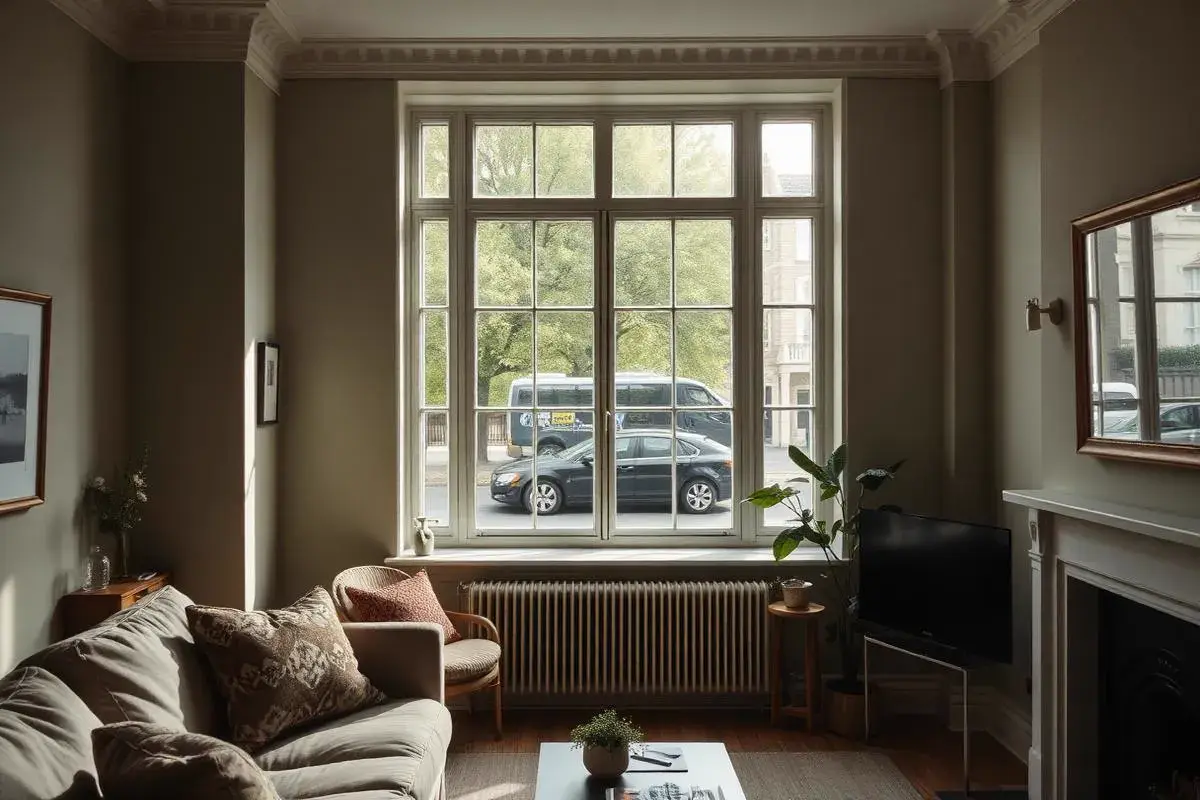
- Preservation: Keep your beautiful, original sash windows and historic character.
- Performance: 21st-century silence in an 18th-century building.
- Functionality: Secondary units align with sash meeting rails — you can still open your windows.
The Verdict: Which One Should You Choose?
6.4mm Acoustic Laminate
- Quiet, residential side streets
- Thermal insulation with noise reduction
- Mostly high-pitched noise (birds, wind, distant voices)
- Tighter budget but still a massive upgrade
Up to 45dB with secondary glazing
10.8mm Acoustic Laminate
- Red Routes, busy B-roads
- Bus engines and lorry vibrations
- Railway lines or flight paths
- Light sleepers wanting absolute "hush"
- Maximum ground-floor security
Up to 54dB with secondary glazing
Final Thoughts
In London, noise is the price we pay for living in the greatest city in the world — but that doesn't mean you have to hear it when you're trying to watch Netflix or sleep.
While 6.4mm is a fantastic product, 10.8mm acoustic laminate is the true king of quiet. If your budget allows for it and your noise problem is significant, you will never regret going for the thicker glass. In fact, the most common thing we hear from customers who went for 6.4mm to save a few pounds is: "I wish I'd just gone for the 10.8mm."
Want to understand the full science behind how a 100mm air gap achieves 50dB noise reduction? Read our in-depth technical guide.
Not Sure Which Glass Fits Your Windows?
We don't just sell glass; we sell silence. Our acoustic specialists will assess your street noise and recommend the exact glass and air-gap combination for your home.
Frequently Asked Questions
What is the difference between 6.4mm and 10.8mm acoustic laminate glass?
6.4mm acoustic laminate consists of two 3mm glass panes with a 0.38mm acoustic PVB interlayer, achieving 34–35dB noise reduction. 10.8mm uses two 5mm panes with a thicker 0.76mm PVB interlayer, achieving 38–39dB — significantly better for low-frequency noise like traffic and trains.
Is 10.8mm acoustic glass worth the extra cost?
If you live on a busy road, near a railway, or under a flight path, absolutely. The thicker glass and PVB interlayer provide substantially better low-frequency noise blocking. The most common feedback from customers who chose 6.4mm is 'I wish I'd gone for the 10.8mm.'
Can 10.8mm acoustic glass fit in any secondary glazing frame?
No. 10.8mm glass weighs approximately 27kg per square metre and requires heavy-duty aluminium frames with reinforced hinges. Budget secondary glazing frames are not designed to support this weight and will sag over time, breaking the acoustic seal.
What is a PVB interlayer in acoustic glass?
PVB (Polyvinyl Butyral) is a special plastic interlayer sandwiched between two glass panes. In acoustic laminate glass, this interlayer is engineered to absorb sound vibrations and convert them into tiny amounts of heat, preventing noise from passing through.
How much noise reduction can I expect with secondary glazing?
With 10.8mm acoustic laminate glass and a 100mm air gap, you can achieve up to 50dB noise reduction — enough to turn a busy London street into background silence. 6.4mm glass with the same air gap typically achieves 40–45dB.
Secondary Glazing Across London
We provide expert acoustic glass installations across London's finest neighbourhoods.
Related Articles
Why a 100mm Air Gap is the Secret to 50dB Noise Reduction
The physics behind the gold-standard air gap for soundproofing.
10.8mm Acoustic Laminate Glass Guide
How much noise reduction can 10.8mm acoustic glass really give you?
Secondary vs Double Glazing
Why secondary glazing outperforms double glazing for soundproofing.
Low Frequency Noise Solutions
Tackling bass and rumble sounds from traffic and trains.